For three days, my Muse and I have been obsessing on the individual essays and poetry in the Punk Anthology, listening to the quality of the words to find its unique note, its tone, its melody... Every piece is different, but they must all flow together harmoniously within one larger work: the book.
As the publisher and Medusa's Muse "big-picture" editor, this is my job.
"There are too many short pieces clumped together at the end," I said, growling and rubbing my fingers through my hair furiously.
My Muse slapped my hands. "Stop that. You'll go bald."
"They all share a similar tone and flow together well, but it feels boring. We can't have everything clumped together like that."
"So pull them out one at a time and try inserting them in different places." Muse lifted a short, moment-in-time essay from the stack of contributions and studied it. "Like this one. It's lovely. It's a snapshot of a time and place rather than a manifesto. Could we move it up in the order of the book? I think something like this, which is well written and moody, would create a nice break next to a longer piece more focused on the person's history."
I took the story and studied it. "I see what you mean. What if we put it after Chestnut's story. He talks about community and this story shows that community." On my lap top, I find the story, then cut and paste it to its new position. I study how the one story ends and flows into the next. "Yeah. I like it. This could work."
We read and re-read the anthology, moving stories, reading the manuscript again, swapping position of one with another, then changing our minds and putting them back. One day passes, then another. I begin to see the stories clearly when I close my eyes at night and rearrange them in my dreams. I'm not even sure what I'm looking for. I don't know how the book should flow yet. When it happens, I'll feel it.
One day I discover that I'd put all the "jail stories" together. I moved those, then realized the first poem didn't ring true with the first essay. Not that the stories have to agree, but the tone needs to be complimentary. It's like trying to use snippets of Mozart with Motorhead. They may both work together in a piece (just ask a Mashup artist), but probably not directly next to each other. You need to find the common note, the thread of the story, to tie it all together one at a time. The first story may have nothing in common with the fourth story, but they are tied together by what they share with story number two and three. I need to find the threads to tie everything up.
Muse asked, "If this is a punk book, does it have to flow harmoniously? Aren't you working with a music that enjoys jarring people out of any sense of calm?"
"Musically, yes. But this is a book of personal stories and there is a pattern to them. They don't have to tie together as neatly as a different type of book, but they should still work together to tell the larger tale."
Late into the night, while Muse listened to Exene on her Ipod, I switched two storie's positions and suddenly felt it. The threads were tied and the story flowed easily from one piece to the next. It was done.
I leaned back in my chair and motioned for Muse to join me. We read the book again from beginning to end and when we finished we looked at each other and smiled. Even her snakes grinned and I thought I heard one whisper, "Yes!"
Muse stood tall before me and announced, "You are a genius."
"Genius?"
"Yes. You discovered the music of this book. Not everyone can do that."
I shrugged. "I'm the big picture girl. I can't find spelling errors but I can find a plot."
Friday, August 21, 2009


Monday, August 17, 2009
Who Owns an Electronic Book?

Amazon.com electronically deleted copies of Nineteen Eighty Four and Animal Farm from Kindles, even though those copies had been legitimately purchased by readers. There's irony for you: George Orwell's Nineteen Eighty Four was deleted by Amazon without the knowledge or permission of the Kindle owners. Did you know Amazon could sneak onto your Kindle and erase what you have stored there? Me either.
Who owns an electronic book? When we purchase and download an ebook, are we buying the actual file, like we would a paper book, or are we leasing that file? Is it ours, or does it still belong to the publisher? Amazon's actions seem to say that we are merely borrowing the book for an extended amount of time but they can take the book back any time they want. And if we loan that ebook to someone else, or give it to a friend, we're violating our lease agreement.
These are the same questions the music industry has been struggling with for ten years. Music companies have responded by trying to lock down music files so they cannot be shared or passed from one computer to another. But they haven't been able to stop the proliferation of pirated music. Music companies aren't just fighting internet piracy, they are battling ideology. Millennium kids believe that music should be shared, period. They don't believe uploading songs to Pirate Bay is stealing. The harder the music industry tries to crack down on piracy, the more people resent the control placed on how and when their music is played.
The book industry is starting to deal with these same issues. Ebooks are popping up on pirate sites alongside bootlegged songs. As a publisher, I am forced to evaluate my own ideas of fair use and ownership. How much do I want to control the way the books I publish are read? How much am I willing to give away? Can I give away books and stay in business? Is there any way to stop people from uploading copies of my books for thousands of people to download for free? Should I care?
Amazon went too far and is now being sued for deleting those Kindle books. CEO Jeff Bezos apologized for the company's actions, saying "Our "solution" to the problem was stupid, thoughtless, and painfully out of line with our principles."
But the reason Amazon.com decided to erase those files from Kindles in the first place is because those copies of Nineteen Eighty Four and Animal Farm were illegal. The "publisher" uploaded those files via Amazon's third party distribution system and did not have the right to sell them. When Amazon found out, it deleted the files, then took the extra step of deleting them from Kindles.
Which is why I'm asking the question, "Who owns an ebook?" I understand the need for Amazon to shut down the illegal ebooks on their site, but do they also have the right to sneak onto your Kindle and delete what they want, without your knowledge or permission?
Friday, August 14, 2009
Rejection
Rejection. There's nothing that stings so sharply. From the time you were a kid and none of the other kids would play with you, to the Jr Prom when your date ditched you for someone more popular, rejection has been bruising our egos. If you decide to become an artist, you will be dancing with the barbed-wire of rejection on a daily basis.
What do you do when you produce your best work and the only thing you get for your efforts is a big fat NO scrawled on a form letter? What do you do when you keep getting that big fat NO 100 times?
Before you decide you're a terrible artist who should never write again and start drinking Jack Daniels in your underwear at 2 pm, wait. I'm going to tell you a secret about rejection. And then I'm going to give you some steps to help defy those rejections
Those rejections are written by people and because they are people they are only giving you their opinion. A person's opinion is not gospel. It is their gospel, not everyone's. Not only that, a person's opinion can change, sometimes hourly. They may have read your proposal at 9 am after a big fight with their boyfriend, so they hate everything on their desk at that moment. But if they'd read your proposal at noon, after the boyfriend called to apologize, they instantly loved everything on their desk, including your proposal.
It's an unfair, subjective, process combing through query letters, and to make it all worse, you are one of a thousand who have sent in a query that week. There's no way you won't get 100 rejections.
But what about those 100 rejections? Should you just ignore them and declare all editors and agents are morons?
Absolutely not. Those rejection letters are trying to tell you something, so pay attention. Your query letter may be boring, or has a spelling error. Because of the overwhelming mass of writers all vying for an agents time, the agents are looking for any reason to ignore a query letter, so make sure it is 100% perfection.
Or maybe your book isn't as great as you think it is. No, I'm not saying your a bad artist! I am encouraging you to take a step back and evaluate it with the keen eye of a master artist. A work of art can always be made better, just ask Michelangelo as he was finishing the Sistine Chapel. Your writing may be wonderful, but how is the plot? Are there places where the writing is dull or bogged down with too much description, or not enough? Does it start with a strong scene, or lovely prose that doesn't really grab the reader's attention? Use those rejection letters as an opportunity to rethink your project.
I wrote a novel and sent it to an agent I met at a writer's conference. When I pitched the idea and showed her a sample of my writing she loved it. So I was pretty confident that when I sent her the entire book she'd send me a contract. Wrong. She sent me a lovely rejection letter, praising my writing skill, but "I'm not in love with it." I burst into tears and swore I'd never write again. After the despair (and the Jack Daniels) wore off I took another look at my novel and discovered I had written a boring book. Great characters. Compelling idea. Lovely writing. Boring plot.
I set the book aside and after five years I only now feel that I have the skills to fix this book and make it great.
Never give up. Believe in the work, but be honest with yourself. Delusion can be worse than rejection.
And the good news is, you don't have to rely on an agent or a publisher anymore. You can do it yourself, or work with a micro press who may be more willing to work with a new author. Like me.
Wednesday, August 12, 2009
Remembering John Hughes
I am an enormous John Hughes fan, ever since I cried during The Breakfast Club. I saw myself reflected in the dark haired, off-her-rocker, artistic Allison Reynalds, the girl who buried herself in her over sized coat and shook dandruff on her drawing to make it look like it was snowing. I didn't have the dandruff problem (I don't think), but I definitely was that lost, emotionally disturbed girl when I was 13 and 14 years old. After that movie, I was a John Hughes devotee for life.
Several weeks ago, I had the urge to watch John Hughe's movies again, so I rented the Breakfast Club and Sixteen Candles. I felt the same reaction as I did when I was 17 and saw the Breakfast Club for the first time, crying through most of the film and cheering wildly at the end. How had he managed to show so profoundly the inner workings of the teen-aged psyche?
Last Thursday, John Hughes died of a heart attack. He was 59. I felt like a friend I'd lost touch with a long time ago had died. I was stunned and saddened. He was so young.
Today I stumbled across the book, "Don't You Forget About Me: Contemporary Writers On The Films of John Hughes" edited by Jaime Clark. The book has received mixed reviews, but I'm interested to read how other authors were influenced by his story telling. What made John Hughes movies so compelling? How did he manage to connect so strongly with the angst that was 1980's teen age life? They are classic films now and story tellers of all types can learn from them. Pay attention to how he plays with stereotypes and cliches. He bends those assumptions on their heads by using them to illuminate the inner workings of a character. Those characters stay with us because they reveal hidden parts of ourselves, letting us laugh and learn from our own foibles. That is what a good story should do.
Rest well, John Hughes. And thank you for the inspiration.
Sunday, August 09, 2009
The Writing Itch
Shhhh... I have a secret. I'm writing a new novel. I'm not sure why I'm doing this because I can't think of a worse time to start in on another novel, which will probably wind up like my last novel: rejected by an agent and then reduced to hiding in my file cabinet, shamed and bruised. I start the Fall semester of Grad school in three weeks, plus I'm gearing up to launch the newest title from Medusa's Muse (Punk Rock Saved My Ass). I should be preparing myself mentally and organizationally for a hectic Autumn, not plunging into another 300 page writing project. But I've got that itch and when the Muse starts scratching there's nothing you can do.
That's the problem with creativity; it is rarely rational. I think too many people try to force it to be. We get busy with our jobs, our kids, our ideas, and learn to ignore that annoying, persistent itch to create something. And I think our expectations hold us up, too. If what we create isn't GOOD, or WORTHY, or APPROPRIATE FOR PUBLIC VIEWING, we think it's worthless.
I disagree. My new novel may end up in a box like my last novel, but the outcome isn't the fun part for me. Writing is fun. Creating a whole new world one word at a time and peopling it with characters who I am now getting to know, that's the fun part. I have a general idea of what will happen, but my characters often change their mind mid-write, forcing me to chase after them. Writing this book will take a long time, but that's okay. Not only do I have school work on the horizon, but I am also working on a couple of short stories and outlining another play. Nothing may be finished before I graduate, but who cares?
If you see me huddled over my lap top and typing furiously at our local cafe, letting my coffee go cold, ignoring my homework, and generally looking dazed and wild, you'll know my Muse is in control. When she says scratch, I must obey. To hell with reason. Let me create!
Thursday, August 06, 2009
The Secret Code of the ISBN
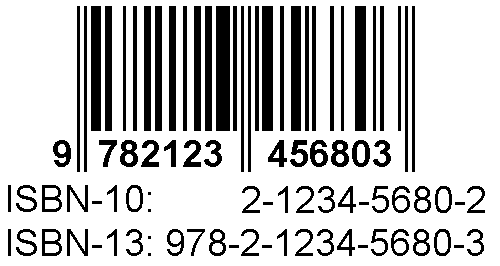
One of the questions I was asked at the Mendocino Coast Writer's Conference was, "What is an ISBN?" There was a great deal of discussion about what that weird bar code on the back of each book means and when a book needs to have one. Not all books do, but if you want to sell a book through a retail outlet, you need one.
Authors don't really need to know what the numbers in the bar code mean (unless their book nerds like me), but every publisher does. The bar code is like the symbol ranchers use to mark their cattle. Every Bar-S ranch cow will have the Bar-S ranch brand. Every Medusa's Muse book will have the numbers 9797152 in their bar code. No other publisher can use those numbers. They are mine, telling stores that the book is a Medusa's Muse book.
Stores use a bar code system to track a books via the book's ISBN. What is a bar code?
From Wikipedia:
A barcode (also bar code) is an optical machine-readable representation of data. Originally, bar codes represented data in the widths (lines) and the spacings of parallel lines, and may be referred to as linear or 1D (1 dimensional) barcodes or symbologies. They also come in patterns of squares, dots, hexagons and other geometric patterns within images termed 2D (2 dimensional) matrix codes or symbologies. Although 2D systems use symbols other than bars, they are generally referred to as barcodes as well.Barcodes can be read by optical scanners called barcode readers, or scanned from an image by special software. In Japan, most mobile phones have built-in scanning software for 2D codes, and similar software is becoming available on smartphone platforms.
If you look at the back of a book you will see a rectangle with two bar codes, usually on the bottom left of the cover. Sometimes there will be a ten digit code, but books published in the last few years will have a 13 digit code. The ISBN standard changed due to the volume of books being published.
The ISBN for What You Need to Know to Be a Pro: The Business Start-Up Guide for Publishers, by Terena Scott, is 978-0-9797152-3-5.
The first three digits identify the type of product it is. 978 means that this is a book.
The next digit identifies the language the book was published in. 0 and 1 are used for English speaking countries.
The center group of numbers is the publisher's ISBN identifier, the brand I wrote of earlier. No other publisher can have the same numbers.
The fourth digit is the number of books published by the publisher. What You Need to Know is the 3rd book published by Medusa's Muse (technically not. This is the second book, but since I set aside two ISBN numbers for Traveling Blind, the next number on the list was the number 3. Nobody cares if the books aren't in order).
The last number is called the check-digit. This is a mathematical variable of the other digits (don't ask me to explain this. Maybe a math person can leave a comment and explain what that means exactly).
You'll see more digits below the code that are the same as the top ISBN digits, but without the dashes. Those numbers show what the bar code means.
Beside the ISBN bar code you'll often see another bar code with numbers on the top. This is the EAN, or European Article Number, which is the world-wide standardization for the sale of books. It tells the price of the book and what system of currency it is sold in. The 5 means that the book is sold in US dollars. What You Need to Know to Be a Pro's EAN looks like this: 5 1 0 0 0, which translates to Ten Dollars US.
And now you know the secret code of an ISBN. Language, currency, price, publisher, and item, all encoded in a bar code for a computer to keep track of books in a store.
Any questions?
Sunday, August 02, 2009
The Mendocino Coast Writer's Conference
On Saturday I was part of a panel called Pathways to Publishing at the Mendocino Coast Writer's Conference. The Mendo Conference is my favorite writer's conference, and not just because it happens at one of the most beautiful places in the world. In only a few days the organizers manage to create a sense of community amongst the attendees based on the love of writing. Everyone is supportive and friendly. There isn't the same competition I've felt at other conferences; participants are genuinely interested in helping each other. Don't think this is a hippi-dippy, kick back kind of conference though. There are agents and editors from New York and the Bay Area offering advice and giving one-on-one consultations as well as award winning writers and poets teaching classes on revision, plot development, character development, writer's block, structure, and pitching. There are lectures about the power of writing to change the world, the needs of a YA reader, and how creative writing and other types of art can stop gangs.
This year I was only able to come for the one day of my talk, but I usually go for the entire three and a half days. In just one day, I met an agent from Manis who was excited about micro-publishinf. I discovered an up and coming author named Benjamin Percy (keep an eye out for him. His short stories are phenomenal. I had lunch with on of my co-panelists,the poet and very funny Robin Ekiss, whose first book debuts this fall. My other co-panelist was Stephanie Freele, whose collection of short stories also debuts this fall.
Our panel went very well and the room was mostly full. We each told how we became published and each of our stories was very different. Stephanie quit her corporate job and got an MFA while Robin went the only route available to poets: contests. I talked about why and how I started my own press and explained all the different paths a writer can take to share their work with the world. The one thing we all focused on was HOPE. Keep trying to get your work out. Keep believing in yourself and your desire to write. Hold fast to your dream. Not all of us will get that contract, but all of us can write and be published. We are not tied to New York City anymore.
Unfortunately I had to leave shortly after the panel. I would have loved to stay and soak up more of that cool, Mendocino Coast air and creative energy, but life is too hectic now days for that. Next year, though. And maybe I'll see you there.
Wednesday, July 29, 2009
Pathways to Publishing.
I'm presenting at the Mendocino Coast Writer's Conference this Saturday on the Pathways to Publishing Panel. It's got me thinking about all the ways there are to get published now days and how lucky we are to not be dependent on publishing companies anymore.
Not that publishing companies are bad! Hell, I am one. But if you don't want to go the route of finding a publisher, you now have many options. In fact, there are FIVE options to get your work out where other people can read it.
Option One - The Traditional Route. This is the one where you find an agent and then the two of you hunt for a publisher, preferably a BIG PUBLISHER, who can give you a BIG ADVANCE and market the book enough that it sells. This is the pot of gold for an author. We all dream of making a deal with Random House or Hatchet and selling thousands of copies of our novel. But competition is fierce and the odds of you actually landing that book deal are slim, especially now days with publishing companies being forced to make budget cuts.
Happily, there are other options.
Option Two- The Micro Publishing Route. This is where you'll find publishing companies like Medusa's Muse. We typically don't work with agents, nor can we afford much of an advance, if at all. But we do offer lots of editorial support and marketing help, as well as making you feel more like you're part of a team than a product. Your book is published by a legitimate publisher, but the odds of selling thousands of copies are slim. No one gets rich in the micro publishing route, and your book may never make the splash you'd like simply because a micro publisher's marketing budget is as micro as the company.
Option Three- The Subsidized Publishing Route. If you'd like to bypass hunting for a publisher but would still like a chance of selling your book, then this is the route for you. This is where you'll find online publishing companies like XLibros and IUniverse. Subsidy publishing has changed for the better over the last decade and a lot of the stigma has disappeared. Working with a subsidy publisher is quick and easy. They'll design and edit your book, for a fee of course. It isn't cheap going this route, and many people have been unhappy with the final result. Plus, you don't own the ISBN, the subsidy publisher does, so that means you don't actually own the book. If that bothers you, then perhaps you should follow option four.
Option Four- The Self Publishing Route. You do it all if you self-publish (so you'll probably want to buy my book, What You Need to Know to Be a Pro). You write it, hire people yourself to edit and design it, send it to a printer, market the book, and sell copies, often from the back of your own car. You will be an author and a business owner, so you also get to do the bookkeeping and track inventory. You'll need a block of ISBN's and a resale license. But all that work allows you to control everything about your book. It's yours, and no one, not an agent or a publishing executive, can tell you what to do. All the profits are yours too. But will it make up for the hours of labor you'll need to put into self-publishing?
Option Five- The Electronic Publishing Route. This is the age of the Internet, so use it. Set up a blog and a website to publish your writing on the net. Post a chapter at a time to serialize your book and start networking with other writers and people who may be interested in your topic to get readers. You won't make any money this way, but you build a following over time which can eventually lead to money in the future, especially if one of those agents we mentioned in Option One likes your work.
I suppose there is an Option Six as well. You can do nothing at all.
Monday, July 27, 2009
Goodbye Merce Cunningham

from the BBC:
US choreographer Merce Cunningham, widely recognised for revolutionising modern dance, has died "of natural causes" at the age of 90.
In a statement, the Cunningham Dance Foundation, which he founded in 1953, said that he "revolutionised the visual and performing arts, not for the sake of iconoclasm, but for the beauty and wonder that lay in exploring new possibilities".
Follow the link to see video of some of his work, and hear him speak about courage.
"Courage... when you're doing something that you want to do. You may even not know how to do it, but you still want to do it, so you go ahead and try..." Merce Cunningham.
May we all live such long, vibrant and creative lives.
Saturday, July 25, 2009
Writing the Punk Rock Introduction
At last, the punk book is DONE. Well... mostly.
I know I already said the book was done, but what I meant is that the writers are done. And my editing is done. Now the designer has to lay out everything and add some awesome photos.
But first, I have to write the intro.
Yep, I got everyone's parts completed but neglected to finish (as in start) my own.
And now I'm looking at this lap stop screen with a completely blank brain.
I need to write my own punk rock story and explain how that inspired Punk Rock Saved My Ass.
So let's see...Well... Once upon a time there was a hippi girl who met a punk boy and she fell in love with his music. Even though the relationship didn't last, her love of punk did... and that's why she put this book together... the end.
Yeah. That could work. Too short to suck is always a good thing.
I'm thinking I need to flush it out a bit more, though.
Dang.
If you need me, I'll be trying to explain how this Hippi Chick from Northern California came to love Punk Rock music. Is there such a thing as a Hippi-Punk?
Thursday, July 23, 2009
Who is Medusa's Muse?
That question has been haunting me lately. Who is Medusa's Muse? What do the words, Medusa's Muse mean? And what do I want to do with my press, and this blog?
Since I started grad school in September last year, the majority of my energy has gone into intellectual, analytical, systematic thinking. School requires this kind of work. At the same time I was writing a factual, how-to hand-book on starting a publishing company (What You Need to Know to Be a Pro: The Business Start-Up Guide for Publishers, by Terena Scott). Between homework, managing my press, finishing a non-fiction book, and taking care of my daughter's needs, I had almost no time for creative thought. The biggest creative outlet I had in the past 12 months has been The Sims (Yes, it is a creative outlet. Just ask my Sims family). But playing the Sims isn't writing.
My brain is weary from all that linear thinking. I need some creative, imaginative expression.
I'm looking for more balance in my life which has me questioning my choices. School is important so I won't give that up, and Medusa's Muse is my passion. Eventually I'll be finished with school which means I'll be working while also raising my child. How will I have time to keep Medusa's Muse going?
That's why I'm asking: Who is Medusa's Muse? What kind of books do I want to publish? What kind of writers do I want to work with? And is Medusa's Muse only about books and writing? What more can I do to keep my wild, creatively fueled mind thriving?
It also feels like this blog needs to change. But in what way? I'd like to expand the focus on ways to feed all of our muses so that we are creatively alive. Of course I will continue sharing information about running a book press and news on the industry, because it is just as important to know how to manage your inventory and market your books as it is to be artistic. A thriving artist needs to be practical as well as imaginative. You have to work hard so you can pay the electric bill. It's impossible to use your lap top when the battery is dead. But don't work so hard your creative muscles atrophy. Great artists need inspiration and imagination, as well as food and shelter.
My Muse is smiling at me right now because I finally have the answer. Who is Medusa's Muse? She is the Muse of practical imagination.
Monday, July 20, 2009
Gifts from my Muse
My Muse did a great job encouraging me to focus on my creativity and let go of some of my task oriented, linear way of living. And then as soon as the temperature passed 100, she vanished, complaining that her snake-filled hair was too sweaty. I'm pretty sure she went to Hunter S Thompson's memorial birthday party which Johnny Depp was hosting on his yacht, but she never tells me what her plans are. "A Muse doesn't have to explain," she says, just before vanishing in a puff of snake scented smoke.
That's a muse for you; wonderful when you need a good push, but not there to catch you on the other end.
It's a good thing I'm used to her disappearing acts. She appears in a rush of inspiration and insight, then is gone when the wind changes direction, like a sexy, incandescent Mary Poppins. After one of her trips, she brings back stories wrapped in shiny paper and gives them to me. "This one came from the top of Mt. Denali. Be careful, it's very cold. And this fancy one is from a nightclub in Berlin. I thought you'd like the music." She fills me up with characters and ideas and then commands me to write.
I'm lucky. I've never felt like I had nothing to write about. My problem is I have too many stories in my head. My muse is generous, filling me to the brim until I can't absorb one more image and I beg her to stop because I'm feeling sick. "Nonsense," she says. "No one ever died from too many stories. Writers kill themselves when they run out."
I've begun work on a new novel, and it feels wonderful to write something creative again. This time I have no deadline, no set goal, and no sense of impending failure (at least not yet). The story has been in my head for a couple of years and is finally being transformed into words. Because the characters have lived inside me for so long, they flow out from my imagination fully formed and speaking scenes of dialogue. What a relief to write this story after so many months of textbooks and nonfiction. And the fact the Punk book is finished gives me more time to create my own worlds.
And yes, I do still need to double check the invoices before paying the State of California its Sales Tax. Tomorrow. Right now I'm going to write.
Saturday, July 18, 2009
Happy Birthday, Dr. Hunter S Thompson

A Muse of my Muse, the good Dr. Thompson. A man who danced on the edge of the cliff singing loud Puerto Rican songs with a glass of scotch in one hand and a pistol in the other. Insane, destructive, beautiful, and extremely talented. Let us all raise a toast to a true original.
There will never be another Dr. Hunter S Thompson.
Monday, July 13, 2009
The Muse is Back!
Greetings to you lovely Medusa fans. This is Muse, taking over for Terena because she seems to be suffering from post-semester brain block. This is a common problem with all people who think too much and have spent a great deal of time focused on one highly complex task for too long. She spent five weeks doing nothing but reading text books and writing opinion papers on subjects such as the Pro and Con of discussing budgetary issues during an IEP and the merits and deficiencies of multi-cultural education. Before summer semester, she wrote a how-to book about starting a small press (What You Need to Know to Be a Pro: The Start-Up Business Guide for Publishers) while at the same time going to Graduate School.I have been mostly silent for 8 months, allowing her time to get through this period of single minded dedication to intellect. But no longer.
Today I found her mumbling over inventory lists in preparation for paying sales tax ("Do I pay 8.75% on sales after April 1, or for all sales of that fiscal year?"). Enough is enough! I grabbed her I POD, set it to play every Pearl Jam song she owns, and pushed her out the front door. "Go for a walk and don't stop until you're worn out!"
"But..." she began.
"No buts. I've had it with all this cerebral, non-creative, linear thinking. Go walk it off."
She lowered her head and pouted but did as she was told.
It's all good and well to focus on work that must be done. Eventually Terena will need to get the sales tax paid, and I'm proud of her for being so dedicated to school. But school is over and she can pay the bills next week. I'm taking control of Medusa's Muse now and steering it back on a more imaginative, creatively passionate, productively wild, course.
After all, a Muse can not live by text books alone.
Thursday, July 09, 2009
Editing an Author's Work
From the book, What You Need to Know to Be a Pro: The Start-Up Business Guide for Publishers, by Terena Scott
Editing is my favorite part of publishing, the time when you and the author work together to transform the manuscript into a work of art. This is also when you build your relationship with the author and create trust. Editing an author's work requires compassion, dedication, mediation skills, humor, and vigilance. You must find a way to help an author see what improvements need to be made without destroying their often delicate egos. A weepy author can't get any work done, but while you’re supporting them emotionally and creatively, you also need to be tough about deadlines. And don’t be afraid to use your red pen. You are a professional and you need the author to be professional too. Be honest about what needs to be fixed and clear about your expectations.
When critiquing, I start with what's working, and then point out what needs improvement. Usually there's a lot that needs to be changed, so I continue to point out the positives while finding the negatives. It is important to be as specific as possible when offering suggestions. Try not to say things like, "This isn't working for me." Instead, say, "This section feels preachy. Ground it in sensory details and focus more on the character than the message."
Occasionally, you and the author will disagree, and that's when you need to decide if the edit is important. The publisher has the final say and the author must defer to your opinion. Don't make demands the author can't provide, though. This is still the author's voice, her work, her writing, so she isn't going to write like you. If it's a minor detail, let it go. If it changes the plot profoundly, you may need to insist. When working with Laura, she was very attached to her descriptions of the landscape. I wanted those descriptions cut and the focus put back on the action. Slowly she cut them down from several pages to one page, then to a few paragraphs. After many months, I was satisfied with the amount of description remaining. I wanted even more cuts, but I let it go because the remaining descriptions didn't distract too much from the book's pacing. I decided to let her keep some of her descriptions, remembering it was her writing style, not mine.
In the example contract provided above, there is a clause that allows both of you to pull out during the editing process. If the author can't deliver a manuscript acceptable to the publisher by a certain date, the contract is void. She gets her work back and you are free to find a different project. Every now and then, it happens.
Tuesday, July 07, 2009
How to Tell When You've Reached the Limit of What You Can Manag
When you forget which day it is and therefor go the wrong appointment, you've reached the limit.
When you can't answer simple questions like what you ate for breakfast without staring into space trying to understand what the word breakfast means, you've reached the limit.
When your to do list has more than six subheadings, you've reached the limit.
When it's the last month of the last quarter of the Fiscal year and you don't know where the invoice file went, you've reached the limit.
When your book gets a wonderful review and it takes you a week to tell your friends and family, let alone post it on your blog, you've reached the limit.
When your website still doesn't have an image of your book's cover after three months, you've reached the limit
When you groan every time the phone rings, or open your inbox, you've reached the limit.
When all you want to do is play the Sims, you've reached the limit.
When you can't figure out what to do when you've reached the limit, you have definitely reached the limit.
Now what?
Saturday, July 04, 2009
Have You Ever Read the Declaration of Independence?
Imagine how it must have felt to be a Colonist in 1776 and hear these words spoken. Your country has just declared war against its Government, The British Empire, the biggest super power on the planet. The odds are so stacked against your country it will be a miracle if anyone survives. Despite certain death, you all agree to fight.
Wow...
IN CONGRESS, JULY 4, 1776
The unanimous Declaration of the thirteen united States of America
When in the Course of human events it becomes necessary for one people to dissolve the political bands which have connected them with another and to assume among the powers of the earth, the separate and equal station to which the Laws of Nature and of Nature's God entitle them, a decent respect to the opinions of mankind requires that they should declare the causes which impel them to the separation.
We hold these truths to be self-evident, that all men are created equal, that they are endowed by their Creator with certain unalienable Rights, that among these are Life, Liberty and the pursuit of Happiness. — That to secure these rights, Governments are instituted among Men, deriving their just powers from the consent of the governed, — That whenever any Form of Government becomes destructive of these ends, it is the Right of the People to alter or to abolish it, and to institute new Government, laying its foundation on such principles and organizing its powers in such form, as to them shall seem most likely to effect their Safety and Happiness. Prudence, indeed, will dictate that Governments long established should not be changed for light and transient causes; and accordingly all experience hath shewn that mankind are more disposed to suffer, while evils are sufferable than to right themselves by abolishing the forms to which they are accustomed. But when a long train of abuses and usurpations, pursuing invariably the same Object evinces a design to reduce them under absolute Despotism, it is their right, it is their duty, to throw off such Government, and to provide new Guards for their future security. — Such has been the patient sufferance of these Colonies; and such is now the necessity which constrains them to alter their former Systems of Government.
Thursday, July 02, 2009
The Worst Writing in the Whole World
David McKenzie of Federal Way, Washington was declared the winner of the Bulwer Lytton Fiction Contest, "where www means 'wretched writers welcome." You can also read an interview with David McKenzie in the San Jose Mercury News.
Follow this link to see his submission, and then try to out do him. Writing bad isn't as easy as it looks.
Here's my attempt:
The road passed the red break house and just kept going, over the horizon to places unseen, never to be seen, by the little girl in the green dress who lived in the red brick house. She wished she could go there, but she had to stay in the yard and watch the cars go by, far away. It made her sad.
Your turn.
Wednesday, July 01, 2009
Micheal Jackson

I am not what you'd call a Micheal Jackson fan, although I respected his incredible talent. This is a man who was truly unique in the full definition of the word. There was never anyone like him, and I doubt there will ever be another.
His life was tragic. He was so flawed, so gifted, so shattered. As he aged, he seemed to become more and more unreal, alienated from himself and everyone around him. He never had a chance to live in the real world, so he had no grasp of what real was. His talent helped him survive, but also destroyed him. He may have been the loneliest man in the world, despite the fact he was surrounded by millions who adored him.
When Thriller came out in 1983, I had a paper route. Since I lived in the country, I couldn't ride a bicycle to all the homes (spread out over 30 miles), so my mom and I drove a car and blasted Thriller as loud as we dared at 6:00 am on a Sunday. The album became our paper route anthem. To this day I can't help but sing along to Thriller.
Whether you are a fan or not, you can't deny the incredible impact Micheal Jackson has had on our culture and ourselves.
The world does seem emptier now that Micheal is gone.
Sunday, June 28, 2009
Where can you find a good Copy Editor?
Sorry for the long delay. I've been swamped with school (two more weeks and I'll have time to think again!).
Last time, I wrote about how important it is to work with a copy editor before sending your work out to agents. But where do you find one?
The best resource on line to find professional copy editors is at the site Editorial Freelancers Association. This is a professional organization for editors with a strict code of conduct. You know you'll get what you paid for when hiring an editor through the organization. The site has a comprehensive search engine that allows you to type in the qualifications you need in an editor. I searched for a copy editor who specializes in memoir who lives in California and found five people meeting my specifications.
You can also check your local college for instructors or students with excellent English language skills, but they may not be versed in the Chicago Manual of Style, which is the primary tool editors use for journalism and literature. I know many authors short on funds who have had success hiring a grad student.
Craigslist is another online resource where editors advertise. Whenever you hire anyone off the Internet, be careful of scams. Some people will take your money and never deliver what you paid for.
I found this great blog about copy editing called The Slot, written by copy editor Bill Walsh. Good writing, humorous, and full of information for editors and those in need of an editor. I particularly liked "What's a Copy Editor?"
We'll spend good money on a new outfit for a job interview and probably even get our nails done. So why don't we pay for quality editing before we send our work to an agent or publisher?
Sunday, June 21, 2009
You just wrote a fabulous book. Now what?
Congratulations! You've actually written, and finished, a book. Lots of people dream of being a writer, and a few of those will sit down and write something, but only a handful will complete an entire manuscript. Before you do anything else, relish this moment of accomplishment. You've done the equivalent of climbing Kilamanjaro. Good for you!
So what's the very first thing you should do before you start sending that beautiful book of yours to potential agents?
HIRE A COPY EDITOR.
I cannot stress this enough: hire a copy editor. Even if you have a PHD in Literature or an MA in English, hire a copy editor. Even if you are the best speller in your entire State and you've got the spelling bee awards to prove it, hire a copy editor. Do not send your lovely novel to agents full of typos. It's like showing up for a job interview wearing a dirty blouse.
I'm assuming you've been passing chapters of your novel to friends and family for feedback, and I'm also assuming those friends and family have been giving you good writing advice (if not, you need to hire a different editor to work on plot and character development). But it shocks me when I see how many writers do not hire a copy editor for a final check of their manuscript. I get plenty of submissions ruined by spelling and grammar errors. Know what I do? Toss it. I am way too busy to work with an author who can't take the time to fix spelling errors. It shows me that they do not take their writing career seriously.
I hire a copy editor for my own writing, as well as for the books I publish via Medusa's Muse (although I don't hire her to edit my blog, which as you see could use the help).
The problem is that none of us can see our own mistakes; we are blinded by the words on the page (what I call writer's goggles. They work a lot like beer goggles). Everyone has this problem, and anyone who thinks they don't are fools. I'll bet you twenty dollars that even President Obama hires a copy editor for his written work.
Where do you find a good copy editor to polish your masterpiece? I'll explain that next time.
Tuesday, June 16, 2009
A Great Review of "What You Need to Know to Be a Pro"
My book just got a great review from the Midwest Book Review. Look for it on their website under the section Library Bookwatch: June 2009: The Writing/Publishing Shelf.
Review by James A. Cox, Editor-in-Chief, Midwest Book Review
When it comes to establishing a publishing enterprise, whether for single title self-published authors, or publishers aspiring to create a stable of authors under one imprint, there is no need to re-invent the wheel. Not when Terena Scott has written "What You Need To Know To Be A Pro: The Business Start-Up Guide For Publishers", a comprehensive but thoroughly accessible instruction manual covering all the elements of launching a publishing enterprise from choosing a name, to structuring the fledgling business enterprise, to creating a business plan, to such issues as licenses, financing, office space, and publishing project evaluation on a case by case basis. "What You Need To Know To Be A Pro" addresses working with authors from contracts to editing; the actual publishing of a book from editing to ISBN, to pricing. "What You Need To Know To Be A Pro" also has invaluable, 'real world' advice on launching a book; keeping track of inventory, royalties and taxes; and establishing how many book titles can be managed by the resources available to the publisher. Of special note are the insertions of practical advice from professional in the publishing industry -- including commentary by James A. Cox, the editor-in-chief of the Midwest Book Review and the author of this review. Enhanced with the inclusion of lists of 'Helpful Resources' including a list of 'how to' books, recommended publisher organizations, publisher oriented websites, "What You Need To Know To Be A Pro: The Business Start-Up Guide For Publishers" is particularly recommended to those new to the publishing field and will prove to be as practical and invaluable, as it is insightful and instructional.
The Midwest Book Review has hundreds of book reviews broken down into topics (cooking, history, fantasy, pets, crafts, etc) to help you find the right book for your interests. Publishers and writers should take a look at The Publisher's Bookshelf for a comprehensive list of books on publishing, book marketing, and writing.
I'm reading the review again and I'm just so happy I need to run around the kitchen and squeal like a five year old! Wheeeeeeeeeeeeeeeeeeeee
Sunday, June 14, 2009
Why Don't People Read my Blog?
First, let me say to all my readers, especially those 16 who subscribe and have stayed through all my ramblings, how much I love and appreciate you. This post in no way belittles your support.
But now, I want to know something. Why is it that no matter what I write or do or say, Medusa's Muse is not one of the top blogs on publishing? This blog has been up and running for five years. I've done everything I'm supposed to do: visit other blogs, comment, share info, provide proper credit, write informative posts with the occasional just for fun bit, and give away books. No matter what, I can't get any more readers.
I'm asking because it's not just me who asks these questions. I hear other bloggers complaining of the same thing. They write great content, but no one knows their blog exists. And with the internet so crowded and stuffed with information, I don't know how anyone finds a blog. What's a blogger to do?
I found this article on Copyblogger which addresses those questions. Here is a snippit:
The Oldest Blogging Myth
“Content is king.”
It sounds good in principle. Produce a truly great piece of content, and you’ll get all the links you could ever hope for.
Maybe it worked too, several years ago. The Web used to be a fairly quiet place compared to what it is now, and it was easier for people to notice great blog posts.
But not anymore.
Now great is no longer good enough. The Web is full of so much remarkable content that bloggers don’t have enough time to read it all, much less link to it.
If you want links now, you need to be more than great. You need to be connected.
(Follow the above link for the full story. If you don't know Copyblogger, you need to check them out, and then bookmark them. Great stuff).
It's a great article with good advice, but I realized that I've been doing those things and I still can't get a date to the prom. If it really is about connections and "who you know," then the internet has turned into a giant high school and I'm back to being that Drama nerd everyone made fun of.
Fine! Me and my 16 nerdy subscribers can still have fun. Right guys?
Thursday, June 11, 2009
Book Written on a Toilet Paper Roll
This is a brilliant idea:
Toilet Paper Horror Novel
It's a perfect example of thinking outside the ordinary. Of course this story should be written on a toilet paper roll because it is based on a Japanese folk tale about a creature who lives in the toilet.
We in the book world tend to hold on too tightly to our ideals of the hallowed halls of traditional publishing. But this is a new century, people. Dust off your creativity and think outside those halls.
Monday, June 08, 2009
San Francisco State
My Muse and I strolled the grounds of San Francisco State University today. It was freezing cold with thick, gray fog hanging on the treetops. A perfect, almost summer day in San Fran.
This is where I got my BA in Drama, back in 199... a while ago. I was a wanna be actress turned director, crazy about the theater, especially Commedia and Molier. My plan was to get my degree and run off to New York City where I would dazzle the world with the adventurous, one woman plays I would write, and where I would be discovered by Johnny Depp and then live happily every after.
Funny how life takes drastic detours.
But the theater taught me a lot about writing, and directing taught me even more about publishing. I got an incredible education on how to manage people, transform disparate elements into a cohesive whole, keep all the various pieces organized, and do it all under a deadline. I discovered back then that I am skilled in seeing the "Big Picture," something I continually work with as I create books.
And it is through my publishing that I am back at my alma mater, this time in the Orientation Mobility Master's Program. Laura's book inspired me to go back to school and become a teacher myself.
I am now enrolled in the Summer Semester intensive. I'm taking 6 units (two classes) in 5 weeks. It could be crazy, but right now I'm enjoying this calm before the stress. I'm back in the city I love. I get to spend the entire week doing nothing but schoolwork, without the interruption of being a Mommy. I'll be able to concentrate and might be able to hear myself think for a change. And on the weekends I go home to my daughter and hubby. I know it sounds weird, but this going to school in San Fran is like a vacation for me.
Unfortunatley I will have zero time to write, and my blog posts may get sporadic. Good thing I finished the first draft of the anthology and sent it to Jane and Rick. Jane will do her editing voodoo and Rick will start inserting photos for the stories. When I'm done with school, we should have a book.
Friday, June 05, 2009
Judging a Writing Contest
Several months ago I was asked if I'd be willing to judge a writing contest. The organization who asked me is well respected with a good reputation, so I said yes. Then I forgot about it. Three weeks ago I got an email asking if I could still do it, and then last week, I got a packet in the mail stuffed with entries. Luckily, it was a flash fiction contest, so they were all short.
I've never judged a contest before and it felt weird being a judge after many years of being a writer who never won a single contest (or any kind of contest) in her life. What made me think I could judge the worthiness of a story? But I rolled up my editing sleeves and got to work.
This was a blind contest, so I had no idea who the author was or where they came from; the writing had to stand on it's own, as it should. There were two other judges, one of whom I knew, but we didn't talk until we had narrowed the field to our personal top five.
How do you judge a person's writing? What are the elements that make a good story? And how do you set aside your personal likes and dislikes to objectively judge a story on its writing skill rather than just the content?
Start with what's easiest, the mechanics of the story: spelling, punctuation, grammar, tense, and structure. Once I had weeded out the stories with mechanical issues (about half! Come on, people! When you enter a contest have someone edit it for spelling mistakes), I could move on to the next issue: does it meet the criteria for flash fiction?
According to Wikipedia, Flash Fiction "is basically a complete story - having a beginning, middle, and end - which confines itself to a very low word count." This contest required that the story be less than 500 words.
I read each remaining story a second time, looking for structure. Did it have a clear plot, with a protagonist, a challenge or obstacle that the protagonist must cope with, and was the protagonist changed in any way by that obstacle? Did it have a satisfying ending?
This is where the problem of subjectivity comes in because what feels like a satisfying story to me may not satisfy the literary needs of another judge. Which is exactly what happened. Each judge had chosen different stories.
The discussion began. My favorite story was ruled out by the other two judges because they felt it wasn't a complete story, but one of the stories they liked didn't meet my requirements for a complete story. We narrowed our choices down to five finalists and then discussed the merits of each. There was one story neither of the other judges liked, but after I argued in favor of its strengths they agreed it shouldn't be eliminated. I also agreed to keep a story I didn't personally like, but which met the criteria of flash fiction. The back and forth and comparing of notes went on for days.
Finally, we agreed on our winners.
I think about all the various writing contests I've entered over the years and what the discussion might have been amongst the judges. Hopefully I made it to at least the top twenty (I ALWAYS triple check my spelling when submitting work). I have a new respect for judges now that I know how difficult it is to chose a "winning work." And ultimately, it really does come down to what a judge personally thinks should comprise a great story. No matter how many times you check your spelling, you can't get around that.
Tuesday, June 02, 2009
Draft One of Punk Anthology DONE
Putting a book together is my favorite part of being a publisher. I sit at my desk with a stack of story pages, freshly edited and clean, and I piece the manuscript together into a cohesive book. With a single author, the process begins from the first draft they send me. I make notes and hunt for the thread that ties everything together. Often the author can't see it, but has created the unifying thread intuitively. When I show them what they've created, the author responds as if I've given away the secret of a magic trick. They didn't realize they'd done the magic themselves.
This time, I've been working with multiple authors, helping them craft stories from their experiences as Punks. Many of these authors are not writers, but they all have great stories to tell. They had to be shown the basics of how to write that story down on paper in a way that will be clear and entertaining for the reader. Most of the authors who originally submitted their stories to me two years ago have continued to work on them, taking my feedback and revising over and over and over... until at last their stories are complete. Only a few dropped out.
And now it's my turn to take those stories and create a book.
I had to decide what order to place the stories. Which one will be first? Which on last? How do I intersperse the funny stories with the sad ones? Where do I put the poetry? How many images do we have? Every story has its own pacing and tone, so where I put it will change the overall pacing and tone of the book. How do they all fit together? Or do they? And if some don't fit easily, where do I want to put them to play with that conflict?
I'm sure I'll redo the structure of the anthology numerous times before I get the right pacing for the book. The book needs a beginning, middle and end. It needs conflict and resolution. Each piece provides those elements to the whole of the book. Putting them in the right order is the important part.
Saturday, May 30, 2009
Jane is Back!
Jane Mackay is the copy-editor at Medusa's Muse who dedicates HOURS to the Medusa cause. She is also my very dear friend and writing partner. She's been away at college in Boston for the last two years but has graduated and is now back in California. To that, I say...
YIIIIIIIPEEEEEE!
Jane helped me start Medusa's Muse and is one of the people who continues to support my struggles and keep the press alive. Without her incredible grammar talents and creative vision, and the technological know-how of Rick, I couldn't be a publisher. So having her back in the hood is not only wonderful for me personally, it is fantastic for the press. Even though we've stayed in touched and worked together via email while she's been away, having her nearby makes running my press less daunting. It's given me a jolt of energy that I've been missing these last few months while slogging through school. And it's perfect timing, because the Punk Anthology is (believe it or not) ready for the final version and I will definitely need her help to get it ready for the designer.
Trying to do all the work a book publishing company needs all on your own is pretty much impossible. I've heard of a few people who've done it, but I'm not convinced they're sane. It's important to surround yourself with people you can share some of the work with and bounce ideas off. Jane is that person for me, and she usually has chocolate in her purse.
Tuesday, May 26, 2009
Now I get why people love Disneyland
I just returned from several days at Disneyland Park in LA with my daughter. It's her birthday, so we went down with Tama and her daughter Boo-Bug for a Princess loving adventure in the "Happiest Place on Earth."
I have never been a Disney person. I could care less about Mickey Mouse and Sleeping Beauty (although I do like Pirates of the Caribbean). But after this trip, I understand why people fall in love with all things Disney.
My daughter has a disability so I was a little concerned about taking her there. Would she be able to cope with the chaos and noise of an amusement park? Disneyland turned out to be the perfect place for her. The staff are well trained and supportive of people with disabilities and the grounds are completely accessible. We had a fantastic time exploring and chatting with Micky Mouse and Tinker Bell. She even went on a couple of rides (although that dang song is still stuck in my head! You know the one, so I'll spare you).
When it was time to leave she asked, still grinning, "Can we come again next year?"
Absolutely!!!!
Of course, the work at Medusa's Muse has piled up while I was away and the Punk Rock anthology deadline is looming. I'll update the blog with publishing news and how-to's soon. But for now, I'm gonna pop in Pirates the Caribbean one more time and enjoy an extra day of lounging.
Monday, May 18, 2009
On Vacation, See You Next Week
I won't be posting for a while: I'm going to Disneyland! My last class for this semester is tomorrow and after that my daughter and I are going to D-Land to hunt for Cinderella. She's never been, and I haven't been since high school (grad night. mostly I remember looking for good spots to make out with my boyfriend).
Have a great week everyone!
Sunday, May 17, 2009
Blogging has Hit the Big Time
Remember when a blog was a fun way to keep a journal that you could share with your friends and any random stranger who happened upon it? Then blogging became part of the way we got our news, with bloggers reporting on events that were previously reserved for the New York Times. Sure, some of those bloggers didn't check their facts and a lot of it was well written gossip, but the opinion makers were often bloggers. Now it seems that everyone has a blog, from President Obama and Nike, to your grandma. And it's mandatory for writers to have blogs.
Now, Amazon is allowing any blogger with an RSS feed to add their content to Amazon.com for Kindle users to download and read. The terms of service are here.
And,even more impressive, there is a special "blogger signing schedule" at Book Expo America this year. Fans can meet and chat with their favorite bloggers, including Jason Boog of Galley Cat, and Amy Riley of My Friend Amy. What should the bloggers sign? Laptops?
Yes, the book industry has changed. No longer are bloggers maligned and scorned; now they have author signings at BEA.
Thursday, May 14, 2009
Tamarian Graffham on The Joy of Owning Your Own Business
If you haven't read Tamarian Graffham's blog, Tales From the Den of Chaos, now's your chance to check her out. She wrote a post about the joys and trials of being an entrepreneur and why she wouldn't give it up, despite the lack of a steady paycheck. Here is an excerpt:
Times like these are both the worst and the best for thinking about doing what you love, rather than whatever puts food on the table. I wouldn’t swap a steady paycheck for opening my own business right now if I had the choice, frankly; but not having that choice, and having been forced to do it…it’s good.
I work harder and longer than I would at a conventional job for returns that are not quite equal to what I’ve made in the past for a lot less effort…but it doesn’t feel that way. In fact, I usually don’t realize I’ve had a “rough” week until I start totaling up the hours for our record keeping.
Put in a lot of hard work, add a dollop of good old horse sense and some meticulous business practices, and the money will follow, almost no matter what you’ve decided to make Your Business.
Put a lot of hard work, a dollop of good old horse sense and some meticulous business practices into something you love and the money will follow and all of the above will feel almost effortless.
It isn’t that simple, of course. Someone who loves making one-of-a-kind Christmas ornaments out of dog poop, for example, may find their gross (in more ways than one, ahem) income is a little…um…less than spectacular.
Some things just aren’t going to be fah-buu-los money makers, no matter how hard you try.
But here’s another thing about doing what you love: It can make sacrificing other things a much easier pill to swallow.
Follow the above link for the full post.
And did I mention Medusa's Muse will be publishing her book?
Monday, May 11, 2009
Article About Publish on Demand
To try and make up for scaring so many people with my workshop on self-publishing, here is an article from CNN on-line about successful authors who used Publish-on-Demand.
(excerpt) "If you believe in your book, I think you should give it a chance," Genova said. "Still Alice" "was a book that people already identified with and [Simon & Schuster] saw the book's potential in a very real way."
Genova is not alone. As the economy takes its toll on traditional publishing houses -- HarperCollins dropped its Collins division in February, losing major executives and editors, and Random House continues with cutbacks -- more authors are looking to online self-publishing companies.
Companies like Author Solutions or Lulu.com allow any budding author to submit a digital file of their manuscript on any subject matter. Unlike traditional publishing companies, these publishers only produce hard copies of the books when a customer buys one, a process known as print on demand
Go to the article for the full story.
I'd like to clarify something, though: what this article is reporting on is actually PUBLISH-ON-DEMAND, not Print-on-demand. If you want to publish your book via Lulu or XLibros, you are using a Publish-on-demand company. Print-on-demand is what I use to digitally print my books one at a time as the orders come in (I like Lightning Source for this). Let's all be clear on the terminology.
(And yes, I know there is no standard, industry wide definition of either and they are used interchangeably. I'll be very surprised if I don't get a few comments from publishers and writers arguing with me about my definition. The debate over the difference between publish-on-demand and print-on-demand still rages, but this is the definition I mean when I use those terms.)
In the article, Lisa Genova, author of Still Alice, talks about her frustration when trying to get her book published traditionally and why she turned to Publish on Demand. Lisa's book was eventually picked up by Simon & Schuster and is now a New York Times best seller.
But this article isn't just about one self-publishing success story. The article also interviewed Melinda Roberts, author of Mommy Confidential: Adventures from the Wonderbelly of Motherhood, who comparatively has had lower sales, but still expresses feeling successful.
Publish-on-demand isn't cheap, in fact, the only one earning a living is the publish-on demand-company. The article explains the process and some of the costs. But it is often the best choice for authors who are tired of banging their heads against the traditional publishing wall, or who don't want to deal with managing their own publishing company. It all depends on what you want and how you define your own vision of success.
Thursday, May 07, 2009
I think I'm Scaring People Away from Publishing

(image by Robin Mills)
Last Saturday, May 2nd, I taught a workshop with Amy Wachspress about starting a small press. 22 people came with their notebooks and questions, eager to learn how we did it.
I think I scared them.
Half way through the class, after Amy had talked about marketing her book and I talked about why I started a press and all the steps I had to take, I realized the room had grown quieter. People stopped jotting notes and instead stared at me with huge, quasi-vacant eyes. Their bodies slumped into their chairs, and the woman closest to me gripped her pen with exasperated tension. A few hardy souls continued to ask questions, but their eager little voices faded into a dull, weary, tone. Luckily, the class was only an hour long, otherwise half the group would have run for the door, fleeing from their dreams of publishing.
I wasn't trying to scare them; I was being honest. Hearing about all the work and money it takes to start a press or self-publish seems to elicit the same kind of terror as the Swine Flu; it's too big, too incomprehensible, and too difficult to deal with.
I changed my focus and talked about what was so great about owning your own press: the creative freedom, control, and collaboration with other artists. I tried to make my voice more cheerful when I explained what an ISBN was. When someone asked what programs Lightning Source wants, I fielded it to Rick (my designer) who explained the process of transforming a file into and Acrobat format they would accept. Someone else asked about editing. These kinds of questions were concrete and specific, so the mood seemed to lighten a bit. But I still had the feeling that I'd tried to cram too much info into one hour and had overwhelmed my students in the process. Had I just deterred a whole room of people from wanting to publish?
The thought annoyed me. If they don't want to hear what creating and managing a press is like, then they shouldn't bother starting a press at all. This is why I wrote my book! The world is full of too many wanna-be publishers who don't take the work seriously and end up with a garage full of books they'll never sell. Serves them right!
Then I remembered how I felt when I was starting, how insurmountable the work seemed, and how I almost quit numerous times. I remember sitting in a room taking notes at a workshop and trying to figure out why the hell I wanted to start a press at all. Was I crazy? It felt impossible, but I had to try. So I kept at it, and slowly I figured it out (mostly), and now I have two published books.
I wrote my book to help people, not frighten them: to give them a road map to follow as they figure out how to start a press and publish their own, or another's, work. I am rethinking the way I present the material so they will understand that YES, the work is hard, but the rewards are addictive. I want people to have success, not a garage full of unsold books.
Or maybe it's a good thing that a bunch of people may have decided self-publishing is not for them before they invest too much money in the process. Instead, they can think about other options.
Friday, May 01, 2009
20 Things to do Before You Publish
In preparing for my workshop tomorrow, I created a list of twenty things everyone who want to publish their own work, or start a small press, should do BEFORE publishing. This is what I'll be discussing at the workshop, as well as book marketing.
I hope you find this useful. And if you think of something to add to this list, please leave it as a comment. I'd love to hear your perspective.
20 Things to do Before You Publish
1) Define your dream. What do you want to do and how will you accomplish it?
What is your personal definition of success?
2) Examine your book with an open mind and critical eyes. What are its
strengths, limitations, and potential?
3) Understand who your reading market is and what they need from your book.
4) Write down your Resources (money, knowledge, equipment, etc), Abilities
(what you know and who you are), and Limitations (time, money, knowledge,
etc). How will you mange them?
5) Find people who can help you. No one can do it all. (book designer, editor,
proof reader, book keeper, CPA, etc…)
6) Study the process of creating and publishing a book! The more you know the
more effective you will be and the better your book will sell.
7) Join a Publishing Association, such as Independent Book Publishers
Association or Small Publishers Association of America. Membership can give
you discounts on printing and marketing, as well as support from experts.
8) Make a budget for your business (not just the book). How much can you
realistically spend and still earn a profit?
9) Choose a name for your company that reflects the image you want to convey.
10) Register your domain name to lock in your spot on the internet.
11) Buy your ISBNs. A block of ten will save you money in the long run.
12) Decide your business structure: Sole Proprietor, Partnership or Corporation?
13) File the paperwork: Business License, Resale License, DBA, etc…
14) Open a Business Checking Account. Keep your business and personal
money separate!
15) Create a Logo for your business.
16) Make a Marketing Plan for your book, including a budget.
17) Explore printing options (digital or offset?)
18) Have your book professionally edited!!!!!!!!!
19) Find a designer who does books. Book design, including cover design, is
different from other types of design.
20) Keep meticulous records of all your start-up expenses to make life easier at
tax time.
Thursday, April 30, 2009
Join Amy Wachspress and Me at Lit Fest for a Workshop on Book Publishing.
This Saturday, May 2nd, Amy Wachspress and I are teaching a workshop on independent publishing, called Perspectives in Publishing, at the Mendocino Community College LitFest, a free, annual event, celebrating authors and publishers. Authors such as Jody Gerhman, Jean Hegland, Charlotte Gullick, Jordan Resonfeld, Hal Zinna Bennett, and many other writers, are reading and teaching workshops at the college from 10:00 to 4:00.
Amy and my workshop begins at 10:00, in room 740 (near the library). Amy will talk about self-publishing and I will talk about the steps you need to take to start a small press. We will also discuss that most mysterious and confusing aspect of book publishing, marketing. You'll leave the workshop with concrete information and your questions answered.
Remember this event is free, so take advantage of this opportunity to learn more about the world of books and what goes in to their creation.
Sunday, April 26, 2009
My One-on-One with Marion Gropen
Who is Marion Gropen, you ask? Marion is a publishing-business expert with a website and blog every small publisher should bookmark and read. She just posted a piece on her blog Publishing for Profit about why she thinks publishing companies should be an S-Corp. Here is a snippet so you can see how she writes:
The old “I’m just publishing my book, not starting a business” fallacy has reared its head again. So, if you already know all there is to know about founding your press, go away. You’re going to be seriously bored by this post. Or, better, stay, and tell me what I omitted in the comments!
First, any time you’re getting money for anything, it’s a business. And no matter whether profit is your primary goal or not, if you don’t at least break even, you won’t be accomplishing any goals for long. Money does matter.
Now that we have that settled: you need to decide what type of company you should have. (read the full article on her blog).
The week before the Northern California Publisher's and Author's Conference, a post went out to the list-serve asking if anyone would like a one-on-one with Marion Gropen. I jumped at the chance. Are you kidding? Who wouldn't want 30 minutes with a publishing expert to discuss your own press, free of charge? I tried to think of my most pressing questions to make full use of my time, but realized the biggest issue my press has is with myself. I seem to have hit a brick wall when it comes to getting things done. I STILL haven't put up a page on the website for my OWN BOOK! What is that telling me?
Marion is outspoken, intelligent, and funny as hell. She tells it like it is, regardless of whether or not you want to hear it, which I respect. There's no bull, but she speaks her mind with compassion. She isn't trying to talk you out of publishing, she's trying to help you see the reality of your situation to prevent that reality from crushing your dreams. A publisher has no time for denial.
After chatting for a few minutes, during which time she asked me about my long term plans and dreams for my press, she got to the root of the problem: I am trying to do too much all by myself. What I am attempting is impossible, regardless of the fact I'm a mom and a grad student. Even a single, child-free, woman with a part-time, flexible job would find it difficult keeping up with the needs of a press, all on her own. I am marketing two books while producing another, managing the press, organizing daily operations, editing manuscripts, keeping up with a slush pile, and trying to make good, long term business decisions, all on a less-than-a-shoe-string budget and in just four hours a day.
Once again, my belief that I am Wonder Woman has kicked me in the ass!
Marion leaned forward, looked me in the eye and said, "Let go." Then she smiled and said she knows how hard that is to do because she's exactly the same kind of person I am: a control freak.
Letting go means that I need to reexamine my goals and the way I make decisions about the books I want to acquire. I need to look at the marketing strengths of the author and not just whether or not I like the book. I need to put more of the book promotion on the AUTHOR, because I simply don't have time to promote the book for them. I also need to find someone who can help me more with the business operation of the press, someone to update the records every quarter. I need to delegate as much as possible and trust that those people I delegate to will make good decisions. Of course I have the final say; I'm the publisher. But micro-managing every detail of my press and the books I publish is destroying my ability to do what I love, namely, publish books. I even micro-manage myself!
She praised me for looking at Medusa's Muse as a business early in the process, which puts me ahead of the game. So many authors don't realize they're starting a business until after the book comes out, and then they get into trouble. Maybe it's easier for me to think about Medusa as a business because I'm not usually publishing my own books. Publishing What You Need to Know to Be a Pro was difficult because I was both author and publisher, so I lost a great deal of objectivity and made mistakes. I like having that objectivity, so I want to stick with publishing other writer's works. It's time to use that objectivity, that second-sight I was born with that lets me grasp "the big picture" quickly, to make decisions about the books I CAN publish, and my own goals for Medusa's Muse.
And I'm taking another look at turning Medusa's Muse into a corporation. I was under the impression that becoming a corp would be expensive, but Marion assured me I could do it myself for little cost. I'd need a board of directors, which would be a great way to get the help I need making decisions about the press and managing the work load.
But I get to keep the title of Publisher/Editor in Chief. I'm far from ready to give up that much control. Any control freak knows that a control freak needs to feel that she's still in control.
Friday, April 24, 2009
The Northern California Publisher's and Author's Conference
Every writer knows how lonely being a writer can get. You spend hours by yourself, playing with imaginary people on paper. Luckily, most of us have writing groups or writing buddies who we can "talk shop" to about how dreadful being a writer can be. And there are plenty of writer's conferences out there, even in Hawaii.
Publishers aren't so lucky. I can talk to my writing friends about my slush pile and how much shipping costs are impacting the long term growth of my business, but all they can do is nod and say, "Yeah. That must suck. Hey, how's the writing going?"
Publishers need like-minded peers as much as writers do, which is why I joined Northern California Publishers and Authors. Based in Sacramento, California, NCPA is an organization which provides support, advice, information, and opportunities for networking with other publishers. There's an informative website, a newsletter, and an active list-serve where I can chat with fellow publishers about the trials and tribulations of publishing. Once a year they throw a conference where we all get together in person, get the latest info from experts, and see what each of us has been working on. The next conference is tomorrow and I'm really looking forward to it.
I think ALL publishers, especially new publishers, should join a publishing association, especially a local group. There are many organizations throughout North America, most of them affiliated with Small Publishers Association of North America. Go to the SPAN website to find a group in your area.
And it doesn't have to be in your town. Even though Sacramento is three hours away, I still get a lot out of my membership, especially through the list-serve. And going to the conference once a year is like going to a family reunion, one where the kids the grown-ups are bragging about are books. We show off our book covers and discuss our projects, all with the same gleam in the eye as any proud parent. "Yep, my book just won an honorable mention in the IPPY."
I wonder if there's a publishing conference in Hawaii?
Monday, April 20, 2009
A You Tube Video About Book Promotion
This video made me laugh! Called "Paperback," it shows a conversation between a writer and his agent in which he explains what he's planning to do to promote his book.
It made me laugh because it is so true!
How will you promote your book?
Um... well... my neighbor's book club is going to discuss my book. Website? I um... sort of haven't gotten to that yet.
"I will work on my smile." That line kills me!
(I want to give a shout-out to my pal at Inked-In for turning me on to this video).
Thursday, April 16, 2009
Why I Revised My Fulfillment System
Recently I had to take another look at my book fulfillment system because it just wasn't working for Medusa's Muse anymore. In a publishing company, fulfillment is when book orders are processed and shipped. It doesn't have anything to do with sexual fulfillment, or the sense of fulfillment you enjoy when you get what you want. Nope, book fulfillment is much duller, but seeing as selling books is the reason you started a publishing company, filling book orders can feel pretty good.
Unfortunately, rising shipping costs are killing my enjoyment for book fulfillment. Right now it costs over $5.00 to send a book to someone in the US, unless I go book rate, but that can take a month to get where it needs to go. To compete with Amazon.com and other on-line retailers, I haven't been charging the full amount of shipping; instead I'm covering about $2.00 an order. Once I did the math, I realized between shipping costs and the cost of printing, I'm actually losing money fulfilling book orders. I can't sustain a small business losing money on sales. No one can.
Instead of selling all our books directly from my website and blog, I will only sell signed copies of our current book and charge the full amount for shipping. Laura's book can be bought at Powells.com, and Amazon.com of course (unless you'd like a signed copy, then you'll need to send the press an email so Laura can sign the book). I will also sell our books at workshops, readings, and other events.
It seems odd that I'm losing money selling books directly from my website, even when I take into account the huge cut in profit retailers take when they sell the book (I earn about $1.00 a book through Amazon.com sales). But most of the books we sell are sold via Amazon.com, and there's no way I can compete with their discounted price and inexpensive shipping rates.
This is why it is so important to keep an eye on your bottom line and pay attention to rising costs that affect your business. Not only am I paying for shipping, but I'm also buying mailers, boxes, packing material to protect the books during transport, paper and ink for my printer to print out the invoices, and spending a lot of time fulfilling each order, plus going to the post office. Every time I order another case of books, I have to pay shipping on those books. And, I am taxed on my unsold inventory that is just sitting in my living room.
A business is a changing, expanding, contracting, exasperating, deflating, evolving entity and it takes a lot of perseverance and know-how to keep it alive. This is just one example of the many business choices I make every month to keep Medusa's Muse Press thriving.
Now I need to go get me some of the other kind of fulfillment, like a Mocha!
Monday, April 13, 2009
Amazon Fail
Right now, there is a storm of anti-Amazon.com protests flooding Twitter and the blogosphere,called Amazon Fail. The uproar is due to Amazon.com's new policy that excludes "adult-subject matter" books from it's ranking and search system. The problem is that their criteria for what constitutes adult content is biased. While bodice rippers full of "heaving bosoms" and "throbbing members" are still ranked and promoted, anything related to gay and lesbian stories are now labeled "adult." That includes the book, Unfriendly Fire: How the Gay Ban Undermines the Military, an award winning expose on the "don't ask, don't tell" policy put into place during the Clinton administration. However, American Psycho, a novel about a serial killer which is extremely explicit in its depictions of violence and sex, is not ranked "adult content." (see the LA Times article for more information about both books.)
I can understand the need to control pornography on an Internet storefront that is frequented by children, but this goes beyond shielding kids from explicit book titles. This is censorship. If Amazon.com doesn't want to sell anything related to Gay and Lesbians, then they should be upfront and say it, rather than hiding behind a bogus, biased policy that considers a book with images of Playboy Centerfolds as "okay," but a memoir about a gay man to be pornographic. Stop playing games, Amazon.com!
And don't forget everyone, there is a viable alternative to Amazon.com. It's called Powells Books.
Friday, April 10, 2009
So, you want to publish your book. What's the very first thing you should do?
You've just completed your 300 page masterpiece and now you're trying to decide how to go about publishing it. Do you want to go traditional and find an agent? Would you rather submit your book directly to a small press? Or do you want to take full control of your book and do it all yourself?
All of those options are viable and each has its pros and cons. But before you decide how to publish your book, you need to step back and look carefully at your writing career dreams.
What kind of writer do you want to be? How do you imagine your writing career? If you'll never be happy unless you're a celebrity author at Random House with a guest spot on Oprah, then think no further. Start writing your query letter and start hunting for an agent. Sure, some people make it to the top publishing the book themselves, but you've got the same odds of winning the California lottery.
However, if your dream of publishing doesn't include that big contract from Random House, you can go the other two routes: small press or self publishing. Either route can potentially get you published with a loyal following of readers and enough earnings to keep you in espresso while you write your next book.
How do you decide which publishing road to follow? To figure that out, you need to take a long hard look in the mirror and HONESTLY ask yourself this question: how hard do you want to work?
Self-Publishing will give you the most control over your book, but you will do ALL the work.
Being published by a Small Press will split some of the workload, but you'll lose some of that control. Sometimes, you won't even have a say in the cover design.
There is always a trade off: the more control you have, the more work you have.
If you're willing to do the work and are a control nut, then self-publish. Even in that route there are two ways to go. You can start a small press, which again gives you ALL the control, or go with an online publisher like XLibros and IUniverse. If you go with the last option you'll lose some control. They will own the ISBN, not you, so you won't be able to publish elsewhere if you change your mind. But if want to focus on only writing and marketing your book and don't want to worry about all the details of managing a business, then an online publisher is a good way to go.
To decide the best way for you to be published, start with your dream, and do some homework. Make realistic decision about your needs and your desires. No option will provide everything, but if you do some research and really think before you jump into publishing, you'll be much happier when your book launches.
Monday, April 06, 2009
Unsigned Musicians Can Create and Distribute a Demo Without Stigma, so Why Can't Writers Self-Publish and Distribute their Writing?
A few weeks ago, JL Powers wrote in the blog for Catalyst Books about the stigma around self-published authors, comparing their self promoted works to demo recordings from unsigned bands. Any fledgling musician with Garageband can make a demo and post it on MySpace. No one looks down on them for doing it, in fact, many great bands have started out underground, collecting a following before being signed to a record deal.
And it isn't just bands who are allowed to self-produce; saying you're writing and producing your own short film is considered cool. Saying you're self-publishing the novel you've given five years of your life to is considered pathetic.
Why does writing have to be legitimized by a publisher while music is allowed to be independent? Is writing so hallowed that it takes finding a golden ticket to be admitted into its league of glorious prose?
What makes writing so special?
I once thought that self-published work must be inferior, just as many people still believe. If it was any good, it would be bought by a "real" publisher. But as I've spent more time in the independent publishing world, I realized the reasons people self-publish are far more complicated than just not being picked up by a publisher. Many love the control self-publishing gives them. The author makes all of the decisions and keeps all the earnings. She decides how the book will look and how it will be marketed. For control nuts, it's the only way to go. Others might dream of being discovered by a big publishing company, but rather than sit around and wait for that day to come, they self-publish their book and start finding readers. Many self-published books are just too niche oriented or controversial for a publisher to be willing to take a risk on. And sometimes the book really is just plain awful, but the author believes in their book so much they are willing to stake their life savings on it. Gotta admire that kind of dedication.
I self published my how-to book, What You Need to Know to Be a Pro: The Start-Up Business Guide for Publishers, because it's about starting your own small press. It seemed ridiculous to ask someone else to publish it for me, like I was ashamed of the work my own press produced. So, does that make me a loser, or an entrepreneur?
What do you think. Why is it okay for a band to make a demo on their own and self promote, but it's not okay for a writer to self publish and self promote?
Subscribe to:
Posts (Atom)