If you haven't read Tamarian Graffham's blog, Tales From the Den of Chaos, now's your chance to check her out. She wrote a post about the joys and trials of being an entrepreneur and why she wouldn't give it up, despite the lack of a steady paycheck. Here is an excerpt:
Times like these are both the worst and the best for thinking about doing what you love, rather than whatever puts food on the table. I wouldn’t swap a steady paycheck for opening my own business right now if I had the choice, frankly; but not having that choice, and having been forced to do it…it’s good.
I work harder and longer than I would at a conventional job for returns that are not quite equal to what I’ve made in the past for a lot less effort…but it doesn’t feel that way. In fact, I usually don’t realize I’ve had a “rough” week until I start totaling up the hours for our record keeping.
Put in a lot of hard work, add a dollop of good old horse sense and some meticulous business practices, and the money will follow, almost no matter what you’ve decided to make Your Business.
Put a lot of hard work, a dollop of good old horse sense and some meticulous business practices into something you love and the money will follow and all of the above will feel almost effortless.
It isn’t that simple, of course. Someone who loves making one-of-a-kind Christmas ornaments out of dog poop, for example, may find their gross (in more ways than one, ahem) income is a little…um…less than spectacular.
Some things just aren’t going to be fah-buu-los money makers, no matter how hard you try.
But here’s another thing about doing what you love: It can make sacrificing other things a much easier pill to swallow.
Follow the above link for the full post.
And did I mention Medusa's Muse will be publishing her book?
Thursday, May 14, 2009


Monday, May 11, 2009
Article About Publish on Demand
To try and make up for scaring so many people with my workshop on self-publishing, here is an article from CNN on-line about successful authors who used Publish-on-Demand.
(excerpt) "If you believe in your book, I think you should give it a chance," Genova said. "Still Alice" "was a book that people already identified with and [Simon & Schuster] saw the book's potential in a very real way."
Genova is not alone. As the economy takes its toll on traditional publishing houses -- HarperCollins dropped its Collins division in February, losing major executives and editors, and Random House continues with cutbacks -- more authors are looking to online self-publishing companies.
Companies like Author Solutions or Lulu.com allow any budding author to submit a digital file of their manuscript on any subject matter. Unlike traditional publishing companies, these publishers only produce hard copies of the books when a customer buys one, a process known as print on demand
Go to the article for the full story.
I'd like to clarify something, though: what this article is reporting on is actually PUBLISH-ON-DEMAND, not Print-on-demand. If you want to publish your book via Lulu or XLibros, you are using a Publish-on-demand company. Print-on-demand is what I use to digitally print my books one at a time as the orders come in (I like Lightning Source for this). Let's all be clear on the terminology.
(And yes, I know there is no standard, industry wide definition of either and they are used interchangeably. I'll be very surprised if I don't get a few comments from publishers and writers arguing with me about my definition. The debate over the difference between publish-on-demand and print-on-demand still rages, but this is the definition I mean when I use those terms.)
In the article, Lisa Genova, author of Still Alice, talks about her frustration when trying to get her book published traditionally and why she turned to Publish on Demand. Lisa's book was eventually picked up by Simon & Schuster and is now a New York Times best seller.
But this article isn't just about one self-publishing success story. The article also interviewed Melinda Roberts, author of Mommy Confidential: Adventures from the Wonderbelly of Motherhood, who comparatively has had lower sales, but still expresses feeling successful.
Publish-on-demand isn't cheap, in fact, the only one earning a living is the publish-on demand-company. The article explains the process and some of the costs. But it is often the best choice for authors who are tired of banging their heads against the traditional publishing wall, or who don't want to deal with managing their own publishing company. It all depends on what you want and how you define your own vision of success.
(excerpt) "If you believe in your book, I think you should give it a chance," Genova said. "Still Alice" "was a book that people already identified with and [Simon & Schuster] saw the book's potential in a very real way."
Genova is not alone. As the economy takes its toll on traditional publishing houses -- HarperCollins dropped its Collins division in February, losing major executives and editors, and Random House continues with cutbacks -- more authors are looking to online self-publishing companies.
Companies like Author Solutions or Lulu.com allow any budding author to submit a digital file of their manuscript on any subject matter. Unlike traditional publishing companies, these publishers only produce hard copies of the books when a customer buys one, a process known as print on demand
Go to the article for the full story.
I'd like to clarify something, though: what this article is reporting on is actually PUBLISH-ON-DEMAND, not Print-on-demand. If you want to publish your book via Lulu or XLibros, you are using a Publish-on-demand company. Print-on-demand is what I use to digitally print my books one at a time as the orders come in (I like Lightning Source for this). Let's all be clear on the terminology.
(And yes, I know there is no standard, industry wide definition of either and they are used interchangeably. I'll be very surprised if I don't get a few comments from publishers and writers arguing with me about my definition. The debate over the difference between publish-on-demand and print-on-demand still rages, but this is the definition I mean when I use those terms.)
In the article, Lisa Genova, author of Still Alice, talks about her frustration when trying to get her book published traditionally and why she turned to Publish on Demand. Lisa's book was eventually picked up by Simon & Schuster and is now a New York Times best seller.
But this article isn't just about one self-publishing success story. The article also interviewed Melinda Roberts, author of Mommy Confidential: Adventures from the Wonderbelly of Motherhood, who comparatively has had lower sales, but still expresses feeling successful.
Publish-on-demand isn't cheap, in fact, the only one earning a living is the publish-on demand-company. The article explains the process and some of the costs. But it is often the best choice for authors who are tired of banging their heads against the traditional publishing wall, or who don't want to deal with managing their own publishing company. It all depends on what you want and how you define your own vision of success.
Thursday, May 07, 2009
I think I'm Scaring People Away from Publishing

(image by Robin Mills)
Last Saturday, May 2nd, I taught a workshop with Amy Wachspress about starting a small press. 22 people came with their notebooks and questions, eager to learn how we did it.
I think I scared them.
Half way through the class, after Amy had talked about marketing her book and I talked about why I started a press and all the steps I had to take, I realized the room had grown quieter. People stopped jotting notes and instead stared at me with huge, quasi-vacant eyes. Their bodies slumped into their chairs, and the woman closest to me gripped her pen with exasperated tension. A few hardy souls continued to ask questions, but their eager little voices faded into a dull, weary, tone. Luckily, the class was only an hour long, otherwise half the group would have run for the door, fleeing from their dreams of publishing.
I wasn't trying to scare them; I was being honest. Hearing about all the work and money it takes to start a press or self-publish seems to elicit the same kind of terror as the Swine Flu; it's too big, too incomprehensible, and too difficult to deal with.
I changed my focus and talked about what was so great about owning your own press: the creative freedom, control, and collaboration with other artists. I tried to make my voice more cheerful when I explained what an ISBN was. When someone asked what programs Lightning Source wants, I fielded it to Rick (my designer) who explained the process of transforming a file into and Acrobat format they would accept. Someone else asked about editing. These kinds of questions were concrete and specific, so the mood seemed to lighten a bit. But I still had the feeling that I'd tried to cram too much info into one hour and had overwhelmed my students in the process. Had I just deterred a whole room of people from wanting to publish?
The thought annoyed me. If they don't want to hear what creating and managing a press is like, then they shouldn't bother starting a press at all. This is why I wrote my book! The world is full of too many wanna-be publishers who don't take the work seriously and end up with a garage full of books they'll never sell. Serves them right!
Then I remembered how I felt when I was starting, how insurmountable the work seemed, and how I almost quit numerous times. I remember sitting in a room taking notes at a workshop and trying to figure out why the hell I wanted to start a press at all. Was I crazy? It felt impossible, but I had to try. So I kept at it, and slowly I figured it out (mostly), and now I have two published books.
I wrote my book to help people, not frighten them: to give them a road map to follow as they figure out how to start a press and publish their own, or another's, work. I am rethinking the way I present the material so they will understand that YES, the work is hard, but the rewards are addictive. I want people to have success, not a garage full of unsold books.
Or maybe it's a good thing that a bunch of people may have decided self-publishing is not for them before they invest too much money in the process. Instead, they can think about other options.
Friday, May 01, 2009
20 Things to do Before You Publish
In preparing for my workshop tomorrow, I created a list of twenty things everyone who want to publish their own work, or start a small press, should do BEFORE publishing. This is what I'll be discussing at the workshop, as well as book marketing.
I hope you find this useful. And if you think of something to add to this list, please leave it as a comment. I'd love to hear your perspective.
20 Things to do Before You Publish
1) Define your dream. What do you want to do and how will you accomplish it?
What is your personal definition of success?
2) Examine your book with an open mind and critical eyes. What are its
strengths, limitations, and potential?
3) Understand who your reading market is and what they need from your book.
4) Write down your Resources (money, knowledge, equipment, etc), Abilities
(what you know and who you are), and Limitations (time, money, knowledge,
etc). How will you mange them?
5) Find people who can help you. No one can do it all. (book designer, editor,
proof reader, book keeper, CPA, etc…)
6) Study the process of creating and publishing a book! The more you know the
more effective you will be and the better your book will sell.
7) Join a Publishing Association, such as Independent Book Publishers
Association or Small Publishers Association of America. Membership can give
you discounts on printing and marketing, as well as support from experts.
8) Make a budget for your business (not just the book). How much can you
realistically spend and still earn a profit?
9) Choose a name for your company that reflects the image you want to convey.
10) Register your domain name to lock in your spot on the internet.
11) Buy your ISBNs. A block of ten will save you money in the long run.
12) Decide your business structure: Sole Proprietor, Partnership or Corporation?
13) File the paperwork: Business License, Resale License, DBA, etc…
14) Open a Business Checking Account. Keep your business and personal
money separate!
15) Create a Logo for your business.
16) Make a Marketing Plan for your book, including a budget.
17) Explore printing options (digital or offset?)
18) Have your book professionally edited!!!!!!!!!
19) Find a designer who does books. Book design, including cover design, is
different from other types of design.
20) Keep meticulous records of all your start-up expenses to make life easier at
tax time.
I hope you find this useful. And if you think of something to add to this list, please leave it as a comment. I'd love to hear your perspective.
20 Things to do Before You Publish
1) Define your dream. What do you want to do and how will you accomplish it?
What is your personal definition of success?
2) Examine your book with an open mind and critical eyes. What are its
strengths, limitations, and potential?
3) Understand who your reading market is and what they need from your book.
4) Write down your Resources (money, knowledge, equipment, etc), Abilities
(what you know and who you are), and Limitations (time, money, knowledge,
etc). How will you mange them?
5) Find people who can help you. No one can do it all. (book designer, editor,
proof reader, book keeper, CPA, etc…)
6) Study the process of creating and publishing a book! The more you know the
more effective you will be and the better your book will sell.
7) Join a Publishing Association, such as Independent Book Publishers
Association or Small Publishers Association of America. Membership can give
you discounts on printing and marketing, as well as support from experts.
8) Make a budget for your business (not just the book). How much can you
realistically spend and still earn a profit?
9) Choose a name for your company that reflects the image you want to convey.
10) Register your domain name to lock in your spot on the internet.
11) Buy your ISBNs. A block of ten will save you money in the long run.
12) Decide your business structure: Sole Proprietor, Partnership or Corporation?
13) File the paperwork: Business License, Resale License, DBA, etc…
14) Open a Business Checking Account. Keep your business and personal
money separate!
15) Create a Logo for your business.
16) Make a Marketing Plan for your book, including a budget.
17) Explore printing options (digital or offset?)
18) Have your book professionally edited!!!!!!!!!
19) Find a designer who does books. Book design, including cover design, is
different from other types of design.
20) Keep meticulous records of all your start-up expenses to make life easier at
tax time.
Thursday, April 30, 2009
Join Amy Wachspress and Me at Lit Fest for a Workshop on Book Publishing.
This Saturday, May 2nd, Amy Wachspress and I are teaching a workshop on independent publishing, called Perspectives in Publishing, at the Mendocino Community College LitFest, a free, annual event, celebrating authors and publishers. Authors such as Jody Gerhman, Jean Hegland, Charlotte Gullick, Jordan Resonfeld, Hal Zinna Bennett, and many other writers, are reading and teaching workshops at the college from 10:00 to 4:00.
Amy and my workshop begins at 10:00, in room 740 (near the library). Amy will talk about self-publishing and I will talk about the steps you need to take to start a small press. We will also discuss that most mysterious and confusing aspect of book publishing, marketing. You'll leave the workshop with concrete information and your questions answered.
Remember this event is free, so take advantage of this opportunity to learn more about the world of books and what goes in to their creation.
Amy and my workshop begins at 10:00, in room 740 (near the library). Amy will talk about self-publishing and I will talk about the steps you need to take to start a small press. We will also discuss that most mysterious and confusing aspect of book publishing, marketing. You'll leave the workshop with concrete information and your questions answered.
Remember this event is free, so take advantage of this opportunity to learn more about the world of books and what goes in to their creation.
Sunday, April 26, 2009
My One-on-One with Marion Gropen
Who is Marion Gropen, you ask? Marion is a publishing-business expert with a website and blog every small publisher should bookmark and read. She just posted a piece on her blog Publishing for Profit about why she thinks publishing companies should be an S-Corp. Here is a snippet so you can see how she writes:
The old “I’m just publishing my book, not starting a business” fallacy has reared its head again. So, if you already know all there is to know about founding your press, go away. You’re going to be seriously bored by this post. Or, better, stay, and tell me what I omitted in the comments!
First, any time you’re getting money for anything, it’s a business. And no matter whether profit is your primary goal or not, if you don’t at least break even, you won’t be accomplishing any goals for long. Money does matter.
Now that we have that settled: you need to decide what type of company you should have. (read the full article on her blog).
The week before the Northern California Publisher's and Author's Conference, a post went out to the list-serve asking if anyone would like a one-on-one with Marion Gropen. I jumped at the chance. Are you kidding? Who wouldn't want 30 minutes with a publishing expert to discuss your own press, free of charge? I tried to think of my most pressing questions to make full use of my time, but realized the biggest issue my press has is with myself. I seem to have hit a brick wall when it comes to getting things done. I STILL haven't put up a page on the website for my OWN BOOK! What is that telling me?
Marion is outspoken, intelligent, and funny as hell. She tells it like it is, regardless of whether or not you want to hear it, which I respect. There's no bull, but she speaks her mind with compassion. She isn't trying to talk you out of publishing, she's trying to help you see the reality of your situation to prevent that reality from crushing your dreams. A publisher has no time for denial.
After chatting for a few minutes, during which time she asked me about my long term plans and dreams for my press, she got to the root of the problem: I am trying to do too much all by myself. What I am attempting is impossible, regardless of the fact I'm a mom and a grad student. Even a single, child-free, woman with a part-time, flexible job would find it difficult keeping up with the needs of a press, all on her own. I am marketing two books while producing another, managing the press, organizing daily operations, editing manuscripts, keeping up with a slush pile, and trying to make good, long term business decisions, all on a less-than-a-shoe-string budget and in just four hours a day.
Once again, my belief that I am Wonder Woman has kicked me in the ass!
Marion leaned forward, looked me in the eye and said, "Let go." Then she smiled and said she knows how hard that is to do because she's exactly the same kind of person I am: a control freak.
Letting go means that I need to reexamine my goals and the way I make decisions about the books I want to acquire. I need to look at the marketing strengths of the author and not just whether or not I like the book. I need to put more of the book promotion on the AUTHOR, because I simply don't have time to promote the book for them. I also need to find someone who can help me more with the business operation of the press, someone to update the records every quarter. I need to delegate as much as possible and trust that those people I delegate to will make good decisions. Of course I have the final say; I'm the publisher. But micro-managing every detail of my press and the books I publish is destroying my ability to do what I love, namely, publish books. I even micro-manage myself!
She praised me for looking at Medusa's Muse as a business early in the process, which puts me ahead of the game. So many authors don't realize they're starting a business until after the book comes out, and then they get into trouble. Maybe it's easier for me to think about Medusa as a business because I'm not usually publishing my own books. Publishing What You Need to Know to Be a Pro was difficult because I was both author and publisher, so I lost a great deal of objectivity and made mistakes. I like having that objectivity, so I want to stick with publishing other writer's works. It's time to use that objectivity, that second-sight I was born with that lets me grasp "the big picture" quickly, to make decisions about the books I CAN publish, and my own goals for Medusa's Muse.
And I'm taking another look at turning Medusa's Muse into a corporation. I was under the impression that becoming a corp would be expensive, but Marion assured me I could do it myself for little cost. I'd need a board of directors, which would be a great way to get the help I need making decisions about the press and managing the work load.
But I get to keep the title of Publisher/Editor in Chief. I'm far from ready to give up that much control. Any control freak knows that a control freak needs to feel that she's still in control.
The old “I’m just publishing my book, not starting a business” fallacy has reared its head again. So, if you already know all there is to know about founding your press, go away. You’re going to be seriously bored by this post. Or, better, stay, and tell me what I omitted in the comments!
First, any time you’re getting money for anything, it’s a business. And no matter whether profit is your primary goal or not, if you don’t at least break even, you won’t be accomplishing any goals for long. Money does matter.
Now that we have that settled: you need to decide what type of company you should have. (read the full article on her blog).
The week before the Northern California Publisher's and Author's Conference, a post went out to the list-serve asking if anyone would like a one-on-one with Marion Gropen. I jumped at the chance. Are you kidding? Who wouldn't want 30 minutes with a publishing expert to discuss your own press, free of charge? I tried to think of my most pressing questions to make full use of my time, but realized the biggest issue my press has is with myself. I seem to have hit a brick wall when it comes to getting things done. I STILL haven't put up a page on the website for my OWN BOOK! What is that telling me?
Marion is outspoken, intelligent, and funny as hell. She tells it like it is, regardless of whether or not you want to hear it, which I respect. There's no bull, but she speaks her mind with compassion. She isn't trying to talk you out of publishing, she's trying to help you see the reality of your situation to prevent that reality from crushing your dreams. A publisher has no time for denial.
After chatting for a few minutes, during which time she asked me about my long term plans and dreams for my press, she got to the root of the problem: I am trying to do too much all by myself. What I am attempting is impossible, regardless of the fact I'm a mom and a grad student. Even a single, child-free, woman with a part-time, flexible job would find it difficult keeping up with the needs of a press, all on her own. I am marketing two books while producing another, managing the press, organizing daily operations, editing manuscripts, keeping up with a slush pile, and trying to make good, long term business decisions, all on a less-than-a-shoe-string budget and in just four hours a day.
Once again, my belief that I am Wonder Woman has kicked me in the ass!
Marion leaned forward, looked me in the eye and said, "Let go." Then she smiled and said she knows how hard that is to do because she's exactly the same kind of person I am: a control freak.
Letting go means that I need to reexamine my goals and the way I make decisions about the books I want to acquire. I need to look at the marketing strengths of the author and not just whether or not I like the book. I need to put more of the book promotion on the AUTHOR, because I simply don't have time to promote the book for them. I also need to find someone who can help me more with the business operation of the press, someone to update the records every quarter. I need to delegate as much as possible and trust that those people I delegate to will make good decisions. Of course I have the final say; I'm the publisher. But micro-managing every detail of my press and the books I publish is destroying my ability to do what I love, namely, publish books. I even micro-manage myself!
She praised me for looking at Medusa's Muse as a business early in the process, which puts me ahead of the game. So many authors don't realize they're starting a business until after the book comes out, and then they get into trouble. Maybe it's easier for me to think about Medusa as a business because I'm not usually publishing my own books. Publishing What You Need to Know to Be a Pro was difficult because I was both author and publisher, so I lost a great deal of objectivity and made mistakes. I like having that objectivity, so I want to stick with publishing other writer's works. It's time to use that objectivity, that second-sight I was born with that lets me grasp "the big picture" quickly, to make decisions about the books I CAN publish, and my own goals for Medusa's Muse.
And I'm taking another look at turning Medusa's Muse into a corporation. I was under the impression that becoming a corp would be expensive, but Marion assured me I could do it myself for little cost. I'd need a board of directors, which would be a great way to get the help I need making decisions about the press and managing the work load.
But I get to keep the title of Publisher/Editor in Chief. I'm far from ready to give up that much control. Any control freak knows that a control freak needs to feel that she's still in control.
Friday, April 24, 2009
The Northern California Publisher's and Author's Conference
Every writer knows how lonely being a writer can get. You spend hours by yourself, playing with imaginary people on paper. Luckily, most of us have writing groups or writing buddies who we can "talk shop" to about how dreadful being a writer can be. And there are plenty of writer's conferences out there, even in Hawaii.
Publishers aren't so lucky. I can talk to my writing friends about my slush pile and how much shipping costs are impacting the long term growth of my business, but all they can do is nod and say, "Yeah. That must suck. Hey, how's the writing going?"
Publishers need like-minded peers as much as writers do, which is why I joined Northern California Publishers and Authors. Based in Sacramento, California, NCPA is an organization which provides support, advice, information, and opportunities for networking with other publishers. There's an informative website, a newsletter, and an active list-serve where I can chat with fellow publishers about the trials and tribulations of publishing. Once a year they throw a conference where we all get together in person, get the latest info from experts, and see what each of us has been working on. The next conference is tomorrow and I'm really looking forward to it.
I think ALL publishers, especially new publishers, should join a publishing association, especially a local group. There are many organizations throughout North America, most of them affiliated with Small Publishers Association of North America. Go to the SPAN website to find a group in your area.
And it doesn't have to be in your town. Even though Sacramento is three hours away, I still get a lot out of my membership, especially through the list-serve. And going to the conference once a year is like going to a family reunion, one where the kids the grown-ups are bragging about are books. We show off our book covers and discuss our projects, all with the same gleam in the eye as any proud parent. "Yep, my book just won an honorable mention in the IPPY."
I wonder if there's a publishing conference in Hawaii?
Publishers aren't so lucky. I can talk to my writing friends about my slush pile and how much shipping costs are impacting the long term growth of my business, but all they can do is nod and say, "Yeah. That must suck. Hey, how's the writing going?"
Publishers need like-minded peers as much as writers do, which is why I joined Northern California Publishers and Authors. Based in Sacramento, California, NCPA is an organization which provides support, advice, information, and opportunities for networking with other publishers. There's an informative website, a newsletter, and an active list-serve where I can chat with fellow publishers about the trials and tribulations of publishing. Once a year they throw a conference where we all get together in person, get the latest info from experts, and see what each of us has been working on. The next conference is tomorrow and I'm really looking forward to it.
I think ALL publishers, especially new publishers, should join a publishing association, especially a local group. There are many organizations throughout North America, most of them affiliated with Small Publishers Association of North America. Go to the SPAN website to find a group in your area.
And it doesn't have to be in your town. Even though Sacramento is three hours away, I still get a lot out of my membership, especially through the list-serve. And going to the conference once a year is like going to a family reunion, one where the kids the grown-ups are bragging about are books. We show off our book covers and discuss our projects, all with the same gleam in the eye as any proud parent. "Yep, my book just won an honorable mention in the IPPY."
I wonder if there's a publishing conference in Hawaii?
Monday, April 20, 2009
A You Tube Video About Book Promotion
This video made me laugh! Called "Paperback," it shows a conversation between a writer and his agent in which he explains what he's planning to do to promote his book.
It made me laugh because it is so true!
How will you promote your book?
Um... well... my neighbor's book club is going to discuss my book. Website? I um... sort of haven't gotten to that yet.
"I will work on my smile." That line kills me!
(I want to give a shout-out to my pal at Inked-In for turning me on to this video).
It made me laugh because it is so true!
How will you promote your book?
Um... well... my neighbor's book club is going to discuss my book. Website? I um... sort of haven't gotten to that yet.
"I will work on my smile." That line kills me!
(I want to give a shout-out to my pal at Inked-In for turning me on to this video).
Thursday, April 16, 2009
Why I Revised My Fulfillment System
Recently I had to take another look at my book fulfillment system because it just wasn't working for Medusa's Muse anymore. In a publishing company, fulfillment is when book orders are processed and shipped. It doesn't have anything to do with sexual fulfillment, or the sense of fulfillment you enjoy when you get what you want. Nope, book fulfillment is much duller, but seeing as selling books is the reason you started a publishing company, filling book orders can feel pretty good.
Unfortunately, rising shipping costs are killing my enjoyment for book fulfillment. Right now it costs over $5.00 to send a book to someone in the US, unless I go book rate, but that can take a month to get where it needs to go. To compete with Amazon.com and other on-line retailers, I haven't been charging the full amount of shipping; instead I'm covering about $2.00 an order. Once I did the math, I realized between shipping costs and the cost of printing, I'm actually losing money fulfilling book orders. I can't sustain a small business losing money on sales. No one can.
Instead of selling all our books directly from my website and blog, I will only sell signed copies of our current book and charge the full amount for shipping. Laura's book can be bought at Powells.com, and Amazon.com of course (unless you'd like a signed copy, then you'll need to send the press an email so Laura can sign the book). I will also sell our books at workshops, readings, and other events.
It seems odd that I'm losing money selling books directly from my website, even when I take into account the huge cut in profit retailers take when they sell the book (I earn about $1.00 a book through Amazon.com sales). But most of the books we sell are sold via Amazon.com, and there's no way I can compete with their discounted price and inexpensive shipping rates.
This is why it is so important to keep an eye on your bottom line and pay attention to rising costs that affect your business. Not only am I paying for shipping, but I'm also buying mailers, boxes, packing material to protect the books during transport, paper and ink for my printer to print out the invoices, and spending a lot of time fulfilling each order, plus going to the post office. Every time I order another case of books, I have to pay shipping on those books. And, I am taxed on my unsold inventory that is just sitting in my living room.
A business is a changing, expanding, contracting, exasperating, deflating, evolving entity and it takes a lot of perseverance and know-how to keep it alive. This is just one example of the many business choices I make every month to keep Medusa's Muse Press thriving.
Now I need to go get me some of the other kind of fulfillment, like a Mocha!
Unfortunately, rising shipping costs are killing my enjoyment for book fulfillment. Right now it costs over $5.00 to send a book to someone in the US, unless I go book rate, but that can take a month to get where it needs to go. To compete with Amazon.com and other on-line retailers, I haven't been charging the full amount of shipping; instead I'm covering about $2.00 an order. Once I did the math, I realized between shipping costs and the cost of printing, I'm actually losing money fulfilling book orders. I can't sustain a small business losing money on sales. No one can.
Instead of selling all our books directly from my website and blog, I will only sell signed copies of our current book and charge the full amount for shipping. Laura's book can be bought at Powells.com, and Amazon.com of course (unless you'd like a signed copy, then you'll need to send the press an email so Laura can sign the book). I will also sell our books at workshops, readings, and other events.
It seems odd that I'm losing money selling books directly from my website, even when I take into account the huge cut in profit retailers take when they sell the book (I earn about $1.00 a book through Amazon.com sales). But most of the books we sell are sold via Amazon.com, and there's no way I can compete with their discounted price and inexpensive shipping rates.
This is why it is so important to keep an eye on your bottom line and pay attention to rising costs that affect your business. Not only am I paying for shipping, but I'm also buying mailers, boxes, packing material to protect the books during transport, paper and ink for my printer to print out the invoices, and spending a lot of time fulfilling each order, plus going to the post office. Every time I order another case of books, I have to pay shipping on those books. And, I am taxed on my unsold inventory that is just sitting in my living room.
A business is a changing, expanding, contracting, exasperating, deflating, evolving entity and it takes a lot of perseverance and know-how to keep it alive. This is just one example of the many business choices I make every month to keep Medusa's Muse Press thriving.
Now I need to go get me some of the other kind of fulfillment, like a Mocha!
Monday, April 13, 2009
Amazon Fail
Right now, there is a storm of anti-Amazon.com protests flooding Twitter and the blogosphere,called Amazon Fail. The uproar is due to Amazon.com's new policy that excludes "adult-subject matter" books from it's ranking and search system. The problem is that their criteria for what constitutes adult content is biased. While bodice rippers full of "heaving bosoms" and "throbbing members" are still ranked and promoted, anything related to gay and lesbian stories are now labeled "adult." That includes the book, Unfriendly Fire: How the Gay Ban Undermines the Military, an award winning expose on the "don't ask, don't tell" policy put into place during the Clinton administration. However, American Psycho, a novel about a serial killer which is extremely explicit in its depictions of violence and sex, is not ranked "adult content." (see the LA Times article for more information about both books.)
I can understand the need to control pornography on an Internet storefront that is frequented by children, but this goes beyond shielding kids from explicit book titles. This is censorship. If Amazon.com doesn't want to sell anything related to Gay and Lesbians, then they should be upfront and say it, rather than hiding behind a bogus, biased policy that considers a book with images of Playboy Centerfolds as "okay," but a memoir about a gay man to be pornographic. Stop playing games, Amazon.com!
And don't forget everyone, there is a viable alternative to Amazon.com. It's called Powells Books.
I can understand the need to control pornography on an Internet storefront that is frequented by children, but this goes beyond shielding kids from explicit book titles. This is censorship. If Amazon.com doesn't want to sell anything related to Gay and Lesbians, then they should be upfront and say it, rather than hiding behind a bogus, biased policy that considers a book with images of Playboy Centerfolds as "okay," but a memoir about a gay man to be pornographic. Stop playing games, Amazon.com!
And don't forget everyone, there is a viable alternative to Amazon.com. It's called Powells Books.
Friday, April 10, 2009
So, you want to publish your book. What's the very first thing you should do?
You've just completed your 300 page masterpiece and now you're trying to decide how to go about publishing it. Do you want to go traditional and find an agent? Would you rather submit your book directly to a small press? Or do you want to take full control of your book and do it all yourself?
All of those options are viable and each has its pros and cons. But before you decide how to publish your book, you need to step back and look carefully at your writing career dreams.
What kind of writer do you want to be? How do you imagine your writing career? If you'll never be happy unless you're a celebrity author at Random House with a guest spot on Oprah, then think no further. Start writing your query letter and start hunting for an agent. Sure, some people make it to the top publishing the book themselves, but you've got the same odds of winning the California lottery.
However, if your dream of publishing doesn't include that big contract from Random House, you can go the other two routes: small press or self publishing. Either route can potentially get you published with a loyal following of readers and enough earnings to keep you in espresso while you write your next book.
How do you decide which publishing road to follow? To figure that out, you need to take a long hard look in the mirror and HONESTLY ask yourself this question: how hard do you want to work?
Self-Publishing will give you the most control over your book, but you will do ALL the work.
Being published by a Small Press will split some of the workload, but you'll lose some of that control. Sometimes, you won't even have a say in the cover design.
There is always a trade off: the more control you have, the more work you have.
If you're willing to do the work and are a control nut, then self-publish. Even in that route there are two ways to go. You can start a small press, which again gives you ALL the control, or go with an online publisher like XLibros and IUniverse. If you go with the last option you'll lose some control. They will own the ISBN, not you, so you won't be able to publish elsewhere if you change your mind. But if want to focus on only writing and marketing your book and don't want to worry about all the details of managing a business, then an online publisher is a good way to go.
To decide the best way for you to be published, start with your dream, and do some homework. Make realistic decision about your needs and your desires. No option will provide everything, but if you do some research and really think before you jump into publishing, you'll be much happier when your book launches.
All of those options are viable and each has its pros and cons. But before you decide how to publish your book, you need to step back and look carefully at your writing career dreams.
What kind of writer do you want to be? How do you imagine your writing career? If you'll never be happy unless you're a celebrity author at Random House with a guest spot on Oprah, then think no further. Start writing your query letter and start hunting for an agent. Sure, some people make it to the top publishing the book themselves, but you've got the same odds of winning the California lottery.
However, if your dream of publishing doesn't include that big contract from Random House, you can go the other two routes: small press or self publishing. Either route can potentially get you published with a loyal following of readers and enough earnings to keep you in espresso while you write your next book.
How do you decide which publishing road to follow? To figure that out, you need to take a long hard look in the mirror and HONESTLY ask yourself this question: how hard do you want to work?
Self-Publishing will give you the most control over your book, but you will do ALL the work.
Being published by a Small Press will split some of the workload, but you'll lose some of that control. Sometimes, you won't even have a say in the cover design.
There is always a trade off: the more control you have, the more work you have.
If you're willing to do the work and are a control nut, then self-publish. Even in that route there are two ways to go. You can start a small press, which again gives you ALL the control, or go with an online publisher like XLibros and IUniverse. If you go with the last option you'll lose some control. They will own the ISBN, not you, so you won't be able to publish elsewhere if you change your mind. But if want to focus on only writing and marketing your book and don't want to worry about all the details of managing a business, then an online publisher is a good way to go.
To decide the best way for you to be published, start with your dream, and do some homework. Make realistic decision about your needs and your desires. No option will provide everything, but if you do some research and really think before you jump into publishing, you'll be much happier when your book launches.
Monday, April 06, 2009
Unsigned Musicians Can Create and Distribute a Demo Without Stigma, so Why Can't Writers Self-Publish and Distribute their Writing?
A few weeks ago, JL Powers wrote in the blog for Catalyst Books about the stigma around self-published authors, comparing their self promoted works to demo recordings from unsigned bands. Any fledgling musician with Garageband can make a demo and post it on MySpace. No one looks down on them for doing it, in fact, many great bands have started out underground, collecting a following before being signed to a record deal.
And it isn't just bands who are allowed to self-produce; saying you're writing and producing your own short film is considered cool. Saying you're self-publishing the novel you've given five years of your life to is considered pathetic.
Why does writing have to be legitimized by a publisher while music is allowed to be independent? Is writing so hallowed that it takes finding a golden ticket to be admitted into its league of glorious prose?
What makes writing so special?
I once thought that self-published work must be inferior, just as many people still believe. If it was any good, it would be bought by a "real" publisher. But as I've spent more time in the independent publishing world, I realized the reasons people self-publish are far more complicated than just not being picked up by a publisher. Many love the control self-publishing gives them. The author makes all of the decisions and keeps all the earnings. She decides how the book will look and how it will be marketed. For control nuts, it's the only way to go. Others might dream of being discovered by a big publishing company, but rather than sit around and wait for that day to come, they self-publish their book and start finding readers. Many self-published books are just too niche oriented or controversial for a publisher to be willing to take a risk on. And sometimes the book really is just plain awful, but the author believes in their book so much they are willing to stake their life savings on it. Gotta admire that kind of dedication.
I self published my how-to book, What You Need to Know to Be a Pro: The Start-Up Business Guide for Publishers, because it's about starting your own small press. It seemed ridiculous to ask someone else to publish it for me, like I was ashamed of the work my own press produced. So, does that make me a loser, or an entrepreneur?
What do you think. Why is it okay for a band to make a demo on their own and self promote, but it's not okay for a writer to self publish and self promote?
And it isn't just bands who are allowed to self-produce; saying you're writing and producing your own short film is considered cool. Saying you're self-publishing the novel you've given five years of your life to is considered pathetic.
Why does writing have to be legitimized by a publisher while music is allowed to be independent? Is writing so hallowed that it takes finding a golden ticket to be admitted into its league of glorious prose?
What makes writing so special?
I once thought that self-published work must be inferior, just as many people still believe. If it was any good, it would be bought by a "real" publisher. But as I've spent more time in the independent publishing world, I realized the reasons people self-publish are far more complicated than just not being picked up by a publisher. Many love the control self-publishing gives them. The author makes all of the decisions and keeps all the earnings. She decides how the book will look and how it will be marketed. For control nuts, it's the only way to go. Others might dream of being discovered by a big publishing company, but rather than sit around and wait for that day to come, they self-publish their book and start finding readers. Many self-published books are just too niche oriented or controversial for a publisher to be willing to take a risk on. And sometimes the book really is just plain awful, but the author believes in their book so much they are willing to stake their life savings on it. Gotta admire that kind of dedication.
I self published my how-to book, What You Need to Know to Be a Pro: The Start-Up Business Guide for Publishers, because it's about starting your own small press. It seemed ridiculous to ask someone else to publish it for me, like I was ashamed of the work my own press produced. So, does that make me a loser, or an entrepreneur?
What do you think. Why is it okay for a band to make a demo on their own and self promote, but it's not okay for a writer to self publish and self promote?
Monday, March 30, 2009
Hey Look Ma, I'm on Internet TV
The Book Event on March 19th was filmed by Ukiah Valley TV and you can see a segment on their website here. Just scroll to 2:46 to see my 40 seconds of fame.
If you'd like a free copy of the book, be the first person to leave a comment telling me what color scarf I was wearing (sorry Medusa staff, but you can't enter).
If you'd like a free copy of the book, be the first person to leave a comment telling me what color scarf I was wearing (sorry Medusa staff, but you can't enter).
Friday, March 27, 2009
My Very First Book Event for My Very First Published Book
Last Thursday, March 19th, was the official launch of my book, What You Need to Know to Be a Pro; The Business Start-Up Guide for Publishers. The book has been available since the beginning of March on Amazon and Powell's Books, but this was the first time I officially introduced it to the public. To say I was nervous was an understatement.
Rather than throw a typical book reading, I decided to make it an event by tying my book's launch with Small Press and Women's History Month. I invited four women publishers/writers to join me and share their work and insights into the world of small, indy presses. All of these women are highly educated and highly intelligent and I was feeling a bit intimidated by their experience. Suddenly my little handbook about starting a press felt horribly presumptive. Who I am to offer any advice to people in the industry? But I pushed that feeling aside as I shared the spotlight with these women and quickly found that I do indeed have something to contribute. I realized that my experience and knowledge is beneficial and it's time to push my fragile ego aside.
About 15 people attended, mostly my friends, which is a great turn out for a book reading. There were people there that I haven't seen in a long time; Nellie and her family, my former boss, a former co-worker, a friend who drove up from Healdsburg and another who came all the way from Reno with her husband and baby. And then, just as we were packing up, my friend Barbara walked in after fighting traffic all the way from San Francisco. I felt really loved and supported as I looked out at the audience while listening to the other presenters talk about their work. I have great friends!
I wasn't planning to read from my book because I thought it would be boring. Gather round children and I'll read to you how to work out an author contract and figure royalties . But I decided to read a bit from the intro that explained why I decided to become a publisher, which my friends seemed to enjoy listening to.
The best part of the night for me was the discussion. I started us off by asking the other presenters what their definition of success is (defining your own success is a favorite topic of mine.) They all had very insightful answers. After that we took questions from the audience and we talked about issues such as the difference between Print on Demand and Publish on Demand, whether or not to use X-Libros, what a vanity press is, how do you know when a project is "done," and what makes a good cover design. The conversation was so lively that I had to step in and stop it because the bookstore needed to close up.
By the end of the evening, I felt calmly excited. The book that would never be done was done, AT LAST. It was well written and well designed and filled a need in the industry. I was proud of my hard work and my little handbook, so stuffed with info I'm surprised it's only 136 pages. So much work in such a small book. I could breath a sigh of relief and move on to the next book... a punk rock anthology that has been in development for far too long.
Of course, I'll still be marketing the heck out of my book (like putting a page on my website about it! um... yeah, that's kind of a bad thing to not do). Amy Wachspress asked me to join her at the Mendocino College LitFest in May for a presentation, and then I'll be at the Mendocino Coast Writer's Conference speaking on a panel about publishing. I'd love to do another event like the book reading in the Fall, perhaps in Healdsburg, and perhaps teach a workshop. Mostly, I'll keep answering questions about starting and managing a press while I chronicle how I manage Medusa's Muse. This is way too much fun to stop.
Rather than throw a typical book reading, I decided to make it an event by tying my book's launch with Small Press and Women's History Month. I invited four women publishers/writers to join me and share their work and insights into the world of small, indy presses. All of these women are highly educated and highly intelligent and I was feeling a bit intimidated by their experience. Suddenly my little handbook about starting a press felt horribly presumptive. Who I am to offer any advice to people in the industry? But I pushed that feeling aside as I shared the spotlight with these women and quickly found that I do indeed have something to contribute. I realized that my experience and knowledge is beneficial and it's time to push my fragile ego aside.
About 15 people attended, mostly my friends, which is a great turn out for a book reading. There were people there that I haven't seen in a long time; Nellie and her family, my former boss, a former co-worker, a friend who drove up from Healdsburg and another who came all the way from Reno with her husband and baby. And then, just as we were packing up, my friend Barbara walked in after fighting traffic all the way from San Francisco. I felt really loved and supported as I looked out at the audience while listening to the other presenters talk about their work. I have great friends!
I wasn't planning to read from my book because I thought it would be boring. Gather round children and I'll read to you how to work out an author contract and figure royalties . But I decided to read a bit from the intro that explained why I decided to become a publisher, which my friends seemed to enjoy listening to.
The best part of the night for me was the discussion. I started us off by asking the other presenters what their definition of success is (defining your own success is a favorite topic of mine.) They all had very insightful answers. After that we took questions from the audience and we talked about issues such as the difference between Print on Demand and Publish on Demand, whether or not to use X-Libros, what a vanity press is, how do you know when a project is "done," and what makes a good cover design. The conversation was so lively that I had to step in and stop it because the bookstore needed to close up.
By the end of the evening, I felt calmly excited. The book that would never be done was done, AT LAST. It was well written and well designed and filled a need in the industry. I was proud of my hard work and my little handbook, so stuffed with info I'm surprised it's only 136 pages. So much work in such a small book. I could breath a sigh of relief and move on to the next book... a punk rock anthology that has been in development for far too long.
Of course, I'll still be marketing the heck out of my book (like putting a page on my website about it! um... yeah, that's kind of a bad thing to not do). Amy Wachspress asked me to join her at the Mendocino College LitFest in May for a presentation, and then I'll be at the Mendocino Coast Writer's Conference speaking on a panel about publishing. I'd love to do another event like the book reading in the Fall, perhaps in Healdsburg, and perhaps teach a workshop. Mostly, I'll keep answering questions about starting and managing a press while I chronicle how I manage Medusa's Muse. This is way too much fun to stop.
Tuesday, March 24, 2009
After an Exhilirating Evening Launching my Book Comes... The Flu!
Sorry there hasn't been an update about the book reading last Thursday. My daughter was sick all last week and she so kindly gave it to me. Isn't that sweet? As soon as I feel like I can formulate more than three words in a sentence I'll update you on the event. It went very well and the other women presenting with me enjoyed it.
I remember when I was an actress and worked crazy hours during rehearsals, then suddenly the show would end and presto, I'd be sick. So would everyone else. As long as the stress was high and you kept busy, the bug wouldn't get you. The moment you paused to relax... WHAM... 102 fever. That's what happened to me.
I'll write more soon. Got to go blow my nose now.
I remember when I was an actress and worked crazy hours during rehearsals, then suddenly the show would end and presto, I'd be sick. So would everyone else. As long as the stress was high and you kept busy, the bug wouldn't get you. The moment you paused to relax... WHAM... 102 fever. That's what happened to me.
I'll write more soon. Got to go blow my nose now.
Wednesday, March 18, 2009
What You Need to Wear to Be a Pro
Tomorrow is the big book launch, reading, Women in Publishing event, and I am suddenly extremely nervous. It's the first time I'm speaking as the author, rather than hiding behind an author as the publisher. So of course I am now obsessing over WHAT TO WEAR.
My Muse isn't helping. "Wear what you want," she says.
"I don't know what I want to wear."
"Then just wear jeans and a nice sweater."
"But are jeans fancy enough?" I hold up my favorite pair of faded blue-jeans.
"Those aren't. The hem's frayed. Wear this." She pulls a polka dot dress from the closet and holds it out to me.
"That?"
"Yes. It looks smashing on you."
"But a dress might be too fancy."
"I thought you wanted to be fancy."
"No. I mean yes. I mean... maybe." I sit on my bed and stare at my closet.
My Muse raises an eyebrow as she watches me. "What's the problem?"
"Nothing. I'm just nervous. I want to give the right impression, like I know what I'm doing, but not too stuffy or uptight. I want to look pretty, but not too pretty. I don't want to be thought of as that cute girl who wrote a cute little handbook. I want to be taken seriously, but not too seriously. You know... I just want to be..."
"What?"
"Respected. But not in an uptight, literary way. I want people to feel that they can talk to me and I will be able to answer their questions correctly and really help them. But I don't want to look school-marmy or overly polished. Just mellow, laid back, down to earth, but not too granola. Does that make sense?"
"Don't wear tie dye and stay away from suits. Got it." She sits beside me and pats my hand. "Remember last time we were upset because no one cared that we were the publishers? Everyone was focused on Laura. I felt like a child sent to bed too early because the grown ups wanted to have a party."
"Now what do you feel like?" I ask.
She smiles. "Like I've just stepped into a spot light and if I don't learn to tap-dance really fast the trap door will open beneath me and I'll fall to my death."
I sigh. "Exactly."
My Muse stands and pats her head of unruly snakes. "I have to go get my hair done. I'll help you figure out what to wear tomorrow."
As she vanishes another terrifying thought pops into my brain: my hair! What am I going to do with my hair?
Why do we do this to ourselves? Any time we step into the spot-light we feel like we have to be clever to earn our keep. Why can't we just enjoy the moment of renown, recognizing that our hard work and creativity are what got us there?
I wrote What You Need to Know to Be a Pro to be of help to others. And I'm not the only one there; four other women are sharing the event with me. I need to let go of my own ego driven nerves and focus on the community spirit of the work.
Yeah, sure. Easier said than done. But not impossible.
I stand and reach into my closet, pulling out the polka dot dress once more. Spanish Gypsies say polka dots are good luck.
"This might work."
My Muse isn't helping. "Wear what you want," she says.
"I don't know what I want to wear."
"Then just wear jeans and a nice sweater."
"But are jeans fancy enough?" I hold up my favorite pair of faded blue-jeans.
"Those aren't. The hem's frayed. Wear this." She pulls a polka dot dress from the closet and holds it out to me.
"That?"
"Yes. It looks smashing on you."
"But a dress might be too fancy."
"I thought you wanted to be fancy."
"No. I mean yes. I mean... maybe." I sit on my bed and stare at my closet.
My Muse raises an eyebrow as she watches me. "What's the problem?"
"Nothing. I'm just nervous. I want to give the right impression, like I know what I'm doing, but not too stuffy or uptight. I want to look pretty, but not too pretty. I don't want to be thought of as that cute girl who wrote a cute little handbook. I want to be taken seriously, but not too seriously. You know... I just want to be..."
"What?"
"Respected. But not in an uptight, literary way. I want people to feel that they can talk to me and I will be able to answer their questions correctly and really help them. But I don't want to look school-marmy or overly polished. Just mellow, laid back, down to earth, but not too granola. Does that make sense?"
"Don't wear tie dye and stay away from suits. Got it." She sits beside me and pats my hand. "Remember last time we were upset because no one cared that we were the publishers? Everyone was focused on Laura. I felt like a child sent to bed too early because the grown ups wanted to have a party."
"Now what do you feel like?" I ask.
She smiles. "Like I've just stepped into a spot light and if I don't learn to tap-dance really fast the trap door will open beneath me and I'll fall to my death."
I sigh. "Exactly."
My Muse stands and pats her head of unruly snakes. "I have to go get my hair done. I'll help you figure out what to wear tomorrow."
As she vanishes another terrifying thought pops into my brain: my hair! What am I going to do with my hair?
Why do we do this to ourselves? Any time we step into the spot-light we feel like we have to be clever to earn our keep. Why can't we just enjoy the moment of renown, recognizing that our hard work and creativity are what got us there?
I wrote What You Need to Know to Be a Pro to be of help to others. And I'm not the only one there; four other women are sharing the event with me. I need to let go of my own ego driven nerves and focus on the community spirit of the work.
Yeah, sure. Easier said than done. But not impossible.
I stand and reach into my closet, pulling out the polka dot dress once more. Spanish Gypsies say polka dots are good luck.
"This might work."
Monday, March 16, 2009
A Great Big Thank You to My Contributors
While writing What You Need to Know to Be a Pro, I thought about the people who had helped me learn to create a company and publish books, either through personal contact or via their blogs and websites I subscribed to. I contacted many of those people to ask if they would share some words of wisdom to be included in the book, and happily many said yes. Here are a few of those people:
Sonia Simone. I've included links to her website many times on this blog and I was very pleased when she sent me a short piece about defining your own success. Sonia writes articles and keeps a great blog about people-centered marketing. Too many marketing gurus sound like stereotypical sales-men, but Sonia keeps it real, reminding us that we are communicating with PEOPLE and not just selling something.
Pete Masterson. Pete has been in the industry for a very long time (I won't say how long. You'll have to ask him) as a book designer and publisher. His experience and knowledge have proved invaluable time and again as I wrestle with the complicated process of creating books. I have his website bookmarked and it's the first place I check when I'm looking for information or resources.
Amy Wachspress. Amy self-published her children's book, Call to Shakobaz, which has gone on to win two awards. She has a very creative, yet down to earth approach to publishing, even turning down another publishing company who wanted to buy her book and publish the series. Some might say she's crazy, but Amy is dedicated to her craft and knows it well. By doing it on her own, she's earned the respect of many in this industry and is quite successful.
Stephanie Chandler. Stephanie is the person who got me thinking I should write this book. I saw her at a conference where she was presenting on effective Internet marketing and afterwards I asked her if she knew of any business oriented books for publishers. I was struggling with setting up my press and couldn't find a book that covered both PUBLISHING and BUSINESS. She said she didn't know of one. I said, jokingly, "I guess I'll have to write it myself." She replied sincerely, "You should." So here we are, over a year and thousands of pages of revisions and research, and it's all thanks to Stephanie.
Bruce Rutlidge. Bruce's press, Chin Music, was one of the first indy presses I found when I was wandering around the Internet looking at small presses and trying to decide if I should start my own. His blog is informative and really gives a glimpse into the life of a small press. Plus the books are great!
These are just a few of the great contributors to my handbook and I hope you'll find their inspiration and information as helpful as I did. Next time, I'll include the rest of my contributors.
Even though the official launch of What You Need to Know to Be a Pro isn't until this Thursday, the book is already available on Amazon.com. And as much as I may grimace at times over Amazon's business practices, I still get all tingly when I see my book on their website.
Sonia Simone. I've included links to her website many times on this blog and I was very pleased when she sent me a short piece about defining your own success. Sonia writes articles and keeps a great blog about people-centered marketing. Too many marketing gurus sound like stereotypical sales-men, but Sonia keeps it real, reminding us that we are communicating with PEOPLE and not just selling something.
Pete Masterson. Pete has been in the industry for a very long time (I won't say how long. You'll have to ask him) as a book designer and publisher. His experience and knowledge have proved invaluable time and again as I wrestle with the complicated process of creating books. I have his website bookmarked and it's the first place I check when I'm looking for information or resources.
Amy Wachspress. Amy self-published her children's book, Call to Shakobaz, which has gone on to win two awards. She has a very creative, yet down to earth approach to publishing, even turning down another publishing company who wanted to buy her book and publish the series. Some might say she's crazy, but Amy is dedicated to her craft and knows it well. By doing it on her own, she's earned the respect of many in this industry and is quite successful.
Stephanie Chandler. Stephanie is the person who got me thinking I should write this book. I saw her at a conference where she was presenting on effective Internet marketing and afterwards I asked her if she knew of any business oriented books for publishers. I was struggling with setting up my press and couldn't find a book that covered both PUBLISHING and BUSINESS. She said she didn't know of one. I said, jokingly, "I guess I'll have to write it myself." She replied sincerely, "You should." So here we are, over a year and thousands of pages of revisions and research, and it's all thanks to Stephanie.
Bruce Rutlidge. Bruce's press, Chin Music, was one of the first indy presses I found when I was wandering around the Internet looking at small presses and trying to decide if I should start my own. His blog is informative and really gives a glimpse into the life of a small press. Plus the books are great!
These are just a few of the great contributors to my handbook and I hope you'll find their inspiration and information as helpful as I did. Next time, I'll include the rest of my contributors.
Even though the official launch of What You Need to Know to Be a Pro isn't until this Thursday, the book is already available on Amazon.com. And as much as I may grimace at times over Amazon's business practices, I still get all tingly when I see my book on their website.
Monday, March 09, 2009
Laura Fogg Gallery Showing, The Launch of the Next Medusa's Muse Book and Other News
Whew! Things are beyond hectic here at Medusa's Muse with preparations for the new book launching soon (and Grad School isn't helping anything!). I haven't had a lot of time to update the blog, but here are a couple of updates from the press.
Laura Fogg, author of Traveling Blind: Life Lessons from Unlikely Teachers, is also a textile artist and you can see some of her art quilts on display at The Art CenterCorner Gallery and Annex in Ukiah, Ca. (201 S. State Street). You can read an interview with her about her artwork on the website. The exhibit is up through the month of March.
On March 19th, my book, What You Need to Know to Be a Pro: The Start-Up Business Guide for Publishers, is officially launched and to celebrate that, and Small Press Month, Mendocino Book Company is hosting a reading and panel discussion with me and four other local, women writers and publishers. They are Cynthia Frank of Cypress House; Molly Dwyer, author of Requiem of the Author of Frankenstein; Amy Wachspress, author of Call to Shakabaz; and Susan Sparrow of Tenacity Press. Each of us will read a short piece from our work and then talk about our experiences working within a Small Press. There will be plenty of time to for attendees to ask questions about publishing, writing, creativity, and business. That's March 19th, 6:00, at the Mendocino Book Company, 102 S. School St, Ukiah, California.
And here's some exciting news: Medusa's Muse made its first international sale (other than Canada) with copies of Traveling Blind being sold in the United Kingdom. Whoo hoo, we've crossed the Atlantic! If your in the UK and would like a copy of the book, you can get yours via Amazon's UK site.
That's the news, and now I need to get back to work marketing the heck out of my book. If you'd like a copy of What You Need to Know to Be a Pro, and are a reader of this blog, email me and let me know you read my blog for one dollar off list price if ordered directly from me before the end of this month.
Happy Small Press Month, everyone!
Laura Fogg, author of Traveling Blind: Life Lessons from Unlikely Teachers, is also a textile artist and you can see some of her art quilts on display at The Art CenterCorner Gallery and Annex in Ukiah, Ca. (201 S. State Street). You can read an interview with her about her artwork on the website. The exhibit is up through the month of March.
On March 19th, my book, What You Need to Know to Be a Pro: The Start-Up Business Guide for Publishers, is officially launched and to celebrate that, and Small Press Month, Mendocino Book Company is hosting a reading and panel discussion with me and four other local, women writers and publishers. They are Cynthia Frank of Cypress House; Molly Dwyer, author of Requiem of the Author of Frankenstein; Amy Wachspress, author of Call to Shakabaz; and Susan Sparrow of Tenacity Press. Each of us will read a short piece from our work and then talk about our experiences working within a Small Press. There will be plenty of time to for attendees to ask questions about publishing, writing, creativity, and business. That's March 19th, 6:00, at the Mendocino Book Company, 102 S. School St, Ukiah, California.
And here's some exciting news: Medusa's Muse made its first international sale (other than Canada) with copies of Traveling Blind being sold in the United Kingdom. Whoo hoo, we've crossed the Atlantic! If your in the UK and would like a copy of the book, you can get yours via Amazon's UK site.
That's the news, and now I need to get back to work marketing the heck out of my book. If you'd like a copy of What You Need to Know to Be a Pro, and are a reader of this blog, email me and let me know you read my blog for one dollar off list price if ordered directly from me before the end of this month.
Happy Small Press Month, everyone!
Monday, March 02, 2009
Happy Small Press Month!

Not only is it Women's History Month, it is also Small Press Month, that lovely time of year when we turn our gaze from the behemoth that is Random House and instead remember the little presses and independent publishers. The micro-presses, university presses, self-publishers, graphic novelists, and mid-sized independents who create works of art that rival anything Random House or Hatchett creates, but aren't as well known because they lack the marketing power of the big publishers.
In honor of Small Press Month, I am launching my own book, called What You Need to Know to Be a Pro: The Business Start-Up Guide for Publishers, officially debuting March 19th. If you'd like to join the renaissance of independent publishing, then grab my 136 page handbook to help you set up your business RIGHT from the first day. Email me to reserve your copy and be the first on the block to know how to create an independent, book publishing company. Then get a copy of Dan Poynter's book, The Self Publishing Manual. With those two books, you'll be on your way to successful publishing.
And take a look at the list of small presses located on the right hand side of my blog to discover some great independent presses and new authors.
Remember, great stories aren't owned by Random House; great stories are owned by us all, and smaller independents have some amazing stories to tell.
Friday, February 27, 2009
The Book Production That Will Not End!
I was starting to think What You Need to Know to Be a Pro would never be finished. It seemed like every time we thought we were done, we'd find more that needed to be done. First I thought I hadn't prepared the document for In Design correctly because the program wasn't behaving correctly. But then we discovered that the Find/Change feature in my Word program wasn't working the way it should, so I spent too much time marking by hand where paragraph breaks should be. After that it was weeks of "floating the text," making the needed adjustments to the layout, then "floating the text," again, over and over, weeding out irregular page breaks, orphans and widows, and changing quotation marks. Rick had to decide where to insert the images and how to format the advice from other experts. We'd think he had it finished, then Jane would send back more notes, pointing out that the first word of each paragraph didn't appear to be lined up right. There would be more tweaking and cursing, followed by long hours of work, late nights of hunting for hyphens, examining the pages line by line (thanks goodness it's only 136 pages long!), until FINALLY we were done!
And THEN we ran into trouble preparing the document to upload to Lightning Source. For some reason, the conversion how-to is hidden at the bottom of the "File Creation" tab, so it took me a good night of hunting to find the info we needed. It had been over a year since we uploaded a book and since then the website had changed. I still had the info from a year ago but we both wanted to make sure we were following the most current instructions. (For the record, you need to scroll over the "File Creation" tab, then scroll down to "Digital Bookblock Creation. Click on that and you'll find all the various links you need to convert a file from In Design to the correct type of PDF they want).
At last the document was converted into the right PDF and uploaded to Lightning Source. I paid the money for a proof copy ($30.00) and eagerly waited for my book. In only five days, the proof arrived via UPS.
When I opened the package I stared at the 6 x 9 paperback, surprised to feel how light it was. I spent a year on this? It's so tiny. I turned it over in my hand, feeling mixed sensations of excitement and fatigue. Yay, the book is here. Whatever... can I just sell the dang thing now? I am honestly so sick of this book if I didn't have to look at it again I'd be thrilled.
With trepidation, I flipped through the pages, examining them for smudges, mistakes, blurred images or clipped words. All looked good. The layout looked clean, the print easy to read, the images crisp and the paper smooth. The cover was even and bright and they'd even managed to print the title on the spine without the words looking too smashed. My nerves calmed and I felt more excited about my little handbook. Here it was, fresh from the printer and ready to share with others.
Then my Muse said, "Did you put the page numbers in the table of contents?"
I sighed. Of course not. I turned to the table of contents, dreading what I would find, and sure enough, there were no page numbers. In fact, there were even a few periods missing.
"Shit," I said. This book just won't end. How the hell did THREE people miss that?
I told Rick and he said, "I have plenty of books with no page numbers in the table of contents. Do we need them?"
As much as I wanted to say "You're right. We don't need no stinking page numbers," I sat down and made Rick a list of each chapter's beginning page number. I also marked where the missing periods should be. He shrugged and said, "Okay," then promised to have it done this weekend.
This is the book that will not end. Every time I think we're finished, something else pops up. Pretty much everything that could go wrong with a book project has gone wrong with THIS book project. I'm so over it I don't care if it ever gets published.
I'm too stubborn to quit, though. Seeing as I've just spent over a year working on this thing, I'll be damned if I'll give up now. I will see this book to it's end, and then I will celebrate the launch, knowing I don't have to work on it any more.
At least until I update the information in a couple of years.
And THEN we ran into trouble preparing the document to upload to Lightning Source. For some reason, the conversion how-to is hidden at the bottom of the "File Creation" tab, so it took me a good night of hunting to find the info we needed. It had been over a year since we uploaded a book and since then the website had changed. I still had the info from a year ago but we both wanted to make sure we were following the most current instructions. (For the record, you need to scroll over the "File Creation" tab, then scroll down to "Digital Bookblock Creation. Click on that and you'll find all the various links you need to convert a file from In Design to the correct type of PDF they want).
At last the document was converted into the right PDF and uploaded to Lightning Source. I paid the money for a proof copy ($30.00) and eagerly waited for my book. In only five days, the proof arrived via UPS.
When I opened the package I stared at the 6 x 9 paperback, surprised to feel how light it was. I spent a year on this? It's so tiny. I turned it over in my hand, feeling mixed sensations of excitement and fatigue. Yay, the book is here. Whatever... can I just sell the dang thing now? I am honestly so sick of this book if I didn't have to look at it again I'd be thrilled.
With trepidation, I flipped through the pages, examining them for smudges, mistakes, blurred images or clipped words. All looked good. The layout looked clean, the print easy to read, the images crisp and the paper smooth. The cover was even and bright and they'd even managed to print the title on the spine without the words looking too smashed. My nerves calmed and I felt more excited about my little handbook. Here it was, fresh from the printer and ready to share with others.
Then my Muse said, "Did you put the page numbers in the table of contents?"
I sighed. Of course not. I turned to the table of contents, dreading what I would find, and sure enough, there were no page numbers. In fact, there were even a few periods missing.
"Shit," I said. This book just won't end. How the hell did THREE people miss that?
I told Rick and he said, "I have plenty of books with no page numbers in the table of contents. Do we need them?"
As much as I wanted to say "You're right. We don't need no stinking page numbers," I sat down and made Rick a list of each chapter's beginning page number. I also marked where the missing periods should be. He shrugged and said, "Okay," then promised to have it done this weekend.
This is the book that will not end. Every time I think we're finished, something else pops up. Pretty much everything that could go wrong with a book project has gone wrong with THIS book project. I'm so over it I don't care if it ever gets published.
I'm too stubborn to quit, though. Seeing as I've just spent over a year working on this thing, I'll be damned if I'll give up now. I will see this book to it's end, and then I will celebrate the launch, knowing I don't have to work on it any more.
At least until I update the information in a couple of years.
Thursday, February 19, 2009
Resources Can Change Over Time, Especially TIME
When I was young (meaning under 40) I could manage four creative tasks at once, spending my energy freely on writing a novel, revising another novel, editing a friend's novel, and sketching out a new novel. I could flit from one plot to another like a hummingbird enjoying fresh nectar, feeling renewed after every task, ready for another page of words, another character to develop, and another ending to write.
Those days are definitely over.
While I've been finishing up What You Need to Know to Be a Pro, I was also supposed to be editing the submissions for the Punk Rock anthology and getting notes to the contributors. I set up the Medusa's Muse production schedule so that while one book is in the design, pre-press phase, the next book is in the editing and revision phase, thereby giving 6-8 months between book launches. I figured I could afford two books a year, as long as the print runs are small and my viral marketing efforts strong. I mean, how hard can it be to edit one book while marketing another?
Very, very hard.
I suppose it would be easier if I wasn't also raising my daughter and going to graduate school while still managing my press. I obviously think I'm some kind of Wonder Woman and should be able to do everything all at once while remaining sane.
In my book, I write about identifying your business's resources, namely Time, Money, Knowledge and Help. I also show you how to identify the limitations, or challenges to your business, all those things that can get in your way while you build your publishing company. After writing that chapter, I felt pretty good about my own limitations and believed I had a viable plan for producing books. What I have learned since I wrote that chapter is that challenges and resources can change quickly; it's important to update your list often.
Lack of time is now a huge obstacle to managing Medusa's Muse. I have the money to produce books (although there never seems to be enough to market them!), the knowledge to do so, and the help I need. What I lack is TIME. Unless I want to give up sleep, which I don't recommend to anyone, I need to give up the idea that I can focus on two books at once.
Which means I need to readjust my production plan and only do one book at a time: from editing to design to printing. Just one. The author can write and revise her book while I'm finishing up the current book, but I can't give the author much of my attention until I'm done. Marketing is an ongoing process, so I need to give energy and time to ALL my books, not just the current one, which is another reason why trying to produce two books at once is unrealistic. Traveling Blind was released over a year ago but I'm still marketing it, and will continue to do so as long as it's in print. Every new book requires marketing time, which takes away from editing time. I will soon be juggling marketing plans for three books while editing one.
As you can see, managing a small press, just as managing any business, takes constant planning and re-planning. You can't just make a plan and say "all done." You have to keep fine tuning the plan as things in the industry and in your life change. Maybe when I'm done with school I'll be able to manage two books in production at a time, although I doubt it. Not only am I not as good at multi-tasking as I once was (which I think may not be such a bad thing), I'll have a full time job when I graduate. And really, what's my hurry? Books are a collaborative work of art that should be relished.
Although I would like to publicly apologize to all my Punk Rock Anthology contributors and thank each of them for their patience. You're all excellent to work with. Thank you.
Those days are definitely over.
While I've been finishing up What You Need to Know to Be a Pro, I was also supposed to be editing the submissions for the Punk Rock anthology and getting notes to the contributors. I set up the Medusa's Muse production schedule so that while one book is in the design, pre-press phase, the next book is in the editing and revision phase, thereby giving 6-8 months between book launches. I figured I could afford two books a year, as long as the print runs are small and my viral marketing efforts strong. I mean, how hard can it be to edit one book while marketing another?
Very, very hard.
I suppose it would be easier if I wasn't also raising my daughter and going to graduate school while still managing my press. I obviously think I'm some kind of Wonder Woman and should be able to do everything all at once while remaining sane.
In my book, I write about identifying your business's resources, namely Time, Money, Knowledge and Help. I also show you how to identify the limitations, or challenges to your business, all those things that can get in your way while you build your publishing company. After writing that chapter, I felt pretty good about my own limitations and believed I had a viable plan for producing books. What I have learned since I wrote that chapter is that challenges and resources can change quickly; it's important to update your list often.
Lack of time is now a huge obstacle to managing Medusa's Muse. I have the money to produce books (although there never seems to be enough to market them!), the knowledge to do so, and the help I need. What I lack is TIME. Unless I want to give up sleep, which I don't recommend to anyone, I need to give up the idea that I can focus on two books at once.
Which means I need to readjust my production plan and only do one book at a time: from editing to design to printing. Just one. The author can write and revise her book while I'm finishing up the current book, but I can't give the author much of my attention until I'm done. Marketing is an ongoing process, so I need to give energy and time to ALL my books, not just the current one, which is another reason why trying to produce two books at once is unrealistic. Traveling Blind was released over a year ago but I'm still marketing it, and will continue to do so as long as it's in print. Every new book requires marketing time, which takes away from editing time. I will soon be juggling marketing plans for three books while editing one.
As you can see, managing a small press, just as managing any business, takes constant planning and re-planning. You can't just make a plan and say "all done." You have to keep fine tuning the plan as things in the industry and in your life change. Maybe when I'm done with school I'll be able to manage two books in production at a time, although I doubt it. Not only am I not as good at multi-tasking as I once was (which I think may not be such a bad thing), I'll have a full time job when I graduate. And really, what's my hurry? Books are a collaborative work of art that should be relished.
Although I would like to publicly apologize to all my Punk Rock Anthology contributors and thank each of them for their patience. You're all excellent to work with. Thank you.
Sunday, February 15, 2009
The Rules of Working With Your Significant Other
We all know that a marriage can be hard work. No matter how much you love each other and stay committed to the relationship, every day stress and sudden catastrophes can test even the strongest marriage. If you decide to start a business with your spouse, then you've just tripled your marriage's stress load.
My husband is my book designer and right now he's pushing hard to meet the deadline to launch What You Need to Know to Be a Pro. I am technically his boss since I'm the publisher, so I have to keep us on track to meet that deadline. I'm the one cracking the whip, demanding to know when the book will be finished, and how soon before I can send it to Jane for a final copy edit, and then the printer. I have to keep the pressure up on my wonderful, driven, perfectionist husband/designer, or the deadline will never be met. But I'm a little worried that this project is causing resentment between the two of us.
How do you keep the business pressures of meeting deadlines and staying under budget from crashing into your relationship with your spouse?
People who work on a team in any type of business will have personality conflicts and different motivations. What is good enough for one person will not be good enough for the next. Each team has to define its rules to determine what is acceptable behavior and how conflicts will be solved.
The same applies when that team is made up of your spouse, boyfriend, girlfriend, life partner, or even that person you're really interested in but haven't slept with yet. You are building a team, so be clear on the rules.
The Rules of Working With You Significant Other:
1) Do not personalize the work. If he misses the deadline, it has nothing to do with how he feels about you, and therefore nothing to do with the relationship.
2) Be very clear about what your expectations are of each other while working together. These will be different from how you do things in your relationship. Don't assume since he goes along with whatever you want in the relationship he will do the same when you're working together on a project.
3) Keep the relationship baggage out of the work. If he takes too long on one part of a project and keeps you waiting, don't think about how he's never on time to pick you up or how often you have to wait for him to get ready. What happened on your last two dates has nothing to do with the work at hand.
4) By that same note, keep the work baggage out of the relationship. If the work is piling up and he says you didn't give him enough time to complete the project, don't carry your frustration about that through your day, thereby increasing the odds that you'll get in a fight about who forgot to buy milk. Take a deep breath and remind yourself that you are mad about the project, not the milk.
5) Communication is VITAL. This applies within a relationship AND work. You have to keep talking and hammering out ideas or the work will become bogged down with false starts and missed information. He/She can't read your mind in the relationship, so how on earth can they read your mind when your working together.
I'm sure there are more, but these are the five that popped into my mind. Send me a comment with your own ideas about keeping a relationship from imploding when you work together. I'm sure plenty of people are experiencing this balancing act right now.
My husband is my book designer and right now he's pushing hard to meet the deadline to launch What You Need to Know to Be a Pro. I am technically his boss since I'm the publisher, so I have to keep us on track to meet that deadline. I'm the one cracking the whip, demanding to know when the book will be finished, and how soon before I can send it to Jane for a final copy edit, and then the printer. I have to keep the pressure up on my wonderful, driven, perfectionist husband/designer, or the deadline will never be met. But I'm a little worried that this project is causing resentment between the two of us.
How do you keep the business pressures of meeting deadlines and staying under budget from crashing into your relationship with your spouse?
People who work on a team in any type of business will have personality conflicts and different motivations. What is good enough for one person will not be good enough for the next. Each team has to define its rules to determine what is acceptable behavior and how conflicts will be solved.
The same applies when that team is made up of your spouse, boyfriend, girlfriend, life partner, or even that person you're really interested in but haven't slept with yet. You are building a team, so be clear on the rules.
The Rules of Working With You Significant Other:
1) Do not personalize the work. If he misses the deadline, it has nothing to do with how he feels about you, and therefore nothing to do with the relationship.
2) Be very clear about what your expectations are of each other while working together. These will be different from how you do things in your relationship. Don't assume since he goes along with whatever you want in the relationship he will do the same when you're working together on a project.
3) Keep the relationship baggage out of the work. If he takes too long on one part of a project and keeps you waiting, don't think about how he's never on time to pick you up or how often you have to wait for him to get ready. What happened on your last two dates has nothing to do with the work at hand.
4) By that same note, keep the work baggage out of the relationship. If the work is piling up and he says you didn't give him enough time to complete the project, don't carry your frustration about that through your day, thereby increasing the odds that you'll get in a fight about who forgot to buy milk. Take a deep breath and remind yourself that you are mad about the project, not the milk.
5) Communication is VITAL. This applies within a relationship AND work. You have to keep talking and hammering out ideas or the work will become bogged down with false starts and missed information. He/She can't read your mind in the relationship, so how on earth can they read your mind when your working together.
I'm sure there are more, but these are the five that popped into my mind. Send me a comment with your own ideas about keeping a relationship from imploding when you work together. I'm sure plenty of people are experiencing this balancing act right now.
Thursday, February 12, 2009
Liu Xiaobo
As much as I might disagree with our government at times, I never take for granted my right to free speech. It is the First Amendment that gives us the ability to speak out against our leaders without fear of imprisonment or death.
This is not the case in many other countries.
On December 8, 2008, Liu Xiaobo, former president and current board member of the Independent Chinese PEN Center, was arrested for helping to launch Charter 08, a petition calling for political reform and human rights in China. He has been in police custody since, and is facing prosecution for "inciting subversion," a charge that carries a three-year prison term. The Charter asks for:
Freedom. Freedom is at the core of universal human values. Freedom of speech, freedom of the press, freedom of assembly, freedom of association, freedom in where to live, and the freedoms to strike, to demonstrate, and to protest, among others, are the forms that freedom takes. Without freedom, China will always remain far from civilized ideals.
Human rights. Human rights are not bestowed by a state. Every person is born with inherent rights to dignity and freedom. The government exists for the protection of the human rights of its citizens. The exercise of state power must be authorized by the people. The succession of political disasters in China's recent history is a direct consequence of the ruling regime's disregard for human rights.
Equality. The integrity, dignity, and freedom of every person—regardless of social station, occupation, sex, economic condition, ethnicity, skin color, religion, or political belief—are the same as those of any other. Principles of equality before the law and equality of social, economic, cultural, civil, and political rights must be upheld.
Republicanism. Republicanism, which holds that power should be balanced among different branches of government and competing interests should be served, resembles the traditional Chinese political ideal of "fairness in all under heaven." It allows different interest groups and social assemblies, and people with a variety of cultures and beliefs, to exercise democratic self-government and to deliberate in order to reach peaceful resolution of public questions on a basis of equal access to government and free and fair competition.
Democracy. The most fundamental principles of democracy are that the people are sovereign and the people select their government. Democracy has these characteristics: (1) Political power begins with the people and the legitimacy of a regime derives from the people. (2) Political power is exercised through choices that the people make. (3) The holders of major official posts in government at all levels are determined through periodic competitive elections. (4) While honoring the will of the majority, the fundamental dignity, freedom, and human rights of minorities are protected. In short, democracy is a modern means for achieving government truly "of the people, by the people, and for the people."
Constitutional rule. Constitutional rule is rule through a legal system and legal regulations to implement principles that are spelled out in a constitution. It means protecting the freedom and the rights of citizens, limiting and defining the scope of legitimate government power, and providing the administrative apparatus necessary to serve these ends.
By asking for these things for the people of China, Liu Xiaobo is in prison.
Please go to the Pen American Website and sign the petition in support of the release of Liu Xiaobo.
This is not the case in many other countries.
On December 8, 2008, Liu Xiaobo, former president and current board member of the Independent Chinese PEN Center, was arrested for helping to launch Charter 08, a petition calling for political reform and human rights in China. He has been in police custody since, and is facing prosecution for "inciting subversion," a charge that carries a three-year prison term. The Charter asks for:
Freedom. Freedom is at the core of universal human values. Freedom of speech, freedom of the press, freedom of assembly, freedom of association, freedom in where to live, and the freedoms to strike, to demonstrate, and to protest, among others, are the forms that freedom takes. Without freedom, China will always remain far from civilized ideals.
Human rights. Human rights are not bestowed by a state. Every person is born with inherent rights to dignity and freedom. The government exists for the protection of the human rights of its citizens. The exercise of state power must be authorized by the people. The succession of political disasters in China's recent history is a direct consequence of the ruling regime's disregard for human rights.
Equality. The integrity, dignity, and freedom of every person—regardless of social station, occupation, sex, economic condition, ethnicity, skin color, religion, or political belief—are the same as those of any other. Principles of equality before the law and equality of social, economic, cultural, civil, and political rights must be upheld.
Republicanism. Republicanism, which holds that power should be balanced among different branches of government and competing interests should be served, resembles the traditional Chinese political ideal of "fairness in all under heaven." It allows different interest groups and social assemblies, and people with a variety of cultures and beliefs, to exercise democratic self-government and to deliberate in order to reach peaceful resolution of public questions on a basis of equal access to government and free and fair competition.
Democracy. The most fundamental principles of democracy are that the people are sovereign and the people select their government. Democracy has these characteristics: (1) Political power begins with the people and the legitimacy of a regime derives from the people. (2) Political power is exercised through choices that the people make. (3) The holders of major official posts in government at all levels are determined through periodic competitive elections. (4) While honoring the will of the majority, the fundamental dignity, freedom, and human rights of minorities are protected. In short, democracy is a modern means for achieving government truly "of the people, by the people, and for the people."
Constitutional rule. Constitutional rule is rule through a legal system and legal regulations to implement principles that are spelled out in a constitution. It means protecting the freedom and the rights of citizens, limiting and defining the scope of legitimate government power, and providing the administrative apparatus necessary to serve these ends.
By asking for these things for the people of China, Liu Xiaobo is in prison.
Please go to the Pen American Website and sign the petition in support of the release of Liu Xiaobo.
Friday, February 06, 2009
Why is it so hard to promote my own writing?
I seem to have a mental block when it comes to my own writing; I simply don't have the self-promotion gene. My book, What You Need to Know to Be a Pro; The Start-up Business Guide for Publishers, will launch next month, but I haven't done a blessed thing to market that book. I should have sent out press releases and marketing materials to reviewers and bookstores MONTHS ago. I haven't even ordered postcards yet! I sent one letter to our local bookstore about hosting a reading, but I still haven't gone back to the store to find out if she will.
Why is it so hard for me to promote my own writing?
There are thousands of small, indy publishers who publish their own books and who are annoying in their self-promotion. They talk about their books ALL the time, pass out business cards with the cover of their book emblazoned in gold lettering, and keep a box of books in the car everywhere they go so they don't miss an opportunity to sell a copy. They make guest appearances on blogs to talk about their book, attend trade shows and conferences to talk about their book, grab radio time and pitch television stations to talk about their book. They drive everyone crazy because all they do is talk about their book.
But me? I mumble "Yeah, I wrote a book," while staring at the floor whenever anyone asks about it.
I'm not just shy about my book. I also avoid talking about my plays. My full length play, "The Guru," is finished and my friend Jody Gehrman is hosting a play reading, birthday party for me this Saturday, inviting many of her acting friends to read it aloud so I can hear the flow of the words. I've been working on that play for three years, growing it from a ten minute scene for a class, pounding out a full length version for Script Frenzy, and then spending 8 months revising. I finished a two act, full length play! I should be excited. But no, not me. Instead, if someone asks me about my play I shrug and say, "Um, yeah... it's about a Guru at a health spa." The person will wait for me to say more, but finally realizing I won't, change the subject to cover the awful silence.
Obviously I have poor self esteem when it comes to my writing. Do I really think I don't deserve praise, despite the hours of hard work it takes to create a book? It's more than praise though. It's like I don't think my work deserves to be read by anyone. If that's the case, why write at all?
My birthday was on Wednesday (Feb. 4th) and on that day I got an acceptance letter from Hip Mama Magazine, saying how much they enjoyed my wrestling essay and they would like to publish it in their "Secrets" issue. I was ecstatic! I get plenty of rejection letters, so an acceptance was a real treat, and on my birthday no less. But when Jody stopped by to wish me a happy birthday I didn't tell her about it until she was leaving. She was stunned. "Why didn't you tell me? That's great news!"
"Um, I got sidetracked," I replied. Somehow, getting accepted by Hip Mama wasn't as important as finishing my quiche.
This has got to stop. I need to embrace marketing my own book with gusto. It's already late in the book marketing game, but I have to start some time. I will order those postcards and update the website with book info today (has anyone noticed I haven't even added the book to the Medusa's Muse Press website? Geesh!).
Seeing as I'm so bad at this, would you all mind spreading the word as well? I think I'm going to need my friends to generate a little buzz, while I try hard not to hide under my desk.
Why is it so hard for me to promote my own writing?
There are thousands of small, indy publishers who publish their own books and who are annoying in their self-promotion. They talk about their books ALL the time, pass out business cards with the cover of their book emblazoned in gold lettering, and keep a box of books in the car everywhere they go so they don't miss an opportunity to sell a copy. They make guest appearances on blogs to talk about their book, attend trade shows and conferences to talk about their book, grab radio time and pitch television stations to talk about their book. They drive everyone crazy because all they do is talk about their book.
But me? I mumble "Yeah, I wrote a book," while staring at the floor whenever anyone asks about it.
I'm not just shy about my book. I also avoid talking about my plays. My full length play, "The Guru," is finished and my friend Jody Gehrman is hosting a play reading, birthday party for me this Saturday, inviting many of her acting friends to read it aloud so I can hear the flow of the words. I've been working on that play for three years, growing it from a ten minute scene for a class, pounding out a full length version for Script Frenzy, and then spending 8 months revising. I finished a two act, full length play! I should be excited. But no, not me. Instead, if someone asks me about my play I shrug and say, "Um, yeah... it's about a Guru at a health spa." The person will wait for me to say more, but finally realizing I won't, change the subject to cover the awful silence.
Obviously I have poor self esteem when it comes to my writing. Do I really think I don't deserve praise, despite the hours of hard work it takes to create a book? It's more than praise though. It's like I don't think my work deserves to be read by anyone. If that's the case, why write at all?
My birthday was on Wednesday (Feb. 4th) and on that day I got an acceptance letter from Hip Mama Magazine, saying how much they enjoyed my wrestling essay and they would like to publish it in their "Secrets" issue. I was ecstatic! I get plenty of rejection letters, so an acceptance was a real treat, and on my birthday no less. But when Jody stopped by to wish me a happy birthday I didn't tell her about it until she was leaving. She was stunned. "Why didn't you tell me? That's great news!"
"Um, I got sidetracked," I replied. Somehow, getting accepted by Hip Mama wasn't as important as finishing my quiche.
This has got to stop. I need to embrace marketing my own book with gusto. It's already late in the book marketing game, but I have to start some time. I will order those postcards and update the website with book info today (has anyone noticed I haven't even added the book to the Medusa's Muse Press website? Geesh!).
Seeing as I'm so bad at this, would you all mind spreading the word as well? I think I'm going to need my friends to generate a little buzz, while I try hard not to hide under my desk.
Monday, February 02, 2009
Product Safety Commision Postpones "Lead Law" for One Year
This just in from the Consumer Product Safety Commission:
CPSC Grants One Year Stay of Testing and Certification Requirements for Certain Products
WASHINGTON, D.C. - The U.S. Consumer Product Safety Commission voted unanimously (2-0) to issue a one year stay of enforcement for certain testing and certification requirements for manufacturers and importers of regulated products, including products intended for children 12 years old and younger. These requirements are part of the Consumer Product Safety Improvement Act (CPSIA), which added certification and testing requirements for all products subject to CPSC standards or bans.
Significant to makers of children’s products, the vote by the Commission provides limited relief from the testing and certification requirements which go into effect on February 10, 2009 for new total lead content limits (600 ppm), phthalates limits for certain products (1000 ppm), and mandatory toy standards, among other things. Manufacturers and importers – large and small – of children’s products will not need to test or certify to these new requirements, but will need to meet the lead and phthalates limits, mandatory toy standards and other requirements.
The decision by the Commission gives the staff more time to finalize four proposed rules which could relieve certain materials and products from lead testing and to issue more guidance on when testing is required and how it is to be conducted.
The stay will remain in effect until February 10, 2010, at which time a Commission vote will be taken to terminate the stay. Click above link for full story.
So it looks like all those calls from publishers, hand made toy makers, libraries, and knitters have encouraged the CPSC to take another look at the impact of the Consumer Product Safety Improvement Act (CPSIA). Hopefully Legislators will rewrite the law so that children are truly protected at the manufacturing level (where the problems really are), there by not driving craft fairs out of business.
Thank you to Scott Flora at SPAN for the update. Again, this is why I encourage everyone going into publishing to join the Small Publishers Association of North America.
CPSC Grants One Year Stay of Testing and Certification Requirements for Certain Products
WASHINGTON, D.C. - The U.S. Consumer Product Safety Commission voted unanimously (2-0) to issue a one year stay of enforcement for certain testing and certification requirements for manufacturers and importers of regulated products, including products intended for children 12 years old and younger. These requirements are part of the Consumer Product Safety Improvement Act (CPSIA), which added certification and testing requirements for all products subject to CPSC standards or bans.
Significant to makers of children’s products, the vote by the Commission provides limited relief from the testing and certification requirements which go into effect on February 10, 2009 for new total lead content limits (600 ppm), phthalates limits for certain products (1000 ppm), and mandatory toy standards, among other things. Manufacturers and importers – large and small – of children’s products will not need to test or certify to these new requirements, but will need to meet the lead and phthalates limits, mandatory toy standards and other requirements.
The decision by the Commission gives the staff more time to finalize four proposed rules which could relieve certain materials and products from lead testing and to issue more guidance on when testing is required and how it is to be conducted.
The stay will remain in effect until February 10, 2010, at which time a Commission vote will be taken to terminate the stay. Click above link for full story.
So it looks like all those calls from publishers, hand made toy makers, libraries, and knitters have encouraged the CPSC to take another look at the impact of the Consumer Product Safety Improvement Act (CPSIA). Hopefully Legislators will rewrite the law so that children are truly protected at the manufacturing level (where the problems really are), there by not driving craft fairs out of business.
Thank you to Scott Flora at SPAN for the update. Again, this is why I encourage everyone going into publishing to join the Small Publishers Association of North America.
Sunday, February 01, 2009
The Mad Dash to the Finish Line
Rick finished all the drawings for What You Need to Know to Be a Pro and they look wonderful. Now he's "floating the text" in InDesign, laying out each page of the book. It can be tricky to design the text on the page when some of the pages have images. Also, each chapter has a quote from a publishing expert, so he and I are discussing how best to present those sections. In a box? Italics? Indent? Larger print, or smaller? Rick is certain he can have both the interior and cover designed this week. I'm sure he can, but I'm not looking forward to the late nights and stress. But late nights and stress are part of the process in the last weeks before you send the book to the printer.
Between working hard to get the book finished, setting up events for book launch and Small Press Month (more on that later) and Grad school starting again, I've had to cut back on blogging. I'll do my best to keep you updated on Publishing News (especially any new information on the lead law and the Amazon lawsuit) as well as on the production of What You Need to Know to Be a Pro, but my posts may be sporadic for a couple of weeks. Stay tuned, friends, for the big launch of the next Medusa's Muse book, What You Need to Know to Be a Pro; The Start-up Business Guide for Publishers, written by me, Terena Scott.
Between working hard to get the book finished, setting up events for book launch and Small Press Month (more on that later) and Grad school starting again, I've had to cut back on blogging. I'll do my best to keep you updated on Publishing News (especially any new information on the lead law and the Amazon lawsuit) as well as on the production of What You Need to Know to Be a Pro, but my posts may be sporadic for a couple of weeks. Stay tuned, friends, for the big launch of the next Medusa's Muse book, What You Need to Know to Be a Pro; The Start-up Business Guide for Publishers, written by me, Terena Scott.
Monday, January 26, 2009
1099 Misc for Royalty Payments
Heads up all you publishers. If you've paid your authors more than $10.00, you need to give them IRS Form 1099 Miscellaneous. The due date is Feb. 1, and here's the fun part: you can't download the form from the IRS website. I just went to the site and found the PDF which stated very clearly it is for INFORMATIONAL PURPOSES ONLY. Great! Looks like I'll be hunting for a form before Friday!
Here is a link to the instruction PDF for Form 1099.
Here's a good explanation about Form 1099 from Wise Geek:
(from article)A 1099-MISC is a type of tax form. It is used to report miscellaneous income, such as income earned as a non-employee, as well as fees, commissions, rents, or royalties paid during the last tax year. Payments for prizes, awards, legal services, and other non-employee activities may be reported on this form as well.
If a business pays you 600 US Dollars (USD) or more as a non-employee, it is legally required to report it to the Internal Revenue Service (IRS), using a 1099-MISC form. For royalty income, a 1099-MISC must be generated for $10 USD or more in royalties. As the payee, you’ll receive your own copy of the form. Once you receive it, you should check it carefully for errors and keep it in a safe place. You’ll need to use it to report this income on your tax return.
(click the link for the full article).
Just another fun thing to do when you're a publisher.
Now will someone please tell me WHY the form cannot be downloaded from the website?
Here is a link to the instruction PDF for Form 1099.
Here's a good explanation about Form 1099 from Wise Geek:
(from article)A 1099-MISC is a type of tax form. It is used to report miscellaneous income, such as income earned as a non-employee, as well as fees, commissions, rents, or royalties paid during the last tax year. Payments for prizes, awards, legal services, and other non-employee activities may be reported on this form as well.
If a business pays you 600 US Dollars (USD) or more as a non-employee, it is legally required to report it to the Internal Revenue Service (IRS), using a 1099-MISC form. For royalty income, a 1099-MISC must be generated for $10 USD or more in royalties. As the payee, you’ll receive your own copy of the form. Once you receive it, you should check it carefully for errors and keep it in a safe place. You’ll need to use it to report this income on your tax return.
(click the link for the full article).
Just another fun thing to do when you're a publisher.
Now will someone please tell me WHY the form cannot be downloaded from the website?
Saturday, January 24, 2009
My Muse is Now Tormenting Rick.
A few weeks ago a friend asked me where my Muse was, wondering why she hadn't made an appearance on my blog in a while. I assured her that my Muse wasn't gone, she was just bothering someone else: Rick.
Rick is my life-partner and my in-house book designer. When I said I wanted to start a press and handed him Pete Masterson's book, he said okay (after a few days of questioning glances when I'm sure he thought I was nuts). Since then, he's been my greatest supporter, throwing himself whole-heartedly into book design and general technical management. When I needed a website, he created one. When I needed a logo, he hunted for the best artist and made it happen. And when I needed a book cover design, he hauled out his camera, brushed off his graphic design courses, and made a cover. For Laura's book, he stood out in the middle of the street, taking several photos of the asphalt, braving cars and the occasional bicycle to get that perfect shot.
My Muse loves him.
For the next Medusa's Muse book, What You Need to Know to Be a Pro: The Business Start-Up Guide for Publishers, he is drawing sixteen images, exemplifying each title's subject. I like the idea, but I don't really think we need them. However, he is determined, spending every free moment between his job, his other computer support clients, and being a dad, hand drawing cartoons. There he is at midnight, sitting at the kitchen table, black pen to paper, my Muse right beside him.
"You should leave him alone," I tell her.
She looks up at me and smiles. "Why?"
"Because you're being cruel. He has enough to worry about without you driving him to the point of creative exhaustion."
"He can take it. He's tough." She strokes his arm with one taloned finger. "And don't you like what he's coming up with?"
"Yes, I do. But I don't like the stress."
She rolls her eyes and sighs. "Stress. Every artist needs a little stress, otherwise nothing gets accomplished. What is an artist without a deadline?"
"A happier artist."
"No. A couch-potato. Without the feeling that they MUST accomplish their task NOW, then the task is never completed. You of all people should know that."
Rick looks up at me and says, "I'm just about done with this part. Next I'm going to add color."
"Color?" I walk to the table and stare at him. "I think the designs you have now are great. You don't need to add color."
"I think they'll be stronger with color. And I want to see how the printer handles the images in color."
I bite my lip. "You know, the book has to be done before the first."
"Yeah. I know." He waves me off and gets back to work.
I glare at my Muse.
"What?" she says. "It wasn't my idea."
"Sure." I fold my arms and watch the two of them again; Rick huddled over his drawing and my Muse watching his every move, her snakes leaning closer to catch a scent of him. I sigh, say, "Don't stay up too late, okay?" and then leave the room.
All I know is that when Rick latches on to an artistic vision, there's no pulling him back. He wants to create the best or there's no reason to create anything. We are so alike, he and I. It's no wonder my Muse is enamored of him right now.
Will we make THIS deadline? I honestly have no idea.
Rick is my life-partner and my in-house book designer. When I said I wanted to start a press and handed him Pete Masterson's book, he said okay (after a few days of questioning glances when I'm sure he thought I was nuts). Since then, he's been my greatest supporter, throwing himself whole-heartedly into book design and general technical management. When I needed a website, he created one. When I needed a logo, he hunted for the best artist and made it happen. And when I needed a book cover design, he hauled out his camera, brushed off his graphic design courses, and made a cover. For Laura's book, he stood out in the middle of the street, taking several photos of the asphalt, braving cars and the occasional bicycle to get that perfect shot.
My Muse loves him.
For the next Medusa's Muse book, What You Need to Know to Be a Pro: The Business Start-Up Guide for Publishers, he is drawing sixteen images, exemplifying each title's subject. I like the idea, but I don't really think we need them. However, he is determined, spending every free moment between his job, his other computer support clients, and being a dad, hand drawing cartoons. There he is at midnight, sitting at the kitchen table, black pen to paper, my Muse right beside him.
"You should leave him alone," I tell her.
She looks up at me and smiles. "Why?"
"Because you're being cruel. He has enough to worry about without you driving him to the point of creative exhaustion."
"He can take it. He's tough." She strokes his arm with one taloned finger. "And don't you like what he's coming up with?"
"Yes, I do. But I don't like the stress."
She rolls her eyes and sighs. "Stress. Every artist needs a little stress, otherwise nothing gets accomplished. What is an artist without a deadline?"
"A happier artist."
"No. A couch-potato. Without the feeling that they MUST accomplish their task NOW, then the task is never completed. You of all people should know that."
Rick looks up at me and says, "I'm just about done with this part. Next I'm going to add color."
"Color?" I walk to the table and stare at him. "I think the designs you have now are great. You don't need to add color."
"I think they'll be stronger with color. And I want to see how the printer handles the images in color."
I bite my lip. "You know, the book has to be done before the first."
"Yeah. I know." He waves me off and gets back to work.
I glare at my Muse.
"What?" she says. "It wasn't my idea."
"Sure." I fold my arms and watch the two of them again; Rick huddled over his drawing and my Muse watching his every move, her snakes leaning closer to catch a scent of him. I sigh, say, "Don't stay up too late, okay?" and then leave the room.
All I know is that when Rick latches on to an artistic vision, there's no pulling him back. He wants to create the best or there's no reason to create anything. We are so alike, he and I. It's no wonder my Muse is enamored of him right now.
Will we make THIS deadline? I honestly have no idea.
Thursday, January 22, 2009
More Information On The New Lead Test Law.
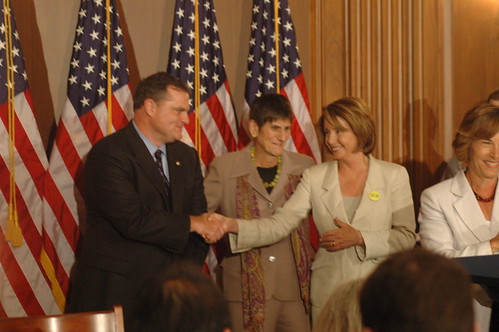
Terry Nathan, executive director of the Independent Book Publisher's Association, sent a letter to IBPA members regarding the Lead Test Law. Here is a portion of that letter:
Information about the Consumer Product Safety Inspection Act continues to roll in, and the outcome is anything but clear. One thing that does seem clear is that this Act applies only to books manufactured after February 10, 2009.
I encourage you to 1) contact your printer for input on this issue, and 2) contact your representatives in Washington, DC to voice your concerns. I am including a list of representatives below.
We have been reaching out to our colleagues in various key segments of the industry for information and are continuing to monitor this issue on a daily basis. We will keep you updated..
This is one of the reasons I encourage everyone who starts a small press to join IBPA. Not only do they provide resources and information, they do a lot of advocacy on our behalf.
He also provided links to articles with more information about the Consumer Products Safety Improvement Act (CPSIA), the official name of the Lead Test Law. Here are those articles:
From Bookselling This Week: (excerpt) CPSIA -- which was signed into law on August 14, 2008, in response to last year's recalls of products containing lead -- limits the amount of lead in children's products to 600 parts-per-million (ppm) as of February 10, and 300 ppm as of August 2009. In August 2011, the limit will drop to 100 ppm if it is considered technologically feasible for a given product or product category. The law requires manufacturers of children's products for children up to age 12, including books, to make accessible to retailers a Certificate of Conformity (COC) stating that their products have been tested by an independent third party and comply with lead limits stipulated in CPSIA.
From Publisher's Weekly: (excerpt) The children’s book industry continues to intensify its efforts to push for an exemption from the Consumer Products Safety Improvement Act. The Act, which goes into effect February 10, requires all products for children 12 and under—including books—to be tested for lead, as noted in Publishers Weekly’s recent detailed coverage of the CPSIA and its implications.
The Association of American Publishers is taking the lead in formal lobbying, but other groups are playing an increasing role. The Children’s Book Council, for example, is developing talking points and scripts that publishers can circulate to help employees petition their Senate and House representatives. “There’s been a real flurry of activity in the last couple of weeks,” says Robin Adelson, CBC’s executive director. “People are making phone calls and people are sending e-mails. They’re heeding the call to action.”
And from The Small Publisher's Association: (excerpt) The Consumer Product Safety Act of 2008 (CPSIA) requires items sold for children, manufactured after February 10, be tested and certified for lead levels by an independent lab.
A Consumer Product Safety Commission (CPSC) letter, dated December 23, 2008, affirmed children's books are included in the lead testing requirement.
Products in inventory (in storage and on bookstore shelves) do not need to be tested, but retailers can be fined if the products are found to have excessive levels of lead.
Testing and certification takes place at the book printer level. Publishers need to check with their printer if they have books in the printing process.
Click the above links for the full articles.
If you'd like to take a look at the law itself, click this link for the PDF.
Also, contact your Congressperson and ask them to take another look at the part of the law that affects children's books. Thank you Terry Nathan for this list of people and phone numbers:
1. Sen. Chuck Schumer, NY - -represents most publishers. 202-224-6542.
2. Sen. Diane Feinstein, who has been influential on the issue 202-224-3841.
3. Sen. John Rockefeller, who will soon oversee the committee of jurisdiction, 202-
224-6472.
4. Sen. Daniel Inouye, who will also oversee committee of jurisdiction 202-224-3934.
5. Cong. Henry Waxman, the new chair of the House Committee of jurisdiction 202-225-
3976.
6. Speaker Nancy Pelosi's office, 202-225-0100.
--
Tuesday, January 20, 2009
President Obama

I don't know what to write. I feel so overwhelmed with happiness, hope and excitement. My cynical, Gen X brain is having a difficult time believing that President Obama is actually PRESIDENT OBAMA.
When I was a baby, Martin Luther King Jr was still leading the fight for Civil Rights. I was a year old when he died. He has been one of my greatest heroes because he stood up for his beliefs and worked to create change in America. His example made a huge impression on me, regardless that I'm a white girl living in California. The fact that my daughter has African-American and Latina friends, that her cousins are half-Filipino and that she thinks judging people by the color of their skin is "silly," shows that Martin Luther King Jr's dream is coming true.
And today, we have absolute proof. He didn't die in vain.
Wednesday, January 14, 2009
Lead Testing of Children's Books
If you are a publisher of children's books, then you need to be aware of this. A law passed by Congress which was created to crack down on high lead levels in toys has now expanded to include children's books.
From the Publisher's Weekly article:
The Consumer Product Safety Improvement Act, enacted in August 2008 as a response to the high-profile 2007 recalls involving Chinese-made toys containing lead, covers not just playthings but all consumer products intended for use by children 12 and under. That includes books, audiobooks and sidelines, no matter where they are manufactured, even though most books have lead levels that are well below the Act’s most stringent safety standards. The industry is fighting to have most books exempted, but there may not be a resolution by the time the Act kicks in on February 10, so publishers and retailers are proceeding as if books will be included.
This ruling could be an economic disaster for already struggling publishers, as well as impact schools and stores as books are removed from shelves. Of course protecting children from exposure to lead is important, but this law creates more problems than it solves. It is a Congressional reaction, fueled by fear, that doesn't solve the real problem of toxic toys.
From the article:
The CPSIA dictates that each children’s book SKU, shipped to retailers, catalogues and e-commerce sites as of February 10, must have been tested by a third-party lab to ensure that lead levels are below 600 parts per million. (Acceptable levels drop to 300 ppm in August and 100 ppm in 2011.) Some books also must be tested for phthalates, an acid used to soften plastic. The importer or domestic manufacturer must provide a Certificate of Conformity (usually posted on the Internet), and the product must be labeled appropriately. Older products on shelf must fall within acceptable safety standards but do not need to be accompanied by a Certificate, according to recent comments by the Consumer Products Safety Commission.
The Small Publishers Association of North America (SPAN) has created an information page on their website. Click the link to learn more about the law, the labs sanctioned to test books, and what the publishing community is doing to try and change the law so the impact on publishers is not as detrimental.
Even if you don't publish children's books, please write your Congressperson to alert them to the problems inherent in the law. Children MUST be protected, but quickly created laws that are reactionary, rather than comprehensive, just create more, sometimes bigger, problems than the one the law was trying to solve.
From the Publisher's Weekly article:
The Consumer Product Safety Improvement Act, enacted in August 2008 as a response to the high-profile 2007 recalls involving Chinese-made toys containing lead, covers not just playthings but all consumer products intended for use by children 12 and under. That includes books, audiobooks and sidelines, no matter where they are manufactured, even though most books have lead levels that are well below the Act’s most stringent safety standards. The industry is fighting to have most books exempted, but there may not be a resolution by the time the Act kicks in on February 10, so publishers and retailers are proceeding as if books will be included.
This ruling could be an economic disaster for already struggling publishers, as well as impact schools and stores as books are removed from shelves. Of course protecting children from exposure to lead is important, but this law creates more problems than it solves. It is a Congressional reaction, fueled by fear, that doesn't solve the real problem of toxic toys.
From the article:
The CPSIA dictates that each children’s book SKU, shipped to retailers, catalogues and e-commerce sites as of February 10, must have been tested by a third-party lab to ensure that lead levels are below 600 parts per million. (Acceptable levels drop to 300 ppm in August and 100 ppm in 2011.) Some books also must be tested for phthalates, an acid used to soften plastic. The importer or domestic manufacturer must provide a Certificate of Conformity (usually posted on the Internet), and the product must be labeled appropriately. Older products on shelf must fall within acceptable safety standards but do not need to be accompanied by a Certificate, according to recent comments by the Consumer Products Safety Commission.
The Small Publishers Association of North America (SPAN) has created an information page on their website. Click the link to learn more about the law, the labs sanctioned to test books, and what the publishing community is doing to try and change the law so the impact on publishers is not as detrimental.
Even if you don't publish children's books, please write your Congressperson to alert them to the problems inherent in the law. Children MUST be protected, but quickly created laws that are reactionary, rather than comprehensive, just create more, sometimes bigger, problems than the one the law was trying to solve.
Monday, January 12, 2009
Resolutions and Procrastination
This is the time of year when most people in the US make New Year's resolution, making promises to ourselves that will improve our lives, promises like losing weight, eating right, earning more money, spending more time with our families, and accomplishing our creative goals. And usually we all start off full of energy and commitment and then by February fall off the resolution wagon. By March, we're beating ourselves up for not sticking to our resolutions and then by Summer we hate ourselves for not being able to comfortably wear a bathing suit.
I decided to skip resolutions this year and instead have only promised to be kind to myself. That's all. Just be kinder.
Which means I am not allowed to berate myself for not keeping up this blog as diligently as I should. Or for the fact the Business Book is still way behind schedule and it looks like it will be mid-February before we can launch it. Nor am I allowed to feel guilty that I STILL haven't gotten back to my Punk Rock contributors with their notes. Nope, not allowed to beat myself up for procrastination.
We've been taught that procrastination is a bad thing, but I'm starting to doubt that assumption. Of course, anything is bad if it stops you from achieving your dreams. Procrastination in the extreme is just as harmful as being in a bad relationship. But some procrastination is healthy. Not everything has to be done RIGHT NOW. In fact, trying to get everything done immediately, on time, and perfectly creates more stress than any task should. I think if we look at the tasks we keep putting off we can discover where our resistances are hidden.
Resistance: an opposing or retarding force (from the Merriam-Webster Dictionary). That's really what procrastination is. We procrastinate because we either don't really want something, don't feel we deserve it, or can't figure out how to get it.
I get overwhelmed very quickly because I take on too many tasks all at once and then I suddenly run out of steam. Instead of writing my blog, I start wandering around Facebook. I chat with friends about whether or not I should let my bangs grow out or not, and then get mad at myself when I run out of time to edit a Punk essay. When I start to procrastinate, I know I'm doing too much. My brain needs the break from constant activity, so I take a walk in the sun or play the Sims.
Rather than allowing those moments of procrastination induced inactivity to take over my life, I've started setting a time limit. If I'm that stressed out or brain-dead, I can have a cup of tea and watch an old movie. But as soon as the movie is over, I have to get back to work on a specific task. I make a list of all the things I need to accomplish, then organize them by Urgency (see earlier post on organizing). I start with the most urgent task, then take breaks when needed by doing one of the more physical tasks, like sweeping the floor or pulling weeds. After a while, I return to the urgent task, refreshed and ready to finish.
Procrastination is not the enemy, your resistances are. So please don't beat yourself up for not exercising or finishing your novel. Be kind to yourself. Tell yourself you DO deserve to be a writer, you DO deserve to eat well. If you're zoning out on MySpace all day, ask yourself "Why?" Are you lonely, tired, bored, or stressed? If you feel like you really need to surf MySpace, then set a timer. Give yourself one hour to surf the net, and then force yourself to do something else. Denying yourself a MySpace account completely is just setting yourself up for guilt and failure; eventually you'll fall off the wagon and spend three days checking out new bands.
And you can always bribe yourself. Chocolate works for me. If I write for two hours I can eat a piece of chocolate. Small bribes that provide immediate gratification can do wonders in motivating you away from Zappos. Remember how much a piece of candy can compel a child to clean their room?
I decided to skip resolutions this year and instead have only promised to be kind to myself. That's all. Just be kinder.
Which means I am not allowed to berate myself for not keeping up this blog as diligently as I should. Or for the fact the Business Book is still way behind schedule and it looks like it will be mid-February before we can launch it. Nor am I allowed to feel guilty that I STILL haven't gotten back to my Punk Rock contributors with their notes. Nope, not allowed to beat myself up for procrastination.
We've been taught that procrastination is a bad thing, but I'm starting to doubt that assumption. Of course, anything is bad if it stops you from achieving your dreams. Procrastination in the extreme is just as harmful as being in a bad relationship. But some procrastination is healthy. Not everything has to be done RIGHT NOW. In fact, trying to get everything done immediately, on time, and perfectly creates more stress than any task should. I think if we look at the tasks we keep putting off we can discover where our resistances are hidden.
Resistance: an opposing or retarding force (from the Merriam-Webster Dictionary). That's really what procrastination is. We procrastinate because we either don't really want something, don't feel we deserve it, or can't figure out how to get it.
I get overwhelmed very quickly because I take on too many tasks all at once and then I suddenly run out of steam. Instead of writing my blog, I start wandering around Facebook. I chat with friends about whether or not I should let my bangs grow out or not, and then get mad at myself when I run out of time to edit a Punk essay. When I start to procrastinate, I know I'm doing too much. My brain needs the break from constant activity, so I take a walk in the sun or play the Sims.
Rather than allowing those moments of procrastination induced inactivity to take over my life, I've started setting a time limit. If I'm that stressed out or brain-dead, I can have a cup of tea and watch an old movie. But as soon as the movie is over, I have to get back to work on a specific task. I make a list of all the things I need to accomplish, then organize them by Urgency (see earlier post on organizing). I start with the most urgent task, then take breaks when needed by doing one of the more physical tasks, like sweeping the floor or pulling weeds. After a while, I return to the urgent task, refreshed and ready to finish.
Procrastination is not the enemy, your resistances are. So please don't beat yourself up for not exercising or finishing your novel. Be kind to yourself. Tell yourself you DO deserve to be a writer, you DO deserve to eat well. If you're zoning out on MySpace all day, ask yourself "Why?" Are you lonely, tired, bored, or stressed? If you feel like you really need to surf MySpace, then set a timer. Give yourself one hour to surf the net, and then force yourself to do something else. Denying yourself a MySpace account completely is just setting yourself up for guilt and failure; eventually you'll fall off the wagon and spend three days checking out new bands.
And you can always bribe yourself. Chocolate works for me. If I write for two hours I can eat a piece of chocolate. Small bribes that provide immediate gratification can do wonders in motivating you away from Zappos. Remember how much a piece of candy can compel a child to clean their room?
Wednesday, January 07, 2009
Thank you Ron Asheton for your Amazing Music

Yesterday I learned that Ron Asheton, founding member of The Stooges, which in my humble opinion is one of the greatest Punk bands of all time, died at his home in Anne Arbor. He was 60.
From the AP article:
DETROIT (AP) — Ron Asheton, the guitarist for the Stooges whose raw sound helped inspire the first generation of punk musicians, has died. He was 60.
Asheton was found at his Ann Arbor home early Tuesday morning by police officers after they were called by an associate who had not heard from him in several days, said city police Sgt. Brad Hill.
There were no signs of foul play, and the death appeared to be of natural causes, Hill said.
Asheton was a founding member of the Stooges, the influential protopunk band formed in Ann Arbor in 1967, along with his brother, Scott.
Lead singer Iggy Pop called Asheton "my best friend" in a statement Tuesday, and the band expressed shock at his death.
"For all that knew him behind the facade of Mr. Cool & Quirky, he was a kind-hearted, genuine, warm person who always believed that people meant well even if they did not," the band said in a written statement. "As a musician Ron was The Guitar God, idol to follow and inspire others. That is how he will be remembered by people who had a great pleasure to work with him, learn from him and share good and bad times with him."
Asheton's powerful, distorted guitar on songs like "I Wanna Be Your Dog" and "T.V. Eye" was a hallmark of the group's sound. His "technically adept but also beautifully raw" style was heavily influenced by free jazz and created "beauty out of noise," said Brian Cogan, a punk-music historian at Molloy College on New York's Long Island.
Follow the above link to read the rest of the article.
Tonight, I will raise a toast to Ron Asheton while listening to TV Eye.
Monday, January 05, 2009
Profit and Loss Statements can be so... um... interesting?

(image from www.myownbusiness.org)
My daughter went back to school this morning and I did a little happy dance thinking about all the free time I now have to be creative and write and maybe sew the curtains and definitely plunge head first into the Punk Anthology and... do the books! Not make a book. DO THE BOOKS. 2008 can not be put to bed without first being tucked in with an official Profit and Loss Statement.
And what is a Profit and Loss Statement? In a nutshell, a profit and loss statement is the end of the year report of your business that shows how much you've earned (profit) and how much you spent (lost). This is what you need to show the IRS when you file your taxes, as well as show your city for you business license, your bank when you need a loan, or anyone else who needs proof that you really do have a business and didn't just put up a pretty sign that says so.
Organizing your profit and loss statement can be daunting, which is why I keep stressing that you should keep track of your earnings and receipts all year long and not just at the end of the year. If you do a mini Profit and Loss statement for every quarter, the time you spend going through receipts and finding old invoices will be cut in half.
I wish I could say I did that (can't take my own advice, now can I?). Quarter one and two were perfectly managed and organized, but quarter three and four were not. As soon as I started school, my records from July to December 2008 were tossed in a file called "receipts" and ignored. Luckily I didn't spend much during that time so there weren't many receipts to tally (nor did I earn very much, so the invoices were low. Not sure that's good, though).
After two hours of organizing receipts and tallying up my costs and earnings, I had my statements for both Quarter 3 and 4. Then I could tackle the entire year.
My expenses are broken into several categories:
-printing
-promotion
-shipping
-supplies
-licenses
-royalty payments
-training
-consultants
-miscellaneous (always have a misc section)
... just to name a few.
The IRS needs all these categories to provide you with the right deductions, plus it will help you organize your receipts better if you can link it to a specific area of your business. And breaking down expenses into different categories enables you to clearly see exactly where your money is going (I spent $22.00 on pens?)
There are numerous templates and tutorials on line to help you with your Profit and Loss statement, but I just created my own by using an Excel spreadsheet. Keep it simple, thorough and clear, and make sure you can back up your expenses with receipts. You can SAY you paid $1000 on printing, but if you get audited and don't have a receipt, you'll be in big trouble with the IRS.
I'm now waiting for one more form from my Wholesaler to verify how many books we sold in December before I can put 2008 to bed. Overall, Medusa's Muse lost money. A lot of money. Far more money than I should have spent. But I really wanted to go to LA and see BookExpo, so I went over budget. Oh well, sometimes the experience is worth the interest on the credit card. But 2009 is going to have to be a much leaner year to make up for this one. I have a feeling a lot of people will be doing the same thing.
Saturday, January 03, 2009
The MacBook Air has arrived!

Right now, I am updating this blog using my brand new MacBook Air, a Christmas gift from my hubby. It arrived yesterday. What's a Macbook Air you ask? Click the link to see how ultra thin, ultra fast, and ultra sexy it is.
I swear, it is so light sitting here on my lap if I fart I might blow it right off and onto the floor. It is lighter than the book "Goodnight Moon." It's like typing on a couple of loaded down paper plates. But the screen is large, the resolution excellent, and the keyboard the right size for typing. Plus, this baby zips! I can zoom around the internet like I'm wearing a jet pack. I click a link and SHAZAM, I'm there!
This is a big improvement over my old laptop, an orange clam shell bought in 1998. Over ten years it has served me well, providing me the tools I needed to write two novels, several plays, and start a publishing company. But in the last two years I've felt the clunk of old software. Surfing the net became a chore, a real problem since Medusa's Muse is primarily an internet based business. Eventually, my orange clam shell became a typewriter and I used the PC in the living room for my work.
Although the clam shell is now replaced by a new, fresh, and superior tool, I am attached to that old orange oddity. Rick wanted to donate it or strip it down for parts but I said I wasn't ready. It's like sending an old horse out to pasture. You know it's time, but you're going to miss the old gal.
I'm excited to get back to work with my new tool. The first book I'll be editing on this lap book is the Punk Rock Anthology, Punk Rock Saved My Ass, debuting this summer.
After many weeks of holiday festivities and family time, I'm ready to get to work.
Subscribe to:
Posts (Atom)