A few weeks ago a friend asked me where my Muse was, wondering why she hadn't made an appearance on my blog in a while. I assured her that my Muse wasn't gone, she was just bothering someone else: Rick.
Rick is my life-partner and my in-house book designer. When I said I wanted to start a press and handed him Pete Masterson's book, he said okay (after a few days of questioning glances when I'm sure he thought I was nuts). Since then, he's been my greatest supporter, throwing himself whole-heartedly into book design and general technical management. When I needed a website, he created one. When I needed a logo, he hunted for the best artist and made it happen. And when I needed a book cover design, he hauled out his camera, brushed off his graphic design courses, and made a cover. For Laura's book, he stood out in the middle of the street, taking several photos of the asphalt, braving cars and the occasional bicycle to get that perfect shot.
My Muse loves him.
For the next Medusa's Muse book, What You Need to Know to Be a Pro: The Business Start-Up Guide for Publishers, he is drawing sixteen images, exemplifying each title's subject. I like the idea, but I don't really think we need them. However, he is determined, spending every free moment between his job, his other computer support clients, and being a dad, hand drawing cartoons. There he is at midnight, sitting at the kitchen table, black pen to paper, my Muse right beside him.
"You should leave him alone," I tell her.
She looks up at me and smiles. "Why?"
"Because you're being cruel. He has enough to worry about without you driving him to the point of creative exhaustion."
"He can take it. He's tough." She strokes his arm with one taloned finger. "And don't you like what he's coming up with?"
"Yes, I do. But I don't like the stress."
She rolls her eyes and sighs. "Stress. Every artist needs a little stress, otherwise nothing gets accomplished. What is an artist without a deadline?"
"A happier artist."
"No. A couch-potato. Without the feeling that they MUST accomplish their task NOW, then the task is never completed. You of all people should know that."
Rick looks up at me and says, "I'm just about done with this part. Next I'm going to add color."
"Color?" I walk to the table and stare at him. "I think the designs you have now are great. You don't need to add color."
"I think they'll be stronger with color. And I want to see how the printer handles the images in color."
I bite my lip. "You know, the book has to be done before the first."
"Yeah. I know." He waves me off and gets back to work.
I glare at my Muse.
"What?" she says. "It wasn't my idea."
"Sure." I fold my arms and watch the two of them again; Rick huddled over his drawing and my Muse watching his every move, her snakes leaning closer to catch a scent of him. I sigh, say, "Don't stay up too late, okay?" and then leave the room.
All I know is that when Rick latches on to an artistic vision, there's no pulling him back. He wants to create the best or there's no reason to create anything. We are so alike, he and I. It's no wonder my Muse is enamored of him right now.
Will we make THIS deadline? I honestly have no idea.
Saturday, January 24, 2009


Thursday, January 22, 2009
More Information On The New Lead Test Law.
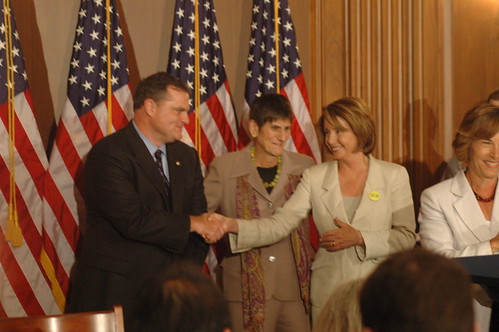
Terry Nathan, executive director of the Independent Book Publisher's Association, sent a letter to IBPA members regarding the Lead Test Law. Here is a portion of that letter:
Information about the Consumer Product Safety Inspection Act continues to roll in, and the outcome is anything but clear. One thing that does seem clear is that this Act applies only to books manufactured after February 10, 2009.
I encourage you to 1) contact your printer for input on this issue, and 2) contact your representatives in Washington, DC to voice your concerns. I am including a list of representatives below.
We have been reaching out to our colleagues in various key segments of the industry for information and are continuing to monitor this issue on a daily basis. We will keep you updated..
This is one of the reasons I encourage everyone who starts a small press to join IBPA. Not only do they provide resources and information, they do a lot of advocacy on our behalf.
He also provided links to articles with more information about the Consumer Products Safety Improvement Act (CPSIA), the official name of the Lead Test Law. Here are those articles:
From Bookselling This Week: (excerpt) CPSIA -- which was signed into law on August 14, 2008, in response to last year's recalls of products containing lead -- limits the amount of lead in children's products to 600 parts-per-million (ppm) as of February 10, and 300 ppm as of August 2009. In August 2011, the limit will drop to 100 ppm if it is considered technologically feasible for a given product or product category. The law requires manufacturers of children's products for children up to age 12, including books, to make accessible to retailers a Certificate of Conformity (COC) stating that their products have been tested by an independent third party and comply with lead limits stipulated in CPSIA.
From Publisher's Weekly: (excerpt) The children’s book industry continues to intensify its efforts to push for an exemption from the Consumer Products Safety Improvement Act. The Act, which goes into effect February 10, requires all products for children 12 and under—including books—to be tested for lead, as noted in Publishers Weekly’s recent detailed coverage of the CPSIA and its implications.
The Association of American Publishers is taking the lead in formal lobbying, but other groups are playing an increasing role. The Children’s Book Council, for example, is developing talking points and scripts that publishers can circulate to help employees petition their Senate and House representatives. “There’s been a real flurry of activity in the last couple of weeks,” says Robin Adelson, CBC’s executive director. “People are making phone calls and people are sending e-mails. They’re heeding the call to action.”
And from The Small Publisher's Association: (excerpt) The Consumer Product Safety Act of 2008 (CPSIA) requires items sold for children, manufactured after February 10, be tested and certified for lead levels by an independent lab.
A Consumer Product Safety Commission (CPSC) letter, dated December 23, 2008, affirmed children's books are included in the lead testing requirement.
Products in inventory (in storage and on bookstore shelves) do not need to be tested, but retailers can be fined if the products are found to have excessive levels of lead.
Testing and certification takes place at the book printer level. Publishers need to check with their printer if they have books in the printing process.
Click the above links for the full articles.
If you'd like to take a look at the law itself, click this link for the PDF.
Also, contact your Congressperson and ask them to take another look at the part of the law that affects children's books. Thank you Terry Nathan for this list of people and phone numbers:
1. Sen. Chuck Schumer, NY - -represents most publishers. 202-224-6542.
2. Sen. Diane Feinstein, who has been influential on the issue 202-224-3841.
3. Sen. John Rockefeller, who will soon oversee the committee of jurisdiction, 202-
224-6472.
4. Sen. Daniel Inouye, who will also oversee committee of jurisdiction 202-224-3934.
5. Cong. Henry Waxman, the new chair of the House Committee of jurisdiction 202-225-
3976.
6. Speaker Nancy Pelosi's office, 202-225-0100.
--
Tuesday, January 20, 2009
President Obama

I don't know what to write. I feel so overwhelmed with happiness, hope and excitement. My cynical, Gen X brain is having a difficult time believing that President Obama is actually PRESIDENT OBAMA.
When I was a baby, Martin Luther King Jr was still leading the fight for Civil Rights. I was a year old when he died. He has been one of my greatest heroes because he stood up for his beliefs and worked to create change in America. His example made a huge impression on me, regardless that I'm a white girl living in California. The fact that my daughter has African-American and Latina friends, that her cousins are half-Filipino and that she thinks judging people by the color of their skin is "silly," shows that Martin Luther King Jr's dream is coming true.
And today, we have absolute proof. He didn't die in vain.
Wednesday, January 14, 2009
Lead Testing of Children's Books
If you are a publisher of children's books, then you need to be aware of this. A law passed by Congress which was created to crack down on high lead levels in toys has now expanded to include children's books.
From the Publisher's Weekly article:
The Consumer Product Safety Improvement Act, enacted in August 2008 as a response to the high-profile 2007 recalls involving Chinese-made toys containing lead, covers not just playthings but all consumer products intended for use by children 12 and under. That includes books, audiobooks and sidelines, no matter where they are manufactured, even though most books have lead levels that are well below the Act’s most stringent safety standards. The industry is fighting to have most books exempted, but there may not be a resolution by the time the Act kicks in on February 10, so publishers and retailers are proceeding as if books will be included.
This ruling could be an economic disaster for already struggling publishers, as well as impact schools and stores as books are removed from shelves. Of course protecting children from exposure to lead is important, but this law creates more problems than it solves. It is a Congressional reaction, fueled by fear, that doesn't solve the real problem of toxic toys.
From the article:
The CPSIA dictates that each children’s book SKU, shipped to retailers, catalogues and e-commerce sites as of February 10, must have been tested by a third-party lab to ensure that lead levels are below 600 parts per million. (Acceptable levels drop to 300 ppm in August and 100 ppm in 2011.) Some books also must be tested for phthalates, an acid used to soften plastic. The importer or domestic manufacturer must provide a Certificate of Conformity (usually posted on the Internet), and the product must be labeled appropriately. Older products on shelf must fall within acceptable safety standards but do not need to be accompanied by a Certificate, according to recent comments by the Consumer Products Safety Commission.
The Small Publishers Association of North America (SPAN) has created an information page on their website. Click the link to learn more about the law, the labs sanctioned to test books, and what the publishing community is doing to try and change the law so the impact on publishers is not as detrimental.
Even if you don't publish children's books, please write your Congressperson to alert them to the problems inherent in the law. Children MUST be protected, but quickly created laws that are reactionary, rather than comprehensive, just create more, sometimes bigger, problems than the one the law was trying to solve.
From the Publisher's Weekly article:
The Consumer Product Safety Improvement Act, enacted in August 2008 as a response to the high-profile 2007 recalls involving Chinese-made toys containing lead, covers not just playthings but all consumer products intended for use by children 12 and under. That includes books, audiobooks and sidelines, no matter where they are manufactured, even though most books have lead levels that are well below the Act’s most stringent safety standards. The industry is fighting to have most books exempted, but there may not be a resolution by the time the Act kicks in on February 10, so publishers and retailers are proceeding as if books will be included.
This ruling could be an economic disaster for already struggling publishers, as well as impact schools and stores as books are removed from shelves. Of course protecting children from exposure to lead is important, but this law creates more problems than it solves. It is a Congressional reaction, fueled by fear, that doesn't solve the real problem of toxic toys.
From the article:
The CPSIA dictates that each children’s book SKU, shipped to retailers, catalogues and e-commerce sites as of February 10, must have been tested by a third-party lab to ensure that lead levels are below 600 parts per million. (Acceptable levels drop to 300 ppm in August and 100 ppm in 2011.) Some books also must be tested for phthalates, an acid used to soften plastic. The importer or domestic manufacturer must provide a Certificate of Conformity (usually posted on the Internet), and the product must be labeled appropriately. Older products on shelf must fall within acceptable safety standards but do not need to be accompanied by a Certificate, according to recent comments by the Consumer Products Safety Commission.
The Small Publishers Association of North America (SPAN) has created an information page on their website. Click the link to learn more about the law, the labs sanctioned to test books, and what the publishing community is doing to try and change the law so the impact on publishers is not as detrimental.
Even if you don't publish children's books, please write your Congressperson to alert them to the problems inherent in the law. Children MUST be protected, but quickly created laws that are reactionary, rather than comprehensive, just create more, sometimes bigger, problems than the one the law was trying to solve.
Monday, January 12, 2009
Resolutions and Procrastination
This is the time of year when most people in the US make New Year's resolution, making promises to ourselves that will improve our lives, promises like losing weight, eating right, earning more money, spending more time with our families, and accomplishing our creative goals. And usually we all start off full of energy and commitment and then by February fall off the resolution wagon. By March, we're beating ourselves up for not sticking to our resolutions and then by Summer we hate ourselves for not being able to comfortably wear a bathing suit.
I decided to skip resolutions this year and instead have only promised to be kind to myself. That's all. Just be kinder.
Which means I am not allowed to berate myself for not keeping up this blog as diligently as I should. Or for the fact the Business Book is still way behind schedule and it looks like it will be mid-February before we can launch it. Nor am I allowed to feel guilty that I STILL haven't gotten back to my Punk Rock contributors with their notes. Nope, not allowed to beat myself up for procrastination.
We've been taught that procrastination is a bad thing, but I'm starting to doubt that assumption. Of course, anything is bad if it stops you from achieving your dreams. Procrastination in the extreme is just as harmful as being in a bad relationship. But some procrastination is healthy. Not everything has to be done RIGHT NOW. In fact, trying to get everything done immediately, on time, and perfectly creates more stress than any task should. I think if we look at the tasks we keep putting off we can discover where our resistances are hidden.
Resistance: an opposing or retarding force (from the Merriam-Webster Dictionary). That's really what procrastination is. We procrastinate because we either don't really want something, don't feel we deserve it, or can't figure out how to get it.
I get overwhelmed very quickly because I take on too many tasks all at once and then I suddenly run out of steam. Instead of writing my blog, I start wandering around Facebook. I chat with friends about whether or not I should let my bangs grow out or not, and then get mad at myself when I run out of time to edit a Punk essay. When I start to procrastinate, I know I'm doing too much. My brain needs the break from constant activity, so I take a walk in the sun or play the Sims.
Rather than allowing those moments of procrastination induced inactivity to take over my life, I've started setting a time limit. If I'm that stressed out or brain-dead, I can have a cup of tea and watch an old movie. But as soon as the movie is over, I have to get back to work on a specific task. I make a list of all the things I need to accomplish, then organize them by Urgency (see earlier post on organizing). I start with the most urgent task, then take breaks when needed by doing one of the more physical tasks, like sweeping the floor or pulling weeds. After a while, I return to the urgent task, refreshed and ready to finish.
Procrastination is not the enemy, your resistances are. So please don't beat yourself up for not exercising or finishing your novel. Be kind to yourself. Tell yourself you DO deserve to be a writer, you DO deserve to eat well. If you're zoning out on MySpace all day, ask yourself "Why?" Are you lonely, tired, bored, or stressed? If you feel like you really need to surf MySpace, then set a timer. Give yourself one hour to surf the net, and then force yourself to do something else. Denying yourself a MySpace account completely is just setting yourself up for guilt and failure; eventually you'll fall off the wagon and spend three days checking out new bands.
And you can always bribe yourself. Chocolate works for me. If I write for two hours I can eat a piece of chocolate. Small bribes that provide immediate gratification can do wonders in motivating you away from Zappos. Remember how much a piece of candy can compel a child to clean their room?
I decided to skip resolutions this year and instead have only promised to be kind to myself. That's all. Just be kinder.
Which means I am not allowed to berate myself for not keeping up this blog as diligently as I should. Or for the fact the Business Book is still way behind schedule and it looks like it will be mid-February before we can launch it. Nor am I allowed to feel guilty that I STILL haven't gotten back to my Punk Rock contributors with their notes. Nope, not allowed to beat myself up for procrastination.
We've been taught that procrastination is a bad thing, but I'm starting to doubt that assumption. Of course, anything is bad if it stops you from achieving your dreams. Procrastination in the extreme is just as harmful as being in a bad relationship. But some procrastination is healthy. Not everything has to be done RIGHT NOW. In fact, trying to get everything done immediately, on time, and perfectly creates more stress than any task should. I think if we look at the tasks we keep putting off we can discover where our resistances are hidden.
Resistance: an opposing or retarding force (from the Merriam-Webster Dictionary). That's really what procrastination is. We procrastinate because we either don't really want something, don't feel we deserve it, or can't figure out how to get it.
I get overwhelmed very quickly because I take on too many tasks all at once and then I suddenly run out of steam. Instead of writing my blog, I start wandering around Facebook. I chat with friends about whether or not I should let my bangs grow out or not, and then get mad at myself when I run out of time to edit a Punk essay. When I start to procrastinate, I know I'm doing too much. My brain needs the break from constant activity, so I take a walk in the sun or play the Sims.
Rather than allowing those moments of procrastination induced inactivity to take over my life, I've started setting a time limit. If I'm that stressed out or brain-dead, I can have a cup of tea and watch an old movie. But as soon as the movie is over, I have to get back to work on a specific task. I make a list of all the things I need to accomplish, then organize them by Urgency (see earlier post on organizing). I start with the most urgent task, then take breaks when needed by doing one of the more physical tasks, like sweeping the floor or pulling weeds. After a while, I return to the urgent task, refreshed and ready to finish.
Procrastination is not the enemy, your resistances are. So please don't beat yourself up for not exercising or finishing your novel. Be kind to yourself. Tell yourself you DO deserve to be a writer, you DO deserve to eat well. If you're zoning out on MySpace all day, ask yourself "Why?" Are you lonely, tired, bored, or stressed? If you feel like you really need to surf MySpace, then set a timer. Give yourself one hour to surf the net, and then force yourself to do something else. Denying yourself a MySpace account completely is just setting yourself up for guilt and failure; eventually you'll fall off the wagon and spend three days checking out new bands.
And you can always bribe yourself. Chocolate works for me. If I write for two hours I can eat a piece of chocolate. Small bribes that provide immediate gratification can do wonders in motivating you away from Zappos. Remember how much a piece of candy can compel a child to clean their room?
Wednesday, January 07, 2009
Thank you Ron Asheton for your Amazing Music

Yesterday I learned that Ron Asheton, founding member of The Stooges, which in my humble opinion is one of the greatest Punk bands of all time, died at his home in Anne Arbor. He was 60.
From the AP article:
DETROIT (AP) — Ron Asheton, the guitarist for the Stooges whose raw sound helped inspire the first generation of punk musicians, has died. He was 60.
Asheton was found at his Ann Arbor home early Tuesday morning by police officers after they were called by an associate who had not heard from him in several days, said city police Sgt. Brad Hill.
There were no signs of foul play, and the death appeared to be of natural causes, Hill said.
Asheton was a founding member of the Stooges, the influential protopunk band formed in Ann Arbor in 1967, along with his brother, Scott.
Lead singer Iggy Pop called Asheton "my best friend" in a statement Tuesday, and the band expressed shock at his death.
"For all that knew him behind the facade of Mr. Cool & Quirky, he was a kind-hearted, genuine, warm person who always believed that people meant well even if they did not," the band said in a written statement. "As a musician Ron was The Guitar God, idol to follow and inspire others. That is how he will be remembered by people who had a great pleasure to work with him, learn from him and share good and bad times with him."
Asheton's powerful, distorted guitar on songs like "I Wanna Be Your Dog" and "T.V. Eye" was a hallmark of the group's sound. His "technically adept but also beautifully raw" style was heavily influenced by free jazz and created "beauty out of noise," said Brian Cogan, a punk-music historian at Molloy College on New York's Long Island.
Follow the above link to read the rest of the article.
Tonight, I will raise a toast to Ron Asheton while listening to TV Eye.
Monday, January 05, 2009
Profit and Loss Statements can be so... um... interesting?

(image from www.myownbusiness.org)
My daughter went back to school this morning and I did a little happy dance thinking about all the free time I now have to be creative and write and maybe sew the curtains and definitely plunge head first into the Punk Anthology and... do the books! Not make a book. DO THE BOOKS. 2008 can not be put to bed without first being tucked in with an official Profit and Loss Statement.
And what is a Profit and Loss Statement? In a nutshell, a profit and loss statement is the end of the year report of your business that shows how much you've earned (profit) and how much you spent (lost). This is what you need to show the IRS when you file your taxes, as well as show your city for you business license, your bank when you need a loan, or anyone else who needs proof that you really do have a business and didn't just put up a pretty sign that says so.
Organizing your profit and loss statement can be daunting, which is why I keep stressing that you should keep track of your earnings and receipts all year long and not just at the end of the year. If you do a mini Profit and Loss statement for every quarter, the time you spend going through receipts and finding old invoices will be cut in half.
I wish I could say I did that (can't take my own advice, now can I?). Quarter one and two were perfectly managed and organized, but quarter three and four were not. As soon as I started school, my records from July to December 2008 were tossed in a file called "receipts" and ignored. Luckily I didn't spend much during that time so there weren't many receipts to tally (nor did I earn very much, so the invoices were low. Not sure that's good, though).
After two hours of organizing receipts and tallying up my costs and earnings, I had my statements for both Quarter 3 and 4. Then I could tackle the entire year.
My expenses are broken into several categories:
-printing
-promotion
-shipping
-supplies
-licenses
-royalty payments
-training
-consultants
-miscellaneous (always have a misc section)
... just to name a few.
The IRS needs all these categories to provide you with the right deductions, plus it will help you organize your receipts better if you can link it to a specific area of your business. And breaking down expenses into different categories enables you to clearly see exactly where your money is going (I spent $22.00 on pens?)
There are numerous templates and tutorials on line to help you with your Profit and Loss statement, but I just created my own by using an Excel spreadsheet. Keep it simple, thorough and clear, and make sure you can back up your expenses with receipts. You can SAY you paid $1000 on printing, but if you get audited and don't have a receipt, you'll be in big trouble with the IRS.
I'm now waiting for one more form from my Wholesaler to verify how many books we sold in December before I can put 2008 to bed. Overall, Medusa's Muse lost money. A lot of money. Far more money than I should have spent. But I really wanted to go to LA and see BookExpo, so I went over budget. Oh well, sometimes the experience is worth the interest on the credit card. But 2009 is going to have to be a much leaner year to make up for this one. I have a feeling a lot of people will be doing the same thing.
Saturday, January 03, 2009
The MacBook Air has arrived!

Right now, I am updating this blog using my brand new MacBook Air, a Christmas gift from my hubby. It arrived yesterday. What's a Macbook Air you ask? Click the link to see how ultra thin, ultra fast, and ultra sexy it is.
I swear, it is so light sitting here on my lap if I fart I might blow it right off and onto the floor. It is lighter than the book "Goodnight Moon." It's like typing on a couple of loaded down paper plates. But the screen is large, the resolution excellent, and the keyboard the right size for typing. Plus, this baby zips! I can zoom around the internet like I'm wearing a jet pack. I click a link and SHAZAM, I'm there!
This is a big improvement over my old laptop, an orange clam shell bought in 1998. Over ten years it has served me well, providing me the tools I needed to write two novels, several plays, and start a publishing company. But in the last two years I've felt the clunk of old software. Surfing the net became a chore, a real problem since Medusa's Muse is primarily an internet based business. Eventually, my orange clam shell became a typewriter and I used the PC in the living room for my work.
Although the clam shell is now replaced by a new, fresh, and superior tool, I am attached to that old orange oddity. Rick wanted to donate it or strip it down for parts but I said I wasn't ready. It's like sending an old horse out to pasture. You know it's time, but you're going to miss the old gal.
I'm excited to get back to work with my new tool. The first book I'll be editing on this lap book is the Punk Rock Anthology, Punk Rock Saved My Ass, debuting this summer.
After many weeks of holiday festivities and family time, I'm ready to get to work.
Wednesday, December 31, 2008
Happy New Year! The Future Looks Bright.

In the New Year, may your right hand always be stretched out in friendship, but never in want.
~Traditional Irish toast
We three Medusa's Muses wish you all the happiest and most creative of New Years. May 2009 bring you joy, or at least may it give you time to write down that story trapped in your head.
Monday, December 29, 2008
A View of a Book Design Meeting
Ever wonder what happens during a production meeting between the publisher/editor at a small press and the lead designer of a book? Here's a glimpse of the meeting I had yesterday with Rick Wismar, Medusa's Muse designer.
"Want cheese on your Wopper?" Rick asked before heading to the counter.
I shook my head and set up the laptop while he got our food. This is about as fancy as a working lunch gets for a micro press; a couple of burgers at "Burger King".
While eating our burgers and fries, we discussed the pros and cons of including images in What You Need to Know to Be a Pro. Now that I am no longer the author/editor on this project, I have to focus on being the publisher, which means my primary job is to create an excellent product (book) while keeping an eye on the bottom line. Some of the questions I have to ask are:
-Does including images increase the overall worth of the book to a reader?
-Will images make the book more appealing, and thus increase sales? Or is it just dressing up a book that already has enough intrinsic value?
-If I want the price of the book to be $10.00, will that price support the book's production? How much more can I spend on design and still gain enough profit on a $10.00 book?
-How fancy can I afford to make the images?
After some discussion, we decided to include simple cartoons at the beginning of each chapter to emphasise the subject of that chapter, while also adding more humor to the book. The book was written with the hope that people would be entertained and inspired as well as informed while reading about how to start a small press. So Rick and I pulled out the table of contents and began doodling ideas for each heading. What would be a good image for "Working with Authors?" Or "Bank Accounts and Licenses?" In the introduction, I compare the book to a travel guide for would-be adventurers who are planning their first trip overseas. Should we carry that metaphor throughout in the images, or let each chapter's image stand alone?
Rick sketched out many ideas and we laughed over the silly ones. It's important to let your imagination lead the way while coming up with ideas rather than only focus on what will be "pertinent." After two hours of tossing around ideas, he had enough to start narrowing down the specific drawings.
Then we asked, "Who can draw them." Rick would rather turn over the actual illustrations to another artist, but I'm concerned about the deadline. Who do we know who can draw several sketches in just a week? I don't want to keep pushing this book's deadline ahead because that pushes the Punk Rock Anthology's deadline even further. This is another place I need to be the publisher, not the author.
-Can we afford to hire an illustrator?
-Should Rick draw the images himself?
-How long can we wait before the deadline will have to be extended again, and can we afford to keep extending that deadline?
I insisted on keeping the mid-January deadline and Rick said he'd do his best. Luckily, we already have a mock-up of the cover and the interior will be simple since we have a template from Traveling Blind. But the images could really slow things down. I'll have to keep wearing my publisher's hat to keep us all on target.
I'm pleased with our progress yesterday and excited about the book again. For a while, I was so sick of What You Need to Know to Be a Pro I didn't want to think about it. After working on a manuscript for a year, you can get pretty tired of the words on the page, even when it's your own book. But Rick's ideas make the book feel fresh again and brings it one step closer to being real.
Besides, I wrote it! I should celebrate! I'd better start planning a party.
"Want cheese on your Wopper?" Rick asked before heading to the counter.
I shook my head and set up the laptop while he got our food. This is about as fancy as a working lunch gets for a micro press; a couple of burgers at "Burger King".
While eating our burgers and fries, we discussed the pros and cons of including images in What You Need to Know to Be a Pro. Now that I am no longer the author/editor on this project, I have to focus on being the publisher, which means my primary job is to create an excellent product (book) while keeping an eye on the bottom line. Some of the questions I have to ask are:
-Does including images increase the overall worth of the book to a reader?
-Will images make the book more appealing, and thus increase sales? Or is it just dressing up a book that already has enough intrinsic value?
-If I want the price of the book to be $10.00, will that price support the book's production? How much more can I spend on design and still gain enough profit on a $10.00 book?
-How fancy can I afford to make the images?
After some discussion, we decided to include simple cartoons at the beginning of each chapter to emphasise the subject of that chapter, while also adding more humor to the book. The book was written with the hope that people would be entertained and inspired as well as informed while reading about how to start a small press. So Rick and I pulled out the table of contents and began doodling ideas for each heading. What would be a good image for "Working with Authors?" Or "Bank Accounts and Licenses?" In the introduction, I compare the book to a travel guide for would-be adventurers who are planning their first trip overseas. Should we carry that metaphor throughout in the images, or let each chapter's image stand alone?
Rick sketched out many ideas and we laughed over the silly ones. It's important to let your imagination lead the way while coming up with ideas rather than only focus on what will be "pertinent." After two hours of tossing around ideas, he had enough to start narrowing down the specific drawings.
Then we asked, "Who can draw them." Rick would rather turn over the actual illustrations to another artist, but I'm concerned about the deadline. Who do we know who can draw several sketches in just a week? I don't want to keep pushing this book's deadline ahead because that pushes the Punk Rock Anthology's deadline even further. This is another place I need to be the publisher, not the author.
-Can we afford to hire an illustrator?
-Should Rick draw the images himself?
-How long can we wait before the deadline will have to be extended again, and can we afford to keep extending that deadline?
I insisted on keeping the mid-January deadline and Rick said he'd do his best. Luckily, we already have a mock-up of the cover and the interior will be simple since we have a template from Traveling Blind. But the images could really slow things down. I'll have to keep wearing my publisher's hat to keep us all on target.
I'm pleased with our progress yesterday and excited about the book again. For a while, I was so sick of What You Need to Know to Be a Pro I didn't want to think about it. After working on a manuscript for a year, you can get pretty tired of the words on the page, even when it's your own book. But Rick's ideas make the book feel fresh again and brings it one step closer to being real.
Besides, I wrote it! I should celebrate! I'd better start planning a party.
Wednesday, December 24, 2008
Happy Winter all you crazy Artists!
It's Christmas Eve and I'm thinking about the world and all its trouble. So much fear, anger, outrage and injustice. From corporate CEO's stealing money from old ladies to cholera decimating Zimbabwe. It's enough to make you want to hide under the bed, or find a bunch of rocks and start throwing them at banks.
But despite all the trouble, I feel a spirit of hope. People everywhere are shaking off the helplessness and asking, what can I do? How can I help? Now is the time for all the crazy artists to drop their ennui and show people how to be creative.
Creativity is the fire that keeps us warm when we haven't seen the sun in weeks. It is the drive that urges us on when we swear we can't take one more step. As soon as we've lost all hope, the creative fire can inspire us to keep trying. It's thinking outside the box to solve problems and deal with chaos.
I'm not talking about the Michelangelo's of the world, although they are amazing. I'm talking about the knitters, woodworkers, cooks, teachers, lawyers, doctors, and plumbers of the world. Even Grandma Smith and her needlepoint bag contribute to the collective creative fire. Every time you look at something old in a new way, you are exercising your creativity, flexing your artistic muscles, and increasing your imagination. These are the tools you need when everything around you feels like it's collapsing.
On this Christmas and this week of Hanukkah, keep the warmth of good wishes, kindness, and beauty in your heart. Store it up for the long year ahead. And the next time you feel like hiding under the bed, remember how much possibility there still is in the world. You can see it in Uncle Jo's drift-wood mobile, or when Martha rebuilt her car's engine. These simple acts of imagination, knowledge, and creativity are what gave the human species fire, and that saved our asses during the Ice Age.
We are intrepid. We carry on.
Happy Winter.
But despite all the trouble, I feel a spirit of hope. People everywhere are shaking off the helplessness and asking, what can I do? How can I help? Now is the time for all the crazy artists to drop their ennui and show people how to be creative.
Creativity is the fire that keeps us warm when we haven't seen the sun in weeks. It is the drive that urges us on when we swear we can't take one more step. As soon as we've lost all hope, the creative fire can inspire us to keep trying. It's thinking outside the box to solve problems and deal with chaos.
I'm not talking about the Michelangelo's of the world, although they are amazing. I'm talking about the knitters, woodworkers, cooks, teachers, lawyers, doctors, and plumbers of the world. Even Grandma Smith and her needlepoint bag contribute to the collective creative fire. Every time you look at something old in a new way, you are exercising your creativity, flexing your artistic muscles, and increasing your imagination. These are the tools you need when everything around you feels like it's collapsing.
On this Christmas and this week of Hanukkah, keep the warmth of good wishes, kindness, and beauty in your heart. Store it up for the long year ahead. And the next time you feel like hiding under the bed, remember how much possibility there still is in the world. You can see it in Uncle Jo's drift-wood mobile, or when Martha rebuilt her car's engine. These simple acts of imagination, knowledge, and creativity are what gave the human species fire, and that saved our asses during the Ice Age.
We are intrepid. We carry on.
Happy Winter.
Monday, December 22, 2008
A Gift from Joan Stewart, The Publicity Hound

Joan Stewart, marketing and PR expert, has a website packed with information, as well as a newsletter, called The Publicity Hound. I urge anyone needing information about marketing their work to check out her site and sign up for the newsletter. Whether you're a writer, publisher, visual artist, or what have you, you'll find great advice and expert tips. Plus,a bit of Joan's expert advice has been included in the next Medusa's Muse book, What You Need to Know to Be a Pro: The Start-Up Business Book for Publishers (written by the one and only me, Terena Scott).
Right now, Joan is offering a free download of her top advice for 2008. Follow this link to check it out and download a copy for yourself.
Here's what you'll find in her ebook (from the website):
A fast, inexpensive way to catch the attention of journalists in your community.
A clever way to get onto the morning TV talk shows...most people who are pitching aren't doing this.
A place where you can connect daily with journalists who are looking for sources. And it won't cost you a penny.
What to do when you're tempted to strangle a reporter for wasting your time interviewing you, and then leaving your name out of the story.
A news story that appears several times a year in almost every community and is PERFECT for piggybacking onto.
9 ways to use video to pull more traffic to your website, sell more products, generate publicity, and build word-of-mouth publicity about your product, service, cause or issue.
11 ways to use a paid or unpaid assistant to help with publicity-related tasks.
How to make your local Chamber of Commerce one of your biggest promoters.
A free tool that tells you whether your press release gets a passing grade or a big, fat F.
How to use a popular social networking site to snoop on your competitors legally and ethically
What writers can learn from a beloved dog's obituary.
How to claim the Number 1 spot on Google.
A publicity mistake that most companies make, and it kills their chances of ever getting covered
I've downloaded my copy. Go get yours!
Thursday, December 18, 2008
Beware the Danger of Writer's Blindness
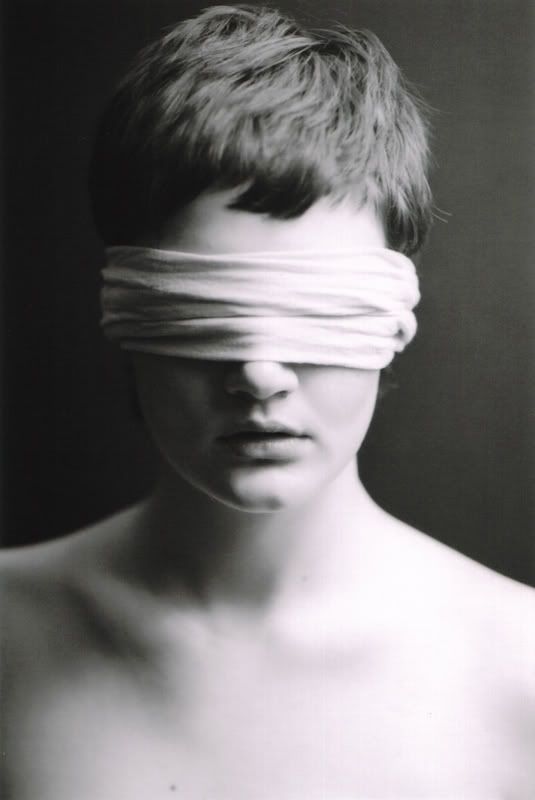
Writer's Blindness is a dangerous threat to your credibility as a writer, as well as to your created work. Don't take it lightly. Protect yourself from this scourge by hiring a good editor. Don't believe me? Read on for my own heart wrenching tale of writer's blindness.
I am a book publisher and professional editor, a very good editor I've been told. I am also a writer, having written several short stories, two novel length manuscripts and four plays, paying my dues to the writing muses by collecting over 80 rejection letters in 15 years. You'd think I'd be able to write well without much help, but that's not the case. Instead, I suffer from the worst writer's blindness anyone could have.
Writer's blindness occurs after you've immersed yourself in a writing project for so long you become blinded to the flaws of your own writing. Every writer has it a little bit because we write the way we hear the story in our heads. Unfortunately, not every reader will get what we intended, which is why we all need editors to make our inner voices understandable to the outside world.
Here is an example of when writer's blindness struck me; a page from What You Need to Know to Be a Pro, which I sent to Jane for editing.
(from - What You Need to Know to Be a Pro. early draft, before revisions)
The production manager oversees the process. He or she decides how the printing will bedone and who will do it. Send the manuscript overseas? Use print-on-demand? Will the print run be large enough to use the standard, off-set, printing process (not digital)? Each book requires different decisions based on the number of pages, the type of paper, whether it is to be published in hardcover or paper-back, the book’s dimensions, the cost of paper, shipping costs, and changing technology.
Everyone wants the book done quickly and the production manager is under intense
pressure to make that happen. Sometimes the pressure is due to outside forces, such as when there was an industry-wide paper shortage while the last Harry Potter book was being printed because practically every sheet of paper available was being used to print Harry Potter books! That delayed other books from being printed, which created a backlog for every Production Department in the book industry. A publishing company often produces many books at a time and it's up to the production department to keep all of those different production schedules organized. A delay in any part of the process, from the author becoming ill to the designer being unable (or unwilling!) to make the changes needed to please the marketing department,will create a delay in production. Those delays can cost the press money.
I thought this was great. Really brilliant writing! I sent it off to Jane feeling like I was DONE.
She sent it back three weeks later, every page COVERED with red marks and notes. Here's the list for just this one page:
Formatted: Highlight
Formatted: No underline
Formatted: Highlight
Deleted: They
Comment [jm15]: Sidenote: more about this in Chapter XX
Deleted: hould they s
Deleted: e
Deleted: P
Deleted: D
Deleted: used
Deleted: ,
Deleted: of the book
Deleted: like
Deleted:
Deleted: the
Deleted: department
Comment [jm16]: SUBHEAD
Comment [jm17]: Bold or itals?
That was just ONE PAGE out of 130 pages. As I looked at her notes throughout the manuscript, I cringed at the typos, misspellings, improper use of commas, confusing sentences and run-ons. I honestly had been incapable of seeing ANYTHING wrong; my manuscript had looked PERFECT.
I spent four weeks revising the manuscript, my blinders suddenly removed by a flash of insight from my editor, Jane. She had set her hands upon my head and commanded, "See!" and in that moment I saw my writing for the first time. I made all the corrections she suggested and triple checked that my sentences were clear. This time when I got the manuscript back, there were only a few notes from Jane, but overall she was pleased. "You did a great job with this revision."
Ask any writer and they will tell you their own tale of when they were struck stupid by writer's blindness. If it can happen to Stephen King and Alice Munroe, it can happen to you. Protect yourself. Get an editor.
Tuesday, December 16, 2008
The Revisions are Complete! Now the Business Book goes to the Designer
Last night I completed the final revision of What You Need to Know to Be a Pro, making the corrections Jane had suggested. Except for finishing the Resources page, the manuscript is DONE. It now goes to the Designer, who will turn the manuscript into a book.
A manuscript is the words on the page, but a book is those words transformed into the perfect font for readability and beauty. A book is also the cover, which should convey the meaning and tone of the manuscript in a creative yet understandable design. The book transforms the manuscript into a work of art.
Finding the right designer is extremely important. You need the best person you can afford (and it shouldn't be Aunt Judy who took a water color workshop two years ago). But how do you find and hire a designer?
1) What is my design budget?
If you don't know that, then you didn't do a thorough project budget. Go back to the beginning and figure out your production costs NOW.
If you do know what the budget is then...
2) Do I need to hire someone to design the cover, the interior layout, or both?
Good design is imperative to the overall readability and sales of your book. I am a big proponent of DIY (do-it-yourself), but part of making good choices about DIY is knowing when you need help. If you have excellent computer skills and a familiarity with InDesign, you can more than likely do the interior design yourself. Buy Pete Masterson's book Book Design and Production and study it. Here is a link to the kinds of things you'll need to consider while doing interior design, and why it's so important to study Pete's book.
The exterior takes a bit more skill. If you have a strong background in graphic design as well as excellent computer skills, you can probably create an acceptable cover design, but again only after studying Pete Masterson's book. A book cover is not just a pretty picture. You are trying to create a work of art that sells; a design so eye catching the reader will be compelled to pick up your book out of the thousands on the shelf.
So, to answer question number two, decide if you have the necessary skills to design the interior and exterior of your book (be honest). With a lot of practice, most people can manage the interior design, but the majority will need help with exterior. Take a look at your skills and your budget to decide how much help you need.
3) How do I find a designer?
John Kremer, author of 1001 Ways to Market Your Books, has a page on his website with links to hundreds of designers. That's a good place to start for ideas on what services are offered by designers and what kind of price range there is. Surf the different sites listed there to find several designers with a style you like.
There is also a book designers resource page on Dan Poynter's web site.
If you haven't already, join Small Publisher's Association of North America. They can help you find the right book designer for your publishing company.
4) How do I decide on a designer.
It comes down to price and style. What design do you envision for your book, and how much can you afford? Do you want a fancy cover design (with embossed lettering and luminescent imagery) or a more simple design, with just one photo and black letters?
As you surf the net exploring different designers, bookmark the styles that appeal to you, and contact that designer for a price quote. You want to get quotes from several designers to find the best person for your project. Don't just settle one the first one you talk to, shop around. You're also looking at how well a designer handles customer service. Do they return your calls quickly and answer your questions pleasantly? Do you feel that you can develop a rapport with this person? You'll be working closely with this person, so make sure it's someone you can communicate with.
5) How do I hire a designer?
Once you've gotten quotes back from the designers you like and have decided on one, request a contract. Always sign a contract whenever you hire a contractor (which you're doing by hiring a designer). The contract clearly specifies exactly what you are hiring the designer to do and how much you will pay them for that work. Every designer has their own contract, but their contract should include the full amount you will pay, the type of work being done (interior, exterior, both?), how many hours the designer thinks it will take, when the work is due, how changes to the design will be dealt with (do changes cost more, or if changes are included in the overall price, how many changes can be made before the cost increases?), when payment is due, if you should pay a deposit, and what will happen if you dislike the cover the designer creates.
Get as much help with the design of your book as possible. Pay as much as you can. Think of your book's design like the outfit you bought for your first date with that really cute guy you've been longing to meet for a year. He finally asked you out and now's your chance to make a great impression. Will it be love, or will you show up with bad breath and your boob hanging out because the dress is too small?
Again, I'm not saying you can't do it all yourself. With practice and research, you can design your own book. At Medusa's Muse, my husband is our designer, but he has a strong background in graphic design and over 15 years of computer expertise. He has the skills do be a good book designer. Do you?
A manuscript is the words on the page, but a book is those words transformed into the perfect font for readability and beauty. A book is also the cover, which should convey the meaning and tone of the manuscript in a creative yet understandable design. The book transforms the manuscript into a work of art.
Finding the right designer is extremely important. You need the best person you can afford (and it shouldn't be Aunt Judy who took a water color workshop two years ago). But how do you find and hire a designer?
1) What is my design budget?
If you don't know that, then you didn't do a thorough project budget. Go back to the beginning and figure out your production costs NOW.
If you do know what the budget is then...
2) Do I need to hire someone to design the cover, the interior layout, or both?
Good design is imperative to the overall readability and sales of your book. I am a big proponent of DIY (do-it-yourself), but part of making good choices about DIY is knowing when you need help. If you have excellent computer skills and a familiarity with InDesign, you can more than likely do the interior design yourself. Buy Pete Masterson's book Book Design and Production and study it. Here is a link to the kinds of things you'll need to consider while doing interior design, and why it's so important to study Pete's book.
The exterior takes a bit more skill. If you have a strong background in graphic design as well as excellent computer skills, you can probably create an acceptable cover design, but again only after studying Pete Masterson's book. A book cover is not just a pretty picture. You are trying to create a work of art that sells; a design so eye catching the reader will be compelled to pick up your book out of the thousands on the shelf.
So, to answer question number two, decide if you have the necessary skills to design the interior and exterior of your book (be honest). With a lot of practice, most people can manage the interior design, but the majority will need help with exterior. Take a look at your skills and your budget to decide how much help you need.
3) How do I find a designer?
John Kremer, author of 1001 Ways to Market Your Books, has a page on his website with links to hundreds of designers. That's a good place to start for ideas on what services are offered by designers and what kind of price range there is. Surf the different sites listed there to find several designers with a style you like.
There is also a book designers resource page on Dan Poynter's web site.
If you haven't already, join Small Publisher's Association of North America. They can help you find the right book designer for your publishing company.
4) How do I decide on a designer.
It comes down to price and style. What design do you envision for your book, and how much can you afford? Do you want a fancy cover design (with embossed lettering and luminescent imagery) or a more simple design, with just one photo and black letters?
As you surf the net exploring different designers, bookmark the styles that appeal to you, and contact that designer for a price quote. You want to get quotes from several designers to find the best person for your project. Don't just settle one the first one you talk to, shop around. You're also looking at how well a designer handles customer service. Do they return your calls quickly and answer your questions pleasantly? Do you feel that you can develop a rapport with this person? You'll be working closely with this person, so make sure it's someone you can communicate with.
5) How do I hire a designer?
Once you've gotten quotes back from the designers you like and have decided on one, request a contract. Always sign a contract whenever you hire a contractor (which you're doing by hiring a designer). The contract clearly specifies exactly what you are hiring the designer to do and how much you will pay them for that work. Every designer has their own contract, but their contract should include the full amount you will pay, the type of work being done (interior, exterior, both?), how many hours the designer thinks it will take, when the work is due, how changes to the design will be dealt with (do changes cost more, or if changes are included in the overall price, how many changes can be made before the cost increases?), when payment is due, if you should pay a deposit, and what will happen if you dislike the cover the designer creates.
Get as much help with the design of your book as possible. Pay as much as you can. Think of your book's design like the outfit you bought for your first date with that really cute guy you've been longing to meet for a year. He finally asked you out and now's your chance to make a great impression. Will it be love, or will you show up with bad breath and your boob hanging out because the dress is too small?
Again, I'm not saying you can't do it all yourself. With practice and research, you can design your own book. At Medusa's Muse, my husband is our designer, but he has a strong background in graphic design and over 15 years of computer expertise. He has the skills do be a good book designer. Do you?
Thursday, December 11, 2008
My Editor is Happy
Being told by your editor that you did an "excellent job with the revision" feels a lot like getting a dollar an hour raise in your paycheck. All those hours of toil and worry have been validated and rewarded. I haven't looked at the feedback yet because I'm still revelling in that job-well-done feeling. I don't want to see what work still needs to be done. Nope. Let me sit here and contemplate how wonderful it is that what I've done so far is good.
Besides, I'm spending every spare moment of my life in Finals Hell. Two take home, open book finals due on the same day. MANY hours later, I've finished final number one and am half way through final number two. My brain reached critical stress overload, so I took another look at the note from Jane and suddenly felt a lot better. My first semester of Grad School ends on Monday and I can then dive joyfully head first into my manuscript again. We are SO CLOSE TO BEING DONE. Just a bit more polish.
I forget to fully embrace these moments between projects when I can enjoy my accomplishment without rushing to the next. We should all give ourselves kudos for sticking in there and doing the work, no matter how many revisions the work may require. Keeping at it is the important part. Eventually, it will be ready.
Besides, I'm spending every spare moment of my life in Finals Hell. Two take home, open book finals due on the same day. MANY hours later, I've finished final number one and am half way through final number two. My brain reached critical stress overload, so I took another look at the note from Jane and suddenly felt a lot better. My first semester of Grad School ends on Monday and I can then dive joyfully head first into my manuscript again. We are SO CLOSE TO BEING DONE. Just a bit more polish.
I forget to fully embrace these moments between projects when I can enjoy my accomplishment without rushing to the next. We should all give ourselves kudos for sticking in there and doing the work, no matter how many revisions the work may require. Keeping at it is the important part. Eventually, it will be ready.
Monday, December 08, 2008
News Updates from the Publishing Industry
Wow! What happened to the week? I catch one lousy cold and lose six days. This is also the last two weeks of grad school, so I'm preparing for finals. Between long hours of reading, lack of sleep, and catching cold all the time, I feel like I'm twenty-four years old again and in college for the first time. It's good to feel young (cough, cough... zzzzzz).
Even though I've been too busy to update my blog, the world of publishing keeps rolling on. These past two weeks have been very interesting ones in the industry.
Over at Houghton Mifflin Harcourt, there's more bad news. According to Galley Cat:
The shock waves just keep coming out of Houghton Mifflin Harcourt: Executive editor Ann Patty (left) informed us this morning that she has been "fired," along with an unspecified number ("a lot") of other employees.
(go to Galley Cat for full story).
That wasn't the only thing that happened on "Black Wednesday," Dec. 3rd. According to the New York Times, the entire book industry is getting slammed by the recession.
from article: In a day of especially grim news for the book business, Random House, the world’s largest publisher of consumer books, announced a sweeping reorganization aimed at trimming costs, while Simon & Schuster laid off 35 people.
The moves signaled just how bad sales have become in bookstores and followed the news this week that the publisher of the adult division of Houghton Mifflin Harcourt, the house that represents authors including Philip Roth and José Saramago, had resigned, presumably in protest of a temporary freeze on the acquisition of new books.
Industry insiders were already calling it “Black Wednesday"
Follow the above link for the full story.
Galley Cat had this article about the layoffs at Simon and Schuster:
In what we understand to be two separate developments at Simon and Schuster, Rick Richter, the president of the publishing company's children's book division, has resigned "in order to explore other opportunities in publishing," while 35 other positions throughout the company were eliminated in what was described by president/CEO Carolyn Reidy as "an unavoidable acknowledgment of the current bookselling marketplace and what may very well be a prolonged period of economic instability."
It looks like the decision by Houghton, Mifflin, Harcourt to temporarily suspend aquisitions is just the beginning of a much larger, industry wide reaction to the poor economy, as well as the changes in the industry as a whole. The big guys can't do business the same way any longer.
Whatever you do, don't start pulling out your hair while wailing, "Books are dead." No, books are NOT dead. The industry has been changing for several years, driven by technology and the desires of the reading public. Throw in a faltering economy and it's no wonder the larger publishing houses are in trouble. Stay informed about what's going on in the book industry, but do not panic. Or you can panic, and start turning your book inventory into a bed frame. It's up to you. Who knows, you might start a new trend in book furniture.
Even though I've been too busy to update my blog, the world of publishing keeps rolling on. These past two weeks have been very interesting ones in the industry.
Over at Houghton Mifflin Harcourt, there's more bad news. According to Galley Cat:
The shock waves just keep coming out of Houghton Mifflin Harcourt: Executive editor Ann Patty (left) informed us this morning that she has been "fired," along with an unspecified number ("a lot") of other employees.
(go to Galley Cat for full story).
That wasn't the only thing that happened on "Black Wednesday," Dec. 3rd. According to the New York Times, the entire book industry is getting slammed by the recession.
from article: In a day of especially grim news for the book business, Random House, the world’s largest publisher of consumer books, announced a sweeping reorganization aimed at trimming costs, while Simon & Schuster laid off 35 people.
The moves signaled just how bad sales have become in bookstores and followed the news this week that the publisher of the adult division of Houghton Mifflin Harcourt, the house that represents authors including Philip Roth and José Saramago, had resigned, presumably in protest of a temporary freeze on the acquisition of new books.
Industry insiders were already calling it “Black Wednesday"
Follow the above link for the full story.
Galley Cat had this article about the layoffs at Simon and Schuster:
In what we understand to be two separate developments at Simon and Schuster, Rick Richter, the president of the publishing company's children's book division, has resigned "in order to explore other opportunities in publishing," while 35 other positions throughout the company were eliminated in what was described by president/CEO Carolyn Reidy as "an unavoidable acknowledgment of the current bookselling marketplace and what may very well be a prolonged period of economic instability."
It looks like the decision by Houghton, Mifflin, Harcourt to temporarily suspend aquisitions is just the beginning of a much larger, industry wide reaction to the poor economy, as well as the changes in the industry as a whole. The big guys can't do business the same way any longer.
Whatever you do, don't start pulling out your hair while wailing, "Books are dead." No, books are NOT dead. The industry has been changing for several years, driven by technology and the desires of the reading public. Throw in a faltering economy and it's no wonder the larger publishing houses are in trouble. Stay informed about what's going on in the book industry, but do not panic. Or you can panic, and start turning your book inventory into a bed frame. It's up to you. Who knows, you might start a new trend in book furniture.
Tuesday, December 02, 2008
Hear Laura Fogg, author of Traveling Blind, on KZYX/Z

(Laura and I launching her book November, 2007)
An interview with Medusa's Muse author Laura Fogg, writer of Traveling Blind: Life Lessons from Unlikely Teachers, will air tomorrow, Wednesday December 3, at 4:30 pm on the public radio station KZYX/Z. Barry Vogel talks with Laura on his Radio Curious program about her book and her work with visually impaired children.
If you live outside Mendocino County and can't hear KZYX/Z on your radio, tune in live via the internet at KZYX.org. I will post a copy of the interview on the Medusa's Muse website later this week for those who miss it.
Monday, December 01, 2008
Celebrating my friends on World AIDS Day

Today, Dec. 1, 2008, is the twentieth anniversary of World AIDS day.
I wish I didn't have anything to write about today. AIDS continues to be a major threat to the health and well being of millions of people around the world, especially in the African continent. So here I am, joining Bloggers Unite once again to light a virtual candle in memory of those I have lost to AIDS, and those who continue to live with it today.
A few weeks ago it suddenly dawned on me that I don't have any gay men in my life anymore. Paul, Andre, Doug, David, Steve, Mark, Nate... they're all gone. Every one of my gay friends died from AIDS between 1990 and 1997. I once danced with them on the Castro, their token "fag-hag," accepted because I was Paul's best friend from childhood and eventually befriended by them all.
Andre's funeral in 1997 was the last one. An entire generation of gay men was gone. I moved away from San Francisco, grieving too much to stay in that shining city where my friends once lived.
I wish my daughter could have known them, and they her. It feels odd to me that my child doesn't have any gay Uncles and that the Castro is just a street in San Francisco usually too crowded for her to navigate. Sometimes I walk the street on my own and listen to the young men of today laughing, feeling like I'm watching the ghosts of my friends.
The first book I every wrote was a memoir about my dear friend Paul. It started as a series of letters to him about our twenty year friendship and my overwhelming grief at his death. Over ten years, it became a book, which I have yet to publish. I just didn't have the strength to face the loneliness. But now I think I'm ready.
We must remember the people who were killed, not just the way they died. AIDS stole their lives, but we cannot allow the disease to erase who they were; their friendship, hopes, fears and dreams. If they are reduced to just another number killed in the AIDS pandemic, then they are truly erased.
Tell their stories. Share their dreams. Speak out about AIDS so that someday the deaths will end.
Saturday, November 29, 2008
Houghton Mifflin Harcourt is not accepting submissions at this time

Poets and Writers reports that Houghton Mifflin Harcourt (HMH), one of the major players in the book publishing industry, has placed a "temporary" halt on all acquisitions of manuscripts, telling its editors NOT to accept any more book projects.
from the article: It’s been clear for months that it will be a not-so-merry holiday season for publishers, but at least one house has gone so far as to halt acquisitions. PW has learned that Houghton Mifflin Harcourt has asked its editors to stop buying books.
Josef Blumenfeld, v-p of communications for HMH, confirmed that the publisher has “temporarily stopped acquiring manuscripts” across its trade and reference divisions. The directive was given verbally to a handful of executives and, according to Blumenfeld, is “not a permanent change.” Blumenfeld, who hedged on when the ban might be lifted, said that the right project could still go to the editorial review board. He also maintained that the the decision is less about taking drastic measures than conducting good business
This action has created a great deal of fear in the publishing industry. For a prominant publishing company to stop accepting submissions "at this time" is unprecedented. Plenty of smaller presses will decline submissions for a time (Medusa's Muse had to stop accepting unsolicited submissions and now has a reading period), but that usually has to do with staffing. HMH publishes an average of fifteen books a month, so to keep up that kind of volume they need a lot of submissions.
What does it mean? There are speculations that HMH is simply trying to streamline the number of books they publish each year, which in our current economy makes sense. But even when a press rethinks its strategy, never has a large house stopped accepting submissions altogether. Could HMH be in more financial trouble than anyone realizes? Is the book industry overall so close to collapse the big houses are starting to crumble?
Beyond the apprehension this move has created in the industry, imagine what it means for all those writers trying to get published. Even HMH's signed mid-list authors, those writers who have published books with the company but have had moderate sales, may have trouble getting their next book published by the press.
For the time being, there is one less major publisher accepting new projects. At fifteen new books a month, that's a lot of books not being published. Writers hungry for publication might find it that much harder to achieve.
In an article posted on Galley Cat, Janet Reid of FinePrint Literary Management has this to say.
from the article: "I think it's smoke and mirrors," she said of the announcement. "If they want something, they're going to get it."
She comments on the fact the acquisition department of HMH is extremely judicious about what types of book projects they accept and she sees the company's decision as nothing more than strategic (click above link to read full article).
Also, according to the Associated Press, the "freeze" at HMH has been greatly overrated.
from the article: "I don't work at the Harcourt offices so I called to find out if the story was true," Otto Penzler, whose Otto Penzler Books specializes in mystery books and releases 6-8 titles per year, said Wednesday.
Penzler was referring to media stories alleging that Harcourt Houghton Mifflin (HMH) had temporarily stopped acquiring new books.
"I was told that it had been blown out of proportion and that there was simply some belt-tightening going on. I asked, `Does this mean I can keep buying books?' `Absolutely,' I was told.
Should we in the book industry start panicking? Probably not.
Time will tell what exactly the acquisition freeze at HMH implies about the financial health of the company. What it tells me about the book industry is that we all need to take a look at our strategies and business plans and make certain we are adapting to the changes in the industry. No one can afford to do business as usual, or stick our heads in our piles of books and think it can't happen to us.
Tuesday, November 25, 2008
Escape from Editing Hell!

(image from EasternState.org)
At last, I managed to finish a massive revision of the business book I'm writing. It took two weeks of intensive work, grabbing every moment I could one hour at a time, day and night, ignoring the phone, emails and blogs, and letting the housework pile up. I sent the file to Jane yesterday morning and then celebrated with a double Peppermint Mocha from Starbucks.
I love editing, but I hate revisions; a revision is when you actually have to DO the work the editor noted. You have to sit your butt in the chair and figure out exactly how to fix all the red marked problems the editor found; all those run-on sentences, awkward phrases and grammatical errors. It is tedious, arduous and demoralizing. But it is extremely necessary.
Occasionally while working I wanted to skip a note. I mean, who cares if I wrote "that" instead of "which?" Only my editor cares. I doubt the average reader will notice. But I forced myself to take my own advice which I had written so clearly on page 48. Do not skimp on the editing process. Every mistake you make will reflect poorly on the overall quality of the book. Yeah, yeah, yeah, like anyone really cares. Geesh, talk about obsessive!
But I did it and I felt like I'd reached the top of Kilimanjaro after being forced to wait an extra few weeks due to altitude sickness. The view was breathtaking. "I'm the Queen of the world," I shouted to the forest far below.
Um... excuse me. I hate to interrupt your musings, Terena, but this isn't the top.
It's not?
No, this is a good scenic spot, so take a break. The top is two more revisions ahead.
Dang!
Well, until I get the notes back from Jane in a couple of weeks I'll rest here and enjoy not staring at a computer screen every spare moment of my life while working on the book I used to love. Used to love. Right now I don't even want to launch the damn thing!
I will also remember this feeling when I'm the one sending notes to my authors, telling them an entire chapter doesn't make sense to the overall plot of their book and they need to cut back on the scenic descriptions throughout. It's a miracle my authors don't have voodoo dolls of me on their desks they can stick pins in while muttering curses. Or maybe they do?
Thursday, November 20, 2008
Agreement reached in Google Copyright Infringement Lawsuit

(image from the Guardian.UK)
On October 28, 2008, Google reached an agreement with the authors and publishers who had sued Google in 2005 for copyright infringement.Google got in trouble when the company began scanning books without permission into Google's online library. Thousands of pages of books, some technically still under copyright, were scanned to create a gigantic cyber-library that would rival the Great Library of Alexandria. You can imagine how upset this made authors and publisher.
What is copyright infringement? The Merriam Webster dictionary states:
Main Entry: in·fringe·ment
Pronunciation: \in-ˈfrinj-mənt\
Function: noun
Date: 1628
1 : the act of infringing : violation
2 : an encroachment or trespass on a right or privilege
and copyright is defined as:
Main Entry: copy·right
Pronunciation: \-ˌrīt\
Function: noun
Date: 1735
: the exclusive legal right to reproduce, publish, sell, or distribute the matter and form of something (as a literary, musical, or artistic work)
Basically, Google was charged with violating the rights of artists who owned the copyright of the books they were scanning.
Here is an article from Bloomberg about the settlement between Google and the claimants in the case with a good explanation of what the two parties agreed on.
Oct. 28 (Bloomberg) -- Google Inc. will pay $125 million to settle two copyright lawsuits by publishers and authors over its book-scanning project, a ``historic'' deal that the company said will make millions of books searchable and printable online.
The owner of the most popular Internet search engine said the agreement will expand the Google Book program to let online readers search for and buy copyrighted and out-of-print books in whole or page-by-page, and provide U.S. libraries with free access to the database.
``The tremendous wealth of knowledge that lies within the books of the world will now be at their fingertips,'' Google co- founder Sergey Brin said today in a statement, calling the accord ``historic.''
Google was sued in 2005 by the Author's Guild, Pearson Plc's Penguin unit, McGraw-Hill Cos., John Wiley & Sons Inc. and CBS Corp.'s Simon & Schuster subsidiary. They claimed the digitizing process infringed their copyrights on a massive scale. The project, which started in 2004, includes Harvard University, the New York Public Library and about 10,000 publishers. MORE
And here is what the Author's Guild has to say about the issue.
They also have a link to the actual legal documents used in the case:
A couple months after I became Authors Guild president in 2006, we met with Google to propose a settlement to our class-action lawsuit. The Guild had sued Google in September 2005, after Google struck deals with major university libraries to scan and copy millions of books in their collections. Many of these were older books in the public domain, but millions of others were still under copyright protection. Nick Taylor, then the president of the Guild, saw Google’s scanning as “a plain and brazen violation of copyright law.” Google countered that its digitizing of these books represented a “fair use” of the material. Our position was: The hell you say. Of such disagreements, lawsuits are made. MORE
One of the more interesting perspectives on the settlement is from Ivan Hoffman, a lawyer specializing in the arts and copyright law:
Assuming that the federal court approves the settlement:
1. It is a settlement between the author-publisher class and Google but the settlement itself leaves many issues potentially unresolved with other parties who may have royalty interests but who are not "authors" including but not limited to some illustrators. In this regard, the following elements are excluded from the settlement coverage:
Photographs, graphic designs, artworks, illustrations (other than illustrations in children’s Books) and other images and works of visual art that are included in Books are not considered Inserts and are not covered by the Settlement, UNLESS the U.S. copyright interest in those works is held by the Rightsholder of the Book. Therefore, to the extent that persons only own copyrights in such materials, they are not members of the Class. The Settlement neither authorizes nor prohibits Google from displaying those materials through the Settlement, and no claims are released concerning any use of those materials.
Personally, I think having books available on the web for anyone to read is a great idea. However, I applaud Google's willingness to work with authors and publishers to ensure the creators of those books retain control over their work and are compensated for its use. The Internet is changing the way books are used in our culture so it would be foolish for writers to try and shut down the public's access to books on line. Instead, we need to work together, artists, publishers and companies such as Google, to embrace this new Internet world and help each other use it for everyones benefit.
Tuesday, November 18, 2008
Sometimes all you can do is LOOK like you know what you're doing.
A fellow publishing friend said she was feeling a little intimidated by my marketing savvy. I had to laugh. Whenever you think I'm intimidating, just remember one thing: I have a BA in Drama. I was trained to look the part by the finest professionals San Francisco State had to offer.
When you're feeling completely lost, overwhelmed, slightly crazed and ready to throw in the towel, take a deep breath and try to PRETEND you know what you're doing. It's amazing how pretending to know what you're doing can actually make you FEEL like you do. And if you feel confidant in your abilities, it's amazing how much you can achieve.
I'm not talking about delusions of grandeur (oh, I am so knowledgeable about publishing I will soon be showered with money!) or conning people into thinking you're more knowledgeable than you really are (of course I can manage Random House. Why do you ask?). I'm talking about keeping your inner voices of self doubt under control.
Right now, I'm juggling too much which makes me feel inadequate. If I was stronger, faster, smarter, bionic and had an invisible plane, I could do EVERYTHING. But since I don't have any superpowers I'm just me, therefore, I'm a failure.
What the ...? Who said that? Failure? You have got to be kidding. Instead of giving in to that little voice who insists on me being perfect at all times, I square my shoulders, look at everything I am accomplishing despite being impossibly busy, and say, "I am a publishing Queen." I keep moving forward, one word on the page at a time. I do not negate my accomplishments because I cannot accomplish everything.
And eventually, I'll get to the other stuff that needs doing.
When you're feeling completely lost, overwhelmed, slightly crazed and ready to throw in the towel, take a deep breath and try to PRETEND you know what you're doing. It's amazing how pretending to know what you're doing can actually make you FEEL like you do. And if you feel confidant in your abilities, it's amazing how much you can achieve.
I'm not talking about delusions of grandeur (oh, I am so knowledgeable about publishing I will soon be showered with money!) or conning people into thinking you're more knowledgeable than you really are (of course I can manage Random House. Why do you ask?). I'm talking about keeping your inner voices of self doubt under control.
Right now, I'm juggling too much which makes me feel inadequate. If I was stronger, faster, smarter, bionic and had an invisible plane, I could do EVERYTHING. But since I don't have any superpowers I'm just me, therefore, I'm a failure.
What the ...? Who said that? Failure? You have got to be kidding. Instead of giving in to that little voice who insists on me being perfect at all times, I square my shoulders, look at everything I am accomplishing despite being impossibly busy, and say, "I am a publishing Queen." I keep moving forward, one word on the page at a time. I do not negate my accomplishments because I cannot accomplish everything.
And eventually, I'll get to the other stuff that needs doing.
Wednesday, November 12, 2008
Dzanc Books Write-A-Thon
A quick shout-out to the Emerging Writer's Network and Dzanc Books Write-A-Thon happening this Saturday, November 15th, 2008. The write-a-thon supports the Non-Profit Dzanc Books, which sponsors writer's workshops, retreats, and publications of emerging writers. Dzanc is an excellent press focused on new works and new writing voices as well as supporting struggling writers everywhere. Their Emerging Writers Network is an excellent resource. If you don't know about it, you should.
Unfortunately I can't participate this year (I'm so slammed with schoolwork I can barely support my own press). If you would like to either sign up and get some sponsors (sorry, I didn't get this info out earlier), or support one of the participating writers by sponsoring a few pages, follow the link to the Dzanc Website.
Good luck, Dzanc. And keep up the excellent work.
Unfortunately I can't participate this year (I'm so slammed with schoolwork I can barely support my own press). If you would like to either sign up and get some sponsors (sorry, I didn't get this info out earlier), or support one of the participating writers by sponsoring a few pages, follow the link to the Dzanc Website.
Good luck, Dzanc. And keep up the excellent work.
Seth Godin and Marketing Lessons from the US Election

One of my favorite business bloggers is Seth Godin. Recently he wrote about the 2008 Election and what business can learn from it. A presidential campaign is a marketing campaign after all; both sides are trying to get you to believe their candidate is the best. Here is an excerpt from his post:
Stories really matter. More than a billion dollars spent, two 'products' that have very different features, and yet, when people look back at the election they will remember mavericky winking. You can say that's trivial. I'll say that it's human nature. Your product doesn't have features that are more important than the 'features' being discussed in this election, yet, like most marketers, you're obsessed with them. Forget it. The story is what people respond to.
Mainstream media isn't powerful because we have no other choices (see below). It's powerful because they're still really good at writing and spreading stories, stories we listen to and stories we believe.
The basic idea is the power of the Tribe, a cornerstone of Seth Godin's philosophy of marketing. Both candidates created a tribe, a group of individuals committed to an idea and person. Those tribes grew in number and strength and began spreading the story of their chosen candidate. But Obama's tribe outnumbered McCain's tribe, so Obama won the presidency. Simple idea.
How did Obama's tribe grow so strong and how does this relate to your publishing company, or any business for that matter?
When you are writing a book, or even a blog post, you should keep in mind WHO you are telling the story to. What do they need? This is basic marketing: discover what the market needs and fill that need, or at least convince them they need it (which is harder to do than simply fulfilling a real need). Obama won because he tapped into the greatest need our country has right now: real CHANGE. The people who needed the change joined his tribe because his story resonated with their own stories. It was harder for McCain to be the force of change because he is a member of the current administration's tribe, namely the Republican Party. But he is also a war hero, and his story of survival resonated with many. However, Obama didn't just talk about change, he actually was different. McCain tried hard to convince us he was "Change," and many people joined his tribe, but he couldn't convince enough people that he was REAL CHANGE. See the difference?
So when you're writing your book think about what you're trying to achieve with that book and who will benefit from it. How does the story create change for the person who will read it? Why will they benefit? Does the book really fill the promise you made by writing it? Or are you trying to sell an old idea as something new? It's not impossible to do, but it is harder, as McCain discovered.
This is a very quick summary of what business can learn from the US Election. There is more specific information in the article about using the media to spread your story, so follow the above link to Seth Godin's blog. And sign up for his newsletter. Each email post I receive from his site is short and very helpful.
Monday, November 10, 2008
How Publishers Can Help Refugees

After Hurricane Katrina, McSweeneys, an independent press created by author Dave Eggers, published "Voices from the Storm; The People of New Orleans on Hurricane Katrina and Its Aftermath." This book gave the people directly impacted by the floods from the levee breaks in New Orleans a chance to tell their stories, stories that were terrifying, hopeful, angry, and affirming. With so much death and damage caused from the storm, and the likelihood there will be more catastrophic storms in the future, why would anyone want to come back to New Orleans? The answer is simple: it's home.
Home really is where the heart is. Home is where we feel connected to our family and friends, to our history. It marks where we come from, even if that place is newly adopted. It is where we BELONG, regardless of whether or not we were born there. As a species, we humans need a tribe and a shelter where we can feel safe and supported.
Katrina gave Americans a glimpse into what being a refugee is like. In our sheltered country, free from internal warfare, the idea of being driven from our homes for more than a week or two is unimaginable.
What if those refugees were driven out of their homes by a war? What if they could NEVER go back? What if they were persecuted everywhere they went, starved out of camps, driven away by neighbors who are overwhelmed by the magnitude of the refugee's need? That is exactly what is happening in places like the Sudan.
Again, McSweeney's is helping refugees be heard. In the book "Out of Exile," edited by Craig Walzer, stories from Sudanese refugee and abductee survivors have been collected in the hope those stories will help raise awareness of the plight of these people. The stories are powerful and terrifying, yet also life affirming. The people survive despite starvation and warfare. They do the best they can for their children and family and hope for the future, that one day they may go home.
Simply by sharing the stories of people who are so powerless they are homeless, publishers can help change the world, one story at a time. We can offer our expertise to those who are not heard, but should be; to those who's voices have been gagged. We can spread awareness of the problems refugees face and work toward reuniting families so that one day they can return home. If not the home of their birthplace, then at least a new home for themselves, free from persecution and slavery, where they can rebuild their lives in safety and know their children will have enough to eat.
Saturday, November 08, 2008
You Know You're Not Paying Attention When You Fall Into A Big Hole In The Sidewalk
On Thursday I was hurrying to the BART station to catch a train in time to make Fremont for my 9:00 am class. The sun was very bright as I walked directly east and the sidewalk was shaded by parked cars. I was thinking about all the homework I still had to do and the O and M skills test coming on Monday and the fact I have yet to update the Medusa's Muse website and.... BAM! I was sprawled out on the sidewalk. I had fallen into one of those large, square holes where there used to be a tree. The tree was gone, leaving a gaping trap for anyone blinded by sunshine and not watching where they were going to fall into.
I got up slowly and realized my foot hurt, but didn't seem too bad. My left knee throbbed, the palms of my hands were scraped, but I hadn't hit my head and wasn't limping. However, by the time I got off the BART train over an hour later, I was limping horribly with stabbing pain in my right foot. I made it to class, found an icepack, and spent the rest of the day long workshop (we were learning how to do vision assessments) with my foot propped up. Luckily one of my fellow students gave me a ride back to San Francisco where my car was parked at a friend's house. But I still had to drive the 2 hours back home that night, my foot and knee throbbing like crazy. Thank goodness for cruise control.
The next day, I felt every area that had made contact with the cement, namely the entire front of my body. I was bruised and aching and no amount of Tylenol could fix it. I spent the day working on my assessment report while watching Barabara Stanwyck movies, trying not to move.
If I'd been paying attention to where I was walking, I doubt I would've fallen. The hole was enormous, so regardless of the sun shining directly into my eyes, I probably would've seen it in time and avoided it. Instead, I plowed right through and ended up front down on the sidewalk.
It took falling to make me realize I am too much in my head these days. Not surprising; there's just too much to do and I feel that I'm constantly playing catch up, scrambling up a rocky hill that is collapsing under my feet. The amount of work is impossible and all needs to be done now. I made my list, distinguishing "Important" from "Unimportant," but everything is so dang IMPORTANT right now, not the least being a mom to my daughter. Because it all needs to be done, I'm not doing any of it very well. For a type A perfectionist like me, half-assed work is unacceptable.
Oh well. Sometimes you have to let go of being perfect and allow yourself to be adequate. Decide what needs to be top-notch (like the books themselves that you publish) and what can be done quickly, but not so perfectly (updating the website, perhaps?). It's true that everything MUST be done, but cut yourself some slack. Running a small business is hard work. So your records aren't color coded and up to date every week. As long as you can find what you need before tax time, you don't have to have everything organized alphabetically.
Because I am such a perfectionist, it takes an injury to get me to slow down. I wish I'd learn to stop and breath BEFORE I fall into a gigantic hole in the sidewalk that anyone who'd been watching where they were going would've noticed. Now I'm stuck on the couch with my foot propped up, forced to sit still and pay attention to right now.
I got up slowly and realized my foot hurt, but didn't seem too bad. My left knee throbbed, the palms of my hands were scraped, but I hadn't hit my head and wasn't limping. However, by the time I got off the BART train over an hour later, I was limping horribly with stabbing pain in my right foot. I made it to class, found an icepack, and spent the rest of the day long workshop (we were learning how to do vision assessments) with my foot propped up. Luckily one of my fellow students gave me a ride back to San Francisco where my car was parked at a friend's house. But I still had to drive the 2 hours back home that night, my foot and knee throbbing like crazy. Thank goodness for cruise control.
The next day, I felt every area that had made contact with the cement, namely the entire front of my body. I was bruised and aching and no amount of Tylenol could fix it. I spent the day working on my assessment report while watching Barabara Stanwyck movies, trying not to move.
If I'd been paying attention to where I was walking, I doubt I would've fallen. The hole was enormous, so regardless of the sun shining directly into my eyes, I probably would've seen it in time and avoided it. Instead, I plowed right through and ended up front down on the sidewalk.
It took falling to make me realize I am too much in my head these days. Not surprising; there's just too much to do and I feel that I'm constantly playing catch up, scrambling up a rocky hill that is collapsing under my feet. The amount of work is impossible and all needs to be done now. I made my list, distinguishing "Important" from "Unimportant," but everything is so dang IMPORTANT right now, not the least being a mom to my daughter. Because it all needs to be done, I'm not doing any of it very well. For a type A perfectionist like me, half-assed work is unacceptable.
Oh well. Sometimes you have to let go of being perfect and allow yourself to be adequate. Decide what needs to be top-notch (like the books themselves that you publish) and what can be done quickly, but not so perfectly (updating the website, perhaps?). It's true that everything MUST be done, but cut yourself some slack. Running a small business is hard work. So your records aren't color coded and up to date every week. As long as you can find what you need before tax time, you don't have to have everything organized alphabetically.
Because I am such a perfectionist, it takes an injury to get me to slow down. I wish I'd learn to stop and breath BEFORE I fall into a gigantic hole in the sidewalk that anyone who'd been watching where they were going would've noticed. Now I'm stuck on the couch with my foot propped up, forced to sit still and pay attention to right now.
Wednesday, November 05, 2008
Bloggers Unite

This morning I woke up thinking, "Obama is our president!" I still can't beleive it. I'm not one to follow leaders or believe anything politicians say, especially while campaigning, but last night while I watched Obama's acceptance speech surrounded by 300 cheering people packed into our local community center, I BELIEVED. He inspires people and now as the new leader of the United States he can lead the way for us citizens to create the change this country needs. I wept as I watched him promise us that change is possible, and I wanted to rush outside and get to work right that minute.
One way bloggers can help foster change in our own country and the world is through Bloggers Unite.
From their website: Bloggers Unite is an attempt to harness the power of the blogosphere to make the world a better place. By asking bloggers to write about a particular subject on 1 day of the month, a single voice can be joined with thousands to help make a difference; from raising awareness for cancer, to an effort to better education systems or supporting 3rd world countries.
Nov 10 is the next Bloggers Unite event, this time to raise awareness of the plight of refugees. If you have a blog and want to help spread awareness, sign up at the Bloggers Unite website and download a badge for your site.
It is important we don't put all our hopes on one man and not do the hard work ourselves. If we want to turn our country around, get out of this economic mess, provide education and health care, repair the image of the US in the eyes of the world which will help keep Americans safe here and abroad, and bring our troops home safe and sound, we have to be willing to get to work. You don't have to give money or a lot of time. Just take a tiny step and donate your blog to support refugee awareness so those people may come home again.
Monday, November 03, 2008
Studs Terkel, Writer and Activist, Has Died

One of my literary, and personal, heroes has died. Studs Terkel, author of Hard Time, a chronicle of the Great Depression as told to him by the people living through it, died in Chicago on Friday at the age of 96.
From Democracy Now, on which Mr. Terkel was a frequent guest:
Monday, November 3, 2008 :The legendary radio broadcaster, writer, oral historian, raconteur and chronicler of our times, Studs Terkel, died Friday at the age of ninety-six in his home town of Chicago. Over the years, Terkel has been a regular guest on Democracy Now! In 2005, he appeared on the show shortly after undergoing open heart surgery. “My curiosity is what saw me through," Terkel said. "What would the world be like, or will there be a world? And so, that’s my epitaph. I have it all set. Curiosity did not kill this cat. And it’s curiosity, I think, that has saved me thus far.”
The legendary radio broadcaster, writer, oral historian, raconteur, and chronicler of our times, Studs Terkel died Friday at the age of 96 in his home-town of Chicago.
Born in 1912 in New York City, Studs Terkel moved with his family to Chicago at the age of ten, where he spent most of his life. Over the years he has worked as an activist, a civil servant, a labor organizer, a radio DJ, an ad writer, and a television actor.
But since the 1960s, he was particularly well-known as a world-class interviewer, a writer and radio personality who drew celebrities and, far more often, average citizens into sharing their stories.
For forty-five years, from 1952 to 1997, Studs Terkel spent an hour each weekday on his nationally syndicated radio show on WFMT interviewing the famous and the not-so-famous. With his unique style of speaking about subjects such as race, war and employment, Terkel spent decades interviewing Americans across the country, creating intimate portraits of everyday life and chronicling changing times through this century.
He wrote over a dozen books, with his long awaited memoir “Touch and Go” coming out just last year. He won the Pulitzer Prize, the National Book Foundation Medal for Distinguished Contribution to American Letters, the George Polk Career Award and the presidential National Humanities Medal.
Studs Terkel never stopped speaking out. Just a year ago, at the age of 95, he wrote an opinion piece for the New York Times criticizing the Bush administration’s warrantless spy program.
The book Hard Times affected me strongly when I read it in my twenties and helped shape the kind of person and publisher I am today. Everyone needs the ability to share their story, to speak out and express their own ideas and opinions. Mr. Terkel extended that right to those who are often ignored. After reading his book and learning more about him, I began to see the world as a network of millions of stories. Every individual living their lives, surviving, laughing, believing, sacrificing for their families and dreaming of a better future. Every story impacted another. Every choice changed the world in often minuscule ways. We all have the power to transform the world just by telling our stories.
Go to the Studs Terkel website to hear interviews with him, including interviews he conducted with some of the Great Depression survivors. Democracy Now also has many interviews with him, including "Curiosity Didn't Kill This Cat."
Thursday, October 30, 2008
Building My Publishing Harem, One Book At A Time
(image from Crafts from India)
Sales of Traveling Blind : Life Lessons from Unlikely Teachers were way down in the third quarter. During those three months we only sold 69 books, down from 108 copies sold in the second quarter and 142 sold in the first quarter. When the book launched, we sold 141 copies in the first month.
Although this is part of the normal sales cycle and should be expected, especially in the book industry, this is also the time publishers start to panic. Everyone sells more books in the few weeks after a book's launch, especially if you created a strong marketing campaign to garner enough attention. But then, after everyone who heard about the book has bought a copy, which includes the author's family and friends, sales decline, sometimes rapidly. What's a publisher to do?
Should you dump the book and move on to the next project, or give the book time to regain some sales? I say, stand by your book.
It's like when you first get married and everything is new and wonderful and you're so high on each other you can't stop kissing. But after a year the glow wears off and you stop feeling tingly when you gaze into your spouse's eyes. Does it mean the love is gone? Of course not, it just means you've transitioned into a new phase of your marriage, a time when your love is more constant and certain.
When you publish a book, you've made a commitment to that book. If the honeymoon appears to be over, it doesn't mean you should dump the book in search of a new, fresher manuscript. I'm in it for the long haul, which means when sales start to slide, I look for ways to develop that constant and steady part of the relationship. A press's backlist, those titles that were released years ago and keep selling, is the press's strength. Devote energy to every title and those titles will return the favor with profit, year after year.
Some publishers prefer a monogomous book relationship, especially if they are self-publishers. They publish only one book, but devote every bit of their talent and resources to promote sales and revising the single book when new information is available. Other publishers enjoy serial monogomy. They publish a book, give it lots of attention, get everything they can from it, and then when sales start to decline they move on to the next project without a backwards glance.
I take a more polygamous approach, as if I'm building a book harem. When I sign the contract with my author I'm agreeing to support that book as long as it remains in print (what staying in print exactly means is something you agree upon with your author), through the good times (sales) and bad.
Traveling Blind: Life Lessons from Unlikely Teachers is still a strong seller, especially when you consider most books from small presses only sell about 100 copies total. Traveling Blind has sold over 630 in less than one year.
I think we will have a wonderful relationship for many years to come.
Sunday, October 26, 2008
Where to Find Work as a Freelance Writer
The economic downtown has hit freelancers of all types very hard. (I love how they call it that. A downturn sounds like the bus broke down and we're standing on the side of the road waiting for someone to fix it. This feels more like an economic pirate attack, complete with sacking of our investments and pillaging of our retirement funds. But I digress...) Everyone from writers to construction workers to data base developers are having a difficult time finding enough work to pay their bills. Even freelance writers with lots of publishing experience are being cut from magazines and presses.
To help so many unemployed writers find work, there is The Career Rut Crusher, posted on Journerdism, "A news and commentary website for journalists and nerds to kick it and discuss the craft (of) journalism, multimedia storytelling, web 2.0 development, web and print design, social content and all things nerdy online." (from their f.a.q.) Follow the link to find resources and ideas to help you find writing gigs, as well as help with negotiations, contracts, salaries, and inspiration.
This is what I love about writers. Yes, we're all hungry for work and will fight like mad for any scrap of print we can get. But we also tend to help and encourage each other, share ideas, and cheer one anothers publishing victories (while hiding our seething jealousy). There are a few pricks out there who steal ideas and stab fellow writers in the back, but the majority of writers, editors, and publishers are genuinely good people. Journedism is one tiny bit of proof.
Don't let the stock market and banker pirates scare you so bad you give up writing. Keep the creative fires burning. So we're all poorer today than we were last week; we're writers! We're used to poverty. And if you really want to go broke, start a publishing company.
To help so many unemployed writers find work, there is The Career Rut Crusher, posted on Journerdism, "A news and commentary website for journalists and nerds to kick it and discuss the craft (of) journalism, multimedia storytelling, web 2.0 development, web and print design, social content and all things nerdy online." (from their f.a.q.) Follow the link to find resources and ideas to help you find writing gigs, as well as help with negotiations, contracts, salaries, and inspiration.
This is what I love about writers. Yes, we're all hungry for work and will fight like mad for any scrap of print we can get. But we also tend to help and encourage each other, share ideas, and cheer one anothers publishing victories (while hiding our seething jealousy). There are a few pricks out there who steal ideas and stab fellow writers in the back, but the majority of writers, editors, and publishers are genuinely good people. Journedism is one tiny bit of proof.
Don't let the stock market and banker pirates scare you so bad you give up writing. Keep the creative fires burning. So we're all poorer today than we were last week; we're writers! We're used to poverty. And if you really want to go broke, start a publishing company.
Friday, October 24, 2008
If the book isn't ready, DO NOT LAUNCH
Over and over I have cautioned new, independent publishers and self-publishers not to launch a book if it isn't absolutely, 100% perfect and ready to be shared with the rest of the world. It is better to wait and revise your book then send it out to readers before it's ready.
Today, I had to take my own advice and postpone the release of my book. Why? Because I got the notes back from Jane and saw that my book still needs a lot of work.
When your copy editor returns your manuscript covered with red marked notes and comments, you know it's time to postpone book launch.
When you start reading the manuscript and see places where you should have added more information, or you start rearranging the words in more than one sentence per page, you know it's time to postpone book launch.
When your designer says he can't wait another week and you'd better send the manuscript to him today or there's no way he'll get the interior designed before Nov. 5th, it's time to postpone book launch.
And when you look at the calendar and see that somehow book launch day is only three weeks away and the book isn't even finished, it is definitely time to postpone launching the book.
When I launched Laura Fogg's book, we had a very important reason to launch the book on a specific date; it was the Orientation and Mobility Conference on Nov. 1 and the people at that conference were our target market. So all four of us (Laura, Jane, Rick and I) worked feverishly to make that deadline. But there is no conference date to meet or event to plan for the launch of "What You Need To Know To Be A Pro." So we'll wait. Besides, starting the New Year with a new book about starting a new business sounds like a good date to me.
I have to admit though, I'm getting sick of this project. You know when you've been working on one manuscript for six months and can't stand to even think about it anymore? I'm there. I don't care what it takes to be a pro anymore! I want to focus on the Punk Rock Anthology now (which I love working on!). I'm tired of writing about numbers and licenses and contracts, I want to write about Punk shows and DIY revolutionaries.
Sigh...
Sometimes being a professional, responsible, publisher kind of sucks.
Today, I had to take my own advice and postpone the release of my book. Why? Because I got the notes back from Jane and saw that my book still needs a lot of work.
When your copy editor returns your manuscript covered with red marked notes and comments, you know it's time to postpone book launch.
When you start reading the manuscript and see places where you should have added more information, or you start rearranging the words in more than one sentence per page, you know it's time to postpone book launch.
When your designer says he can't wait another week and you'd better send the manuscript to him today or there's no way he'll get the interior designed before Nov. 5th, it's time to postpone book launch.
And when you look at the calendar and see that somehow book launch day is only three weeks away and the book isn't even finished, it is definitely time to postpone launching the book.
When I launched Laura Fogg's book, we had a very important reason to launch the book on a specific date; it was the Orientation and Mobility Conference on Nov. 1 and the people at that conference were our target market. So all four of us (Laura, Jane, Rick and I) worked feverishly to make that deadline. But there is no conference date to meet or event to plan for the launch of "What You Need To Know To Be A Pro." So we'll wait. Besides, starting the New Year with a new book about starting a new business sounds like a good date to me.
I have to admit though, I'm getting sick of this project. You know when you've been working on one manuscript for six months and can't stand to even think about it anymore? I'm there. I don't care what it takes to be a pro anymore! I want to focus on the Punk Rock Anthology now (which I love working on!). I'm tired of writing about numbers and licenses and contracts, I want to write about Punk shows and DIY revolutionaries.
Sigh...
Sometimes being a professional, responsible, publisher kind of sucks.
Monday, October 20, 2008
Which Path are You Following? The "Young Genius" Path or The "Honing Your Craft" Path?
I tried the young genius writer path but that didn't really work out (supposedly, once you turn 40 you are no longer "young"), so now I'm trying the honing my craft path. I have two book length manuscripts and over 80 rejection letters to prove my worth, so I should be well on my way to glorious author success! Right?
Anyway, I found this article in New Yorker magazine that made me laugh while giving me a strong dose of inspiration to keep going, even if neither of those books are published for another ten years (too bad they're fiction. I don't publish fiction. Now that's what you call ironic!).
From the article:
Ben Fountain’s rise sounds like a familiar story: the young man from the provinces suddenly takes the literary world by storm. But Ben Fountain’s success was far from sudden. He quit his job at Akin, Gump in 1988. For every story he published in those early years, he had at least thirty rejections. The novel that he put away in a drawer took him four years. The dark period lasted for the entire second half of the nineteen-nineties. His breakthrough with “Brief Encounters” came in 2006, eighteen years after he first sat down to write at his kitchen table. The “young” writer from the provinces took the literary world by storm at the age of forty-eight.
As my school work increases, my blog posts decrease, but that is also partly due to the increase of work at Medusa's Muse. With one book about to launch and another celebrating its one year anniversary with a big promotion and sale (more on that later), my schedule is extremely tight. Speaking of time constraints, I'd better end now. I leave for class again in a couple of hours and I still have two more tasks to finish for Medusa before I hit the road.
Read the article, then promise yourself you'll keep doing the work, no matter what the return might be. Your Muse expects nothing less.
Anyway, I found this article in New Yorker magazine that made me laugh while giving me a strong dose of inspiration to keep going, even if neither of those books are published for another ten years (too bad they're fiction. I don't publish fiction. Now that's what you call ironic!).
From the article:
Ben Fountain’s rise sounds like a familiar story: the young man from the provinces suddenly takes the literary world by storm. But Ben Fountain’s success was far from sudden. He quit his job at Akin, Gump in 1988. For every story he published in those early years, he had at least thirty rejections. The novel that he put away in a drawer took him four years. The dark period lasted for the entire second half of the nineteen-nineties. His breakthrough with “Brief Encounters” came in 2006, eighteen years after he first sat down to write at his kitchen table. The “young” writer from the provinces took the literary world by storm at the age of forty-eight.
As my school work increases, my blog posts decrease, but that is also partly due to the increase of work at Medusa's Muse. With one book about to launch and another celebrating its one year anniversary with a big promotion and sale (more on that later), my schedule is extremely tight. Speaking of time constraints, I'd better end now. I leave for class again in a couple of hours and I still have two more tasks to finish for Medusa before I hit the road.
Read the article, then promise yourself you'll keep doing the work, no matter what the return might be. Your Muse expects nothing less.
Subscribe to:
Posts (Atom)