I was starting to think What You Need to Know to Be a Pro would never be finished. It seemed like every time we thought we were done, we'd find more that needed to be done. First I thought I hadn't prepared the document for In Design correctly because the program wasn't behaving correctly. But then we discovered that the Find/Change feature in my Word program wasn't working the way it should, so I spent too much time marking by hand where paragraph breaks should be. After that it was weeks of "floating the text," making the needed adjustments to the layout, then "floating the text," again, over and over, weeding out irregular page breaks, orphans and widows, and changing quotation marks. Rick had to decide where to insert the images and how to format the advice from other experts. We'd think he had it finished, then Jane would send back more notes, pointing out that the first word of each paragraph didn't appear to be lined up right. There would be more tweaking and cursing, followed by long hours of work, late nights of hunting for hyphens, examining the pages line by line (thanks goodness it's only 136 pages long!), until FINALLY we were done!
And THEN we ran into trouble preparing the document to upload to Lightning Source. For some reason, the conversion how-to is hidden at the bottom of the "File Creation" tab, so it took me a good night of hunting to find the info we needed. It had been over a year since we uploaded a book and since then the website had changed. I still had the info from a year ago but we both wanted to make sure we were following the most current instructions. (For the record, you need to scroll over the "File Creation" tab, then scroll down to "Digital Bookblock Creation. Click on that and you'll find all the various links you need to convert a file from In Design to the correct type of PDF they want).
At last the document was converted into the right PDF and uploaded to Lightning Source. I paid the money for a proof copy ($30.00) and eagerly waited for my book. In only five days, the proof arrived via UPS.
When I opened the package I stared at the 6 x 9 paperback, surprised to feel how light it was. I spent a year on this? It's so tiny. I turned it over in my hand, feeling mixed sensations of excitement and fatigue. Yay, the book is here. Whatever... can I just sell the dang thing now? I am honestly so sick of this book if I didn't have to look at it again I'd be thrilled.
With trepidation, I flipped through the pages, examining them for smudges, mistakes, blurred images or clipped words. All looked good. The layout looked clean, the print easy to read, the images crisp and the paper smooth. The cover was even and bright and they'd even managed to print the title on the spine without the words looking too smashed. My nerves calmed and I felt more excited about my little handbook. Here it was, fresh from the printer and ready to share with others.
Then my Muse said, "Did you put the page numbers in the table of contents?"
I sighed. Of course not. I turned to the table of contents, dreading what I would find, and sure enough, there were no page numbers. In fact, there were even a few periods missing.
"Shit," I said. This book just won't end. How the hell did THREE people miss that?
I told Rick and he said, "I have plenty of books with no page numbers in the table of contents. Do we need them?"
As much as I wanted to say "You're right. We don't need no stinking page numbers," I sat down and made Rick a list of each chapter's beginning page number. I also marked where the missing periods should be. He shrugged and said, "Okay," then promised to have it done this weekend.
This is the book that will not end. Every time I think we're finished, something else pops up. Pretty much everything that could go wrong with a book project has gone wrong with THIS book project. I'm so over it I don't care if it ever gets published.
I'm too stubborn to quit, though. Seeing as I've just spent over a year working on this thing, I'll be damned if I'll give up now. I will see this book to it's end, and then I will celebrate the launch, knowing I don't have to work on it any more.
At least until I update the information in a couple of years.
Friday, February 27, 2009


Thursday, February 19, 2009
Resources Can Change Over Time, Especially TIME
When I was young (meaning under 40) I could manage four creative tasks at once, spending my energy freely on writing a novel, revising another novel, editing a friend's novel, and sketching out a new novel. I could flit from one plot to another like a hummingbird enjoying fresh nectar, feeling renewed after every task, ready for another page of words, another character to develop, and another ending to write.
Those days are definitely over.
While I've been finishing up What You Need to Know to Be a Pro, I was also supposed to be editing the submissions for the Punk Rock anthology and getting notes to the contributors. I set up the Medusa's Muse production schedule so that while one book is in the design, pre-press phase, the next book is in the editing and revision phase, thereby giving 6-8 months between book launches. I figured I could afford two books a year, as long as the print runs are small and my viral marketing efforts strong. I mean, how hard can it be to edit one book while marketing another?
Very, very hard.
I suppose it would be easier if I wasn't also raising my daughter and going to graduate school while still managing my press. I obviously think I'm some kind of Wonder Woman and should be able to do everything all at once while remaining sane.
In my book, I write about identifying your business's resources, namely Time, Money, Knowledge and Help. I also show you how to identify the limitations, or challenges to your business, all those things that can get in your way while you build your publishing company. After writing that chapter, I felt pretty good about my own limitations and believed I had a viable plan for producing books. What I have learned since I wrote that chapter is that challenges and resources can change quickly; it's important to update your list often.
Lack of time is now a huge obstacle to managing Medusa's Muse. I have the money to produce books (although there never seems to be enough to market them!), the knowledge to do so, and the help I need. What I lack is TIME. Unless I want to give up sleep, which I don't recommend to anyone, I need to give up the idea that I can focus on two books at once.
Which means I need to readjust my production plan and only do one book at a time: from editing to design to printing. Just one. The author can write and revise her book while I'm finishing up the current book, but I can't give the author much of my attention until I'm done. Marketing is an ongoing process, so I need to give energy and time to ALL my books, not just the current one, which is another reason why trying to produce two books at once is unrealistic. Traveling Blind was released over a year ago but I'm still marketing it, and will continue to do so as long as it's in print. Every new book requires marketing time, which takes away from editing time. I will soon be juggling marketing plans for three books while editing one.
As you can see, managing a small press, just as managing any business, takes constant planning and re-planning. You can't just make a plan and say "all done." You have to keep fine tuning the plan as things in the industry and in your life change. Maybe when I'm done with school I'll be able to manage two books in production at a time, although I doubt it. Not only am I not as good at multi-tasking as I once was (which I think may not be such a bad thing), I'll have a full time job when I graduate. And really, what's my hurry? Books are a collaborative work of art that should be relished.
Although I would like to publicly apologize to all my Punk Rock Anthology contributors and thank each of them for their patience. You're all excellent to work with. Thank you.
Sunday, February 15, 2009
The Rules of Working With Your Significant Other
We all know that a marriage can be hard work. No matter how much you love each other and stay committed to the relationship, every day stress and sudden catastrophes can test even the strongest marriage. If you decide to start a business with your spouse, then you've just tripled your marriage's stress load.
My husband is my book designer and right now he's pushing hard to meet the deadline to launch What You Need to Know to Be a Pro. I am technically his boss since I'm the publisher, so I have to keep us on track to meet that deadline. I'm the one cracking the whip, demanding to know when the book will be finished, and how soon before I can send it to Jane for a final copy edit, and then the printer. I have to keep the pressure up on my wonderful, driven, perfectionist husband/designer, or the deadline will never be met. But I'm a little worried that this project is causing resentment between the two of us.
How do you keep the business pressures of meeting deadlines and staying under budget from crashing into your relationship with your spouse?
People who work on a team in any type of business will have personality conflicts and different motivations. What is good enough for one person will not be good enough for the next. Each team has to define its rules to determine what is acceptable behavior and how conflicts will be solved.
The same applies when that team is made up of your spouse, boyfriend, girlfriend, life partner, or even that person you're really interested in but haven't slept with yet. You are building a team, so be clear on the rules.
The Rules of Working With You Significant Other:
1) Do not personalize the work. If he misses the deadline, it has nothing to do with how he feels about you, and therefore nothing to do with the relationship.
2) Be very clear about what your expectations are of each other while working together. These will be different from how you do things in your relationship. Don't assume since he goes along with whatever you want in the relationship he will do the same when you're working together on a project.
3) Keep the relationship baggage out of the work. If he takes too long on one part of a project and keeps you waiting, don't think about how he's never on time to pick you up or how often you have to wait for him to get ready. What happened on your last two dates has nothing to do with the work at hand.
4) By that same note, keep the work baggage out of the relationship. If the work is piling up and he says you didn't give him enough time to complete the project, don't carry your frustration about that through your day, thereby increasing the odds that you'll get in a fight about who forgot to buy milk. Take a deep breath and remind yourself that you are mad about the project, not the milk.
5) Communication is VITAL. This applies within a relationship AND work. You have to keep talking and hammering out ideas or the work will become bogged down with false starts and missed information. He/She can't read your mind in the relationship, so how on earth can they read your mind when your working together.
I'm sure there are more, but these are the five that popped into my mind. Send me a comment with your own ideas about keeping a relationship from imploding when you work together. I'm sure plenty of people are experiencing this balancing act right now.
Thursday, February 12, 2009
Liu Xiaobo
As much as I might disagree with our government at times, I never take for granted my right to free speech. It is the First Amendment that gives us the ability to speak out against our leaders without fear of imprisonment or death.
This is not the case in many other countries.
On December 8, 2008, Liu Xiaobo, former president and current board member of the Independent Chinese PEN Center, was arrested for helping to launch Charter 08, a petition calling for political reform and human rights in China. He has been in police custody since, and is facing prosecution for "inciting subversion," a charge that carries a three-year prison term. The Charter asks for:
Freedom. Freedom is at the core of universal human values. Freedom of speech, freedom of the press, freedom of assembly, freedom of association, freedom in where to live, and the freedoms to strike, to demonstrate, and to protest, among others, are the forms that freedom takes. Without freedom, China will always remain far from civilized ideals.
Human rights. Human rights are not bestowed by a state. Every person is born with inherent rights to dignity and freedom. The government exists for the protection of the human rights of its citizens. The exercise of state power must be authorized by the people. The succession of political disasters in China's recent history is a direct consequence of the ruling regime's disregard for human rights.
Equality. The integrity, dignity, and freedom of every person—regardless of social station, occupation, sex, economic condition, ethnicity, skin color, religion, or political belief—are the same as those of any other. Principles of equality before the law and equality of social, economic, cultural, civil, and political rights must be upheld.
Republicanism. Republicanism, which holds that power should be balanced among different branches of government and competing interests should be served, resembles the traditional Chinese political ideal of "fairness in all under heaven." It allows different interest groups and social assemblies, and people with a variety of cultures and beliefs, to exercise democratic self-government and to deliberate in order to reach peaceful resolution of public questions on a basis of equal access to government and free and fair competition.
Democracy. The most fundamental principles of democracy are that the people are sovereign and the people select their government. Democracy has these characteristics: (1) Political power begins with the people and the legitimacy of a regime derives from the people. (2) Political power is exercised through choices that the people make. (3) The holders of major official posts in government at all levels are determined through periodic competitive elections. (4) While honoring the will of the majority, the fundamental dignity, freedom, and human rights of minorities are protected. In short, democracy is a modern means for achieving government truly "of the people, by the people, and for the people."
Constitutional rule. Constitutional rule is rule through a legal system and legal regulations to implement principles that are spelled out in a constitution. It means protecting the freedom and the rights of citizens, limiting and defining the scope of legitimate government power, and providing the administrative apparatus necessary to serve these ends.
By asking for these things for the people of China, Liu Xiaobo is in prison.
Please go to the Pen American Website and sign the petition in support of the release of Liu Xiaobo.
Friday, February 06, 2009
Why is it so hard to promote my own writing?
I seem to have a mental block when it comes to my own writing; I simply don't have the self-promotion gene. My book, What You Need to Know to Be a Pro; The Start-up Business Guide for Publishers, will launch next month, but I haven't done a blessed thing to market that book. I should have sent out press releases and marketing materials to reviewers and bookstores MONTHS ago. I haven't even ordered postcards yet! I sent one letter to our local bookstore about hosting a reading, but I still haven't gone back to the store to find out if she will.
Why is it so hard for me to promote my own writing?
There are thousands of small, indy publishers who publish their own books and who are annoying in their self-promotion. They talk about their books ALL the time, pass out business cards with the cover of their book emblazoned in gold lettering, and keep a box of books in the car everywhere they go so they don't miss an opportunity to sell a copy. They make guest appearances on blogs to talk about their book, attend trade shows and conferences to talk about their book, grab radio time and pitch television stations to talk about their book. They drive everyone crazy because all they do is talk about their book.
But me? I mumble "Yeah, I wrote a book," while staring at the floor whenever anyone asks about it.
I'm not just shy about my book. I also avoid talking about my plays. My full length play, "The Guru," is finished and my friend Jody Gehrman is hosting a play reading, birthday party for me this Saturday, inviting many of her acting friends to read it aloud so I can hear the flow of the words. I've been working on that play for three years, growing it from a ten minute scene for a class, pounding out a full length version for Script Frenzy, and then spending 8 months revising. I finished a two act, full length play! I should be excited. But no, not me. Instead, if someone asks me about my play I shrug and say, "Um, yeah... it's about a Guru at a health spa." The person will wait for me to say more, but finally realizing I won't, change the subject to cover the awful silence.
Obviously I have poor self esteem when it comes to my writing. Do I really think I don't deserve praise, despite the hours of hard work it takes to create a book? It's more than praise though. It's like I don't think my work deserves to be read by anyone. If that's the case, why write at all?
My birthday was on Wednesday (Feb. 4th) and on that day I got an acceptance letter from Hip Mama Magazine, saying how much they enjoyed my wrestling essay and they would like to publish it in their "Secrets" issue. I was ecstatic! I get plenty of rejection letters, so an acceptance was a real treat, and on my birthday no less. But when Jody stopped by to wish me a happy birthday I didn't tell her about it until she was leaving. She was stunned. "Why didn't you tell me? That's great news!"
"Um, I got sidetracked," I replied. Somehow, getting accepted by Hip Mama wasn't as important as finishing my quiche.
This has got to stop. I need to embrace marketing my own book with gusto. It's already late in the book marketing game, but I have to start some time. I will order those postcards and update the website with book info today (has anyone noticed I haven't even added the book to the Medusa's Muse Press website? Geesh!).
Seeing as I'm so bad at this, would you all mind spreading the word as well? I think I'm going to need my friends to generate a little buzz, while I try hard not to hide under my desk.
Monday, February 02, 2009
Product Safety Commision Postpones "Lead Law" for One Year
This just in from the Consumer Product Safety Commission:
CPSC Grants One Year Stay of Testing and Certification Requirements for Certain Products
WASHINGTON, D.C. - The U.S. Consumer Product Safety Commission voted unanimously (2-0) to issue a one year stay of enforcement for certain testing and certification requirements for manufacturers and importers of regulated products, including products intended for children 12 years old and younger. These requirements are part of the Consumer Product Safety Improvement Act (CPSIA), which added certification and testing requirements for all products subject to CPSC standards or bans.
Significant to makers of children’s products, the vote by the Commission provides limited relief from the testing and certification requirements which go into effect on February 10, 2009 for new total lead content limits (600 ppm), phthalates limits for certain products (1000 ppm), and mandatory toy standards, among other things. Manufacturers and importers – large and small – of children’s products will not need to test or certify to these new requirements, but will need to meet the lead and phthalates limits, mandatory toy standards and other requirements.
The decision by the Commission gives the staff more time to finalize four proposed rules which could relieve certain materials and products from lead testing and to issue more guidance on when testing is required and how it is to be conducted.
The stay will remain in effect until February 10, 2010, at which time a Commission vote will be taken to terminate the stay. Click above link for full story.
So it looks like all those calls from publishers, hand made toy makers, libraries, and knitters have encouraged the CPSC to take another look at the impact of the Consumer Product Safety Improvement Act (CPSIA). Hopefully Legislators will rewrite the law so that children are truly protected at the manufacturing level (where the problems really are), there by not driving craft fairs out of business.
Thank you to Scott Flora at SPAN for the update. Again, this is why I encourage everyone going into publishing to join the Small Publishers Association of North America.
Sunday, February 01, 2009
The Mad Dash to the Finish Line
Rick finished all the drawings for What You Need to Know to Be a Pro and they look wonderful. Now he's "floating the text" in InDesign, laying out each page of the book. It can be tricky to design the text on the page when some of the pages have images. Also, each chapter has a quote from a publishing expert, so he and I are discussing how best to present those sections. In a box? Italics? Indent? Larger print, or smaller? Rick is certain he can have both the interior and cover designed this week. I'm sure he can, but I'm not looking forward to the late nights and stress. But late nights and stress are part of the process in the last weeks before you send the book to the printer.
Between working hard to get the book finished, setting up events for book launch and Small Press Month (more on that later) and Grad school starting again, I've had to cut back on blogging. I'll do my best to keep you updated on Publishing News (especially any new information on the lead law and the Amazon lawsuit) as well as on the production of What You Need to Know to Be a Pro, but my posts may be sporadic for a couple of weeks. Stay tuned, friends, for the big launch of the next Medusa's Muse book, What You Need to Know to Be a Pro; The Start-up Business Guide for Publishers, written by me, Terena Scott.
Monday, January 26, 2009
1099 Misc for Royalty Payments
Heads up all you publishers. If you've paid your authors more than $10.00, you need to give them IRS Form 1099 Miscellaneous. The due date is Feb. 1, and here's the fun part: you can't download the form from the IRS website. I just went to the site and found the PDF which stated very clearly it is for INFORMATIONAL PURPOSES ONLY. Great! Looks like I'll be hunting for a form before Friday!
Here is a link to the instruction PDF for Form 1099.
Here's a good explanation about Form 1099 from Wise Geek:
(from article)A 1099-MISC is a type of tax form. It is used to report miscellaneous income, such as income earned as a non-employee, as well as fees, commissions, rents, or royalties paid during the last tax year. Payments for prizes, awards, legal services, and other non-employee activities may be reported on this form as well.
If a business pays you 600 US Dollars (USD) or more as a non-employee, it is legally required to report it to the Internal Revenue Service (IRS), using a 1099-MISC form. For royalty income, a 1099-MISC must be generated for $10 USD or more in royalties. As the payee, you’ll receive your own copy of the form. Once you receive it, you should check it carefully for errors and keep it in a safe place. You’ll need to use it to report this income on your tax return.
(click the link for the full article).
Just another fun thing to do when you're a publisher.
Now will someone please tell me WHY the form cannot be downloaded from the website?
Saturday, January 24, 2009
My Muse is Now Tormenting Rick.
A few weeks ago a friend asked me where my Muse was, wondering why she hadn't made an appearance on my blog in a while. I assured her that my Muse wasn't gone, she was just bothering someone else: Rick.
Rick is my life-partner and my in-house book designer. When I said I wanted to start a press and handed him Pete Masterson's book, he said okay (after a few days of questioning glances when I'm sure he thought I was nuts). Since then, he's been my greatest supporter, throwing himself whole-heartedly into book design and general technical management. When I needed a website, he created one. When I needed a logo, he hunted for the best artist and made it happen. And when I needed a book cover design, he hauled out his camera, brushed off his graphic design courses, and made a cover. For Laura's book, he stood out in the middle of the street, taking several photos of the asphalt, braving cars and the occasional bicycle to get that perfect shot.
My Muse loves him.
For the next Medusa's Muse book, What You Need to Know to Be a Pro: The Business Start-Up Guide for Publishers, he is drawing sixteen images, exemplifying each title's subject. I like the idea, but I don't really think we need them. However, he is determined, spending every free moment between his job, his other computer support clients, and being a dad, hand drawing cartoons. There he is at midnight, sitting at the kitchen table, black pen to paper, my Muse right beside him.
"You should leave him alone," I tell her.
She looks up at me and smiles. "Why?"
"Because you're being cruel. He has enough to worry about without you driving him to the point of creative exhaustion."
"He can take it. He's tough." She strokes his arm with one taloned finger. "And don't you like what he's coming up with?"
"Yes, I do. But I don't like the stress."
She rolls her eyes and sighs. "Stress. Every artist needs a little stress, otherwise nothing gets accomplished. What is an artist without a deadline?"
"A happier artist."
"No. A couch-potato. Without the feeling that they MUST accomplish their task NOW, then the task is never completed. You of all people should know that."
Rick looks up at me and says, "I'm just about done with this part. Next I'm going to add color."
"Color?" I walk to the table and stare at him. "I think the designs you have now are great. You don't need to add color."
"I think they'll be stronger with color. And I want to see how the printer handles the images in color."
I bite my lip. "You know, the book has to be done before the first."
"Yeah. I know." He waves me off and gets back to work.
I glare at my Muse.
"What?" she says. "It wasn't my idea."
"Sure." I fold my arms and watch the two of them again; Rick huddled over his drawing and my Muse watching his every move, her snakes leaning closer to catch a scent of him. I sigh, say, "Don't stay up too late, okay?" and then leave the room.
All I know is that when Rick latches on to an artistic vision, there's no pulling him back. He wants to create the best or there's no reason to create anything. We are so alike, he and I. It's no wonder my Muse is enamored of him right now.
Will we make THIS deadline? I honestly have no idea.
Thursday, January 22, 2009
More Information On The New Lead Test Law.
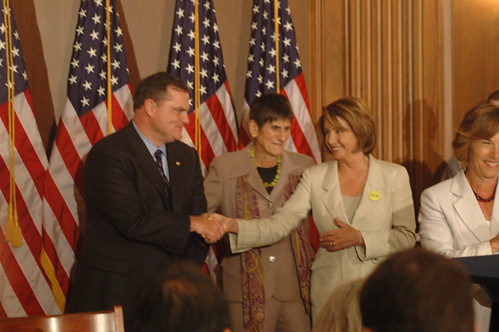
Terry Nathan, executive director of the Independent Book Publisher's Association, sent a letter to IBPA members regarding the Lead Test Law. Here is a portion of that letter:
Information about the Consumer Product Safety Inspection Act continues to roll in, and the outcome is anything but clear. One thing that does seem clear is that this Act applies only to books manufactured after February 10, 2009.
I encourage you to 1) contact your printer for input on this issue, and 2) contact your representatives in Washington, DC to voice your concerns. I am including a list of representatives below.
We have been reaching out to our colleagues in various key segments of the industry for information and are continuing to monitor this issue on a daily basis. We will keep you updated..
This is one of the reasons I encourage everyone who starts a small press to join IBPA. Not only do they provide resources and information, they do a lot of advocacy on our behalf.
He also provided links to articles with more information about the Consumer Products Safety Improvement Act (CPSIA), the official name of the Lead Test Law. Here are those articles:
From Bookselling This Week: (excerpt) CPSIA -- which was signed into law on August 14, 2008, in response to last year's recalls of products containing lead -- limits the amount of lead in children's products to 600 parts-per-million (ppm) as of February 10, and 300 ppm as of August 2009. In August 2011, the limit will drop to 100 ppm if it is considered technologically feasible for a given product or product category. The law requires manufacturers of children's products for children up to age 12, including books, to make accessible to retailers a Certificate of Conformity (COC) stating that their products have been tested by an independent third party and comply with lead limits stipulated in CPSIA.
From Publisher's Weekly: (excerpt) The children’s book industry continues to intensify its efforts to push for an exemption from the Consumer Products Safety Improvement Act. The Act, which goes into effect February 10, requires all products for children 12 and under—including books—to be tested for lead, as noted in Publishers Weekly’s recent detailed coverage of the CPSIA and its implications.
The Association of American Publishers is taking the lead in formal lobbying, but other groups are playing an increasing role. The Children’s Book Council, for example, is developing talking points and scripts that publishers can circulate to help employees petition their Senate and House representatives. “There’s been a real flurry of activity in the last couple of weeks,” says Robin Adelson, CBC’s executive director. “People are making phone calls and people are sending e-mails. They’re heeding the call to action.”
And from The Small Publisher's Association: (excerpt) The Consumer Product Safety Act of 2008 (CPSIA) requires items sold for children, manufactured after February 10, be tested and certified for lead levels by an independent lab.
A Consumer Product Safety Commission (CPSC) letter, dated December 23, 2008, affirmed children's books are included in the lead testing requirement.
Products in inventory (in storage and on bookstore shelves) do not need to be tested, but retailers can be fined if the products are found to have excessive levels of lead.
Testing and certification takes place at the book printer level. Publishers need to check with their printer if they have books in the printing process.
Click the above links for the full articles.
If you'd like to take a look at the law itself, click this link for the PDF.
Also, contact your Congressperson and ask them to take another look at the part of the law that affects children's books. Thank you Terry Nathan for this list of people and phone numbers:
1. Sen. Chuck Schumer, NY - -represents most publishers. 202-224-6542.
2. Sen. Diane Feinstein, who has been influential on the issue 202-224-3841.
3. Sen. John Rockefeller, who will soon oversee the committee of jurisdiction, 202-
224-6472.
4. Sen. Daniel Inouye, who will also oversee committee of jurisdiction 202-224-3934.
5. Cong. Henry Waxman, the new chair of the House Committee of jurisdiction 202-225-
3976.
6. Speaker Nancy Pelosi's office, 202-225-0100.
--
Tuesday, January 20, 2009
President Obama

I don't know what to write. I feel so overwhelmed with happiness, hope and excitement. My cynical, Gen X brain is having a difficult time believing that President Obama is actually PRESIDENT OBAMA.
When I was a baby, Martin Luther King Jr was still leading the fight for Civil Rights. I was a year old when he died. He has been one of my greatest heroes because he stood up for his beliefs and worked to create change in America. His example made a huge impression on me, regardless that I'm a white girl living in California. The fact that my daughter has African-American and Latina friends, that her cousins are half-Filipino and that she thinks judging people by the color of their skin is "silly," shows that Martin Luther King Jr's dream is coming true.
And today, we have absolute proof. He didn't die in vain.
Wednesday, January 14, 2009
Lead Testing of Children's Books
If you are a publisher of children's books, then you need to be aware of this. A law passed by Congress which was created to crack down on high lead levels in toys has now expanded to include children's books.
From the Publisher's Weekly article:
The Consumer Product Safety Improvement Act, enacted in August 2008 as a response to the high-profile 2007 recalls involving Chinese-made toys containing lead, covers not just playthings but all consumer products intended for use by children 12 and under. That includes books, audiobooks and sidelines, no matter where they are manufactured, even though most books have lead levels that are well below the Act’s most stringent safety standards. The industry is fighting to have most books exempted, but there may not be a resolution by the time the Act kicks in on February 10, so publishers and retailers are proceeding as if books will be included.
This ruling could be an economic disaster for already struggling publishers, as well as impact schools and stores as books are removed from shelves. Of course protecting children from exposure to lead is important, but this law creates more problems than it solves. It is a Congressional reaction, fueled by fear, that doesn't solve the real problem of toxic toys.
From the article:
The CPSIA dictates that each children’s book SKU, shipped to retailers, catalogues and e-commerce sites as of February 10, must have been tested by a third-party lab to ensure that lead levels are below 600 parts per million. (Acceptable levels drop to 300 ppm in August and 100 ppm in 2011.) Some books also must be tested for phthalates, an acid used to soften plastic. The importer or domestic manufacturer must provide a Certificate of Conformity (usually posted on the Internet), and the product must be labeled appropriately. Older products on shelf must fall within acceptable safety standards but do not need to be accompanied by a Certificate, according to recent comments by the Consumer Products Safety Commission.
The Small Publishers Association of North America (SPAN) has created an information page on their website. Click the link to learn more about the law, the labs sanctioned to test books, and what the publishing community is doing to try and change the law so the impact on publishers is not as detrimental.
Even if you don't publish children's books, please write your Congressperson to alert them to the problems inherent in the law. Children MUST be protected, but quickly created laws that are reactionary, rather than comprehensive, just create more, sometimes bigger, problems than the one the law was trying to solve.
Monday, January 12, 2009
Resolutions and Procrastination
This is the time of year when most people in the US make New Year's resolution, making promises to ourselves that will improve our lives, promises like losing weight, eating right, earning more money, spending more time with our families, and accomplishing our creative goals. And usually we all start off full of energy and commitment and then by February fall off the resolution wagon. By March, we're beating ourselves up for not sticking to our resolutions and then by Summer we hate ourselves for not being able to comfortably wear a bathing suit.
I decided to skip resolutions this year and instead have only promised to be kind to myself. That's all. Just be kinder.
Which means I am not allowed to berate myself for not keeping up this blog as diligently as I should. Or for the fact the Business Book is still way behind schedule and it looks like it will be mid-February before we can launch it. Nor am I allowed to feel guilty that I STILL haven't gotten back to my Punk Rock contributors with their notes. Nope, not allowed to beat myself up for procrastination.
We've been taught that procrastination is a bad thing, but I'm starting to doubt that assumption. Of course, anything is bad if it stops you from achieving your dreams. Procrastination in the extreme is just as harmful as being in a bad relationship. But some procrastination is healthy. Not everything has to be done RIGHT NOW. In fact, trying to get everything done immediately, on time, and perfectly creates more stress than any task should. I think if we look at the tasks we keep putting off we can discover where our resistances are hidden.
Resistance: an opposing or retarding force (from the Merriam-Webster Dictionary). That's really what procrastination is. We procrastinate because we either don't really want something, don't feel we deserve it, or can't figure out how to get it.
I get overwhelmed very quickly because I take on too many tasks all at once and then I suddenly run out of steam. Instead of writing my blog, I start wandering around Facebook. I chat with friends about whether or not I should let my bangs grow out or not, and then get mad at myself when I run out of time to edit a Punk essay. When I start to procrastinate, I know I'm doing too much. My brain needs the break from constant activity, so I take a walk in the sun or play the Sims.
Rather than allowing those moments of procrastination induced inactivity to take over my life, I've started setting a time limit. If I'm that stressed out or brain-dead, I can have a cup of tea and watch an old movie. But as soon as the movie is over, I have to get back to work on a specific task. I make a list of all the things I need to accomplish, then organize them by Urgency (see earlier post on organizing). I start with the most urgent task, then take breaks when needed by doing one of the more physical tasks, like sweeping the floor or pulling weeds. After a while, I return to the urgent task, refreshed and ready to finish.
Procrastination is not the enemy, your resistances are. So please don't beat yourself up for not exercising or finishing your novel. Be kind to yourself. Tell yourself you DO deserve to be a writer, you DO deserve to eat well. If you're zoning out on MySpace all day, ask yourself "Why?" Are you lonely, tired, bored, or stressed? If you feel like you really need to surf MySpace, then set a timer. Give yourself one hour to surf the net, and then force yourself to do something else. Denying yourself a MySpace account completely is just setting yourself up for guilt and failure; eventually you'll fall off the wagon and spend three days checking out new bands.
And you can always bribe yourself. Chocolate works for me. If I write for two hours I can eat a piece of chocolate. Small bribes that provide immediate gratification can do wonders in motivating you away from Zappos. Remember how much a piece of candy can compel a child to clean their room?
Wednesday, January 07, 2009
Thank you Ron Asheton for your Amazing Music

Yesterday I learned that Ron Asheton, founding member of The Stooges, which in my humble opinion is one of the greatest Punk bands of all time, died at his home in Anne Arbor. He was 60.
From the AP article:
DETROIT (AP) — Ron Asheton, the guitarist for the Stooges whose raw sound helped inspire the first generation of punk musicians, has died. He was 60.
Asheton was found at his Ann Arbor home early Tuesday morning by police officers after they were called by an associate who had not heard from him in several days, said city police Sgt. Brad Hill.
There were no signs of foul play, and the death appeared to be of natural causes, Hill said.
Asheton was a founding member of the Stooges, the influential protopunk band formed in Ann Arbor in 1967, along with his brother, Scott.
Lead singer Iggy Pop called Asheton "my best friend" in a statement Tuesday, and the band expressed shock at his death.
"For all that knew him behind the facade of Mr. Cool & Quirky, he was a kind-hearted, genuine, warm person who always believed that people meant well even if they did not," the band said in a written statement. "As a musician Ron was The Guitar God, idol to follow and inspire others. That is how he will be remembered by people who had a great pleasure to work with him, learn from him and share good and bad times with him."
Asheton's powerful, distorted guitar on songs like "I Wanna Be Your Dog" and "T.V. Eye" was a hallmark of the group's sound. His "technically adept but also beautifully raw" style was heavily influenced by free jazz and created "beauty out of noise," said Brian Cogan, a punk-music historian at Molloy College on New York's Long Island.
Follow the above link to read the rest of the article.
Tonight, I will raise a toast to Ron Asheton while listening to TV Eye.
Monday, January 05, 2009
Profit and Loss Statements can be so... um... interesting?

(image from www.myownbusiness.org)
My daughter went back to school this morning and I did a little happy dance thinking about all the free time I now have to be creative and write and maybe sew the curtains and definitely plunge head first into the Punk Anthology and... do the books! Not make a book. DO THE BOOKS. 2008 can not be put to bed without first being tucked in with an official Profit and Loss Statement.
And what is a Profit and Loss Statement? In a nutshell, a profit and loss statement is the end of the year report of your business that shows how much you've earned (profit) and how much you spent (lost). This is what you need to show the IRS when you file your taxes, as well as show your city for you business license, your bank when you need a loan, or anyone else who needs proof that you really do have a business and didn't just put up a pretty sign that says so.
Organizing your profit and loss statement can be daunting, which is why I keep stressing that you should keep track of your earnings and receipts all year long and not just at the end of the year. If you do a mini Profit and Loss statement for every quarter, the time you spend going through receipts and finding old invoices will be cut in half.
I wish I could say I did that (can't take my own advice, now can I?). Quarter one and two were perfectly managed and organized, but quarter three and four were not. As soon as I started school, my records from July to December 2008 were tossed in a file called "receipts" and ignored. Luckily I didn't spend much during that time so there weren't many receipts to tally (nor did I earn very much, so the invoices were low. Not sure that's good, though).
After two hours of organizing receipts and tallying up my costs and earnings, I had my statements for both Quarter 3 and 4. Then I could tackle the entire year.
My expenses are broken into several categories:
-printing
-promotion
-shipping
-supplies
-licenses
-royalty payments
-training
-consultants
-miscellaneous (always have a misc section)
... just to name a few.
The IRS needs all these categories to provide you with the right deductions, plus it will help you organize your receipts better if you can link it to a specific area of your business. And breaking down expenses into different categories enables you to clearly see exactly where your money is going (I spent $22.00 on pens?)
There are numerous templates and tutorials on line to help you with your Profit and Loss statement, but I just created my own by using an Excel spreadsheet. Keep it simple, thorough and clear, and make sure you can back up your expenses with receipts. You can SAY you paid $1000 on printing, but if you get audited and don't have a receipt, you'll be in big trouble with the IRS.
I'm now waiting for one more form from my Wholesaler to verify how many books we sold in December before I can put 2008 to bed. Overall, Medusa's Muse lost money. A lot of money. Far more money than I should have spent. But I really wanted to go to LA and see BookExpo, so I went over budget. Oh well, sometimes the experience is worth the interest on the credit card. But 2009 is going to have to be a much leaner year to make up for this one. I have a feeling a lot of people will be doing the same thing.
Saturday, January 03, 2009
The MacBook Air has arrived!

Right now, I am updating this blog using my brand new MacBook Air, a Christmas gift from my hubby. It arrived yesterday. What's a Macbook Air you ask? Click the link to see how ultra thin, ultra fast, and ultra sexy it is.
I swear, it is so light sitting here on my lap if I fart I might blow it right off and onto the floor. It is lighter than the book "Goodnight Moon." It's like typing on a couple of loaded down paper plates. But the screen is large, the resolution excellent, and the keyboard the right size for typing. Plus, this baby zips! I can zoom around the internet like I'm wearing a jet pack. I click a link and SHAZAM, I'm there!
This is a big improvement over my old laptop, an orange clam shell bought in 1998. Over ten years it has served me well, providing me the tools I needed to write two novels, several plays, and start a publishing company. But in the last two years I've felt the clunk of old software. Surfing the net became a chore, a real problem since Medusa's Muse is primarily an internet based business. Eventually, my orange clam shell became a typewriter and I used the PC in the living room for my work.
Although the clam shell is now replaced by a new, fresh, and superior tool, I am attached to that old orange oddity. Rick wanted to donate it or strip it down for parts but I said I wasn't ready. It's like sending an old horse out to pasture. You know it's time, but you're going to miss the old gal.
I'm excited to get back to work with my new tool. The first book I'll be editing on this lap book is the Punk Rock Anthology, Punk Rock Saved My Ass, debuting this summer.
After many weeks of holiday festivities and family time, I'm ready to get to work.
Wednesday, December 31, 2008
Happy New Year! The Future Looks Bright.

In the New Year, may your right hand always be stretched out in friendship, but never in want.
~Traditional Irish toast
We three Medusa's Muses wish you all the happiest and most creative of New Years. May 2009 bring you joy, or at least may it give you time to write down that story trapped in your head.
Monday, December 29, 2008
A View of a Book Design Meeting
Ever wonder what happens during a production meeting between the publisher/editor at a small press and the lead designer of a book? Here's a glimpse of the meeting I had yesterday with Rick Wismar, Medusa's Muse designer.
"Want cheese on your Wopper?" Rick asked before heading to the counter.
I shook my head and set up the laptop while he got our food. This is about as fancy as a working lunch gets for a micro press; a couple of burgers at "Burger King".
While eating our burgers and fries, we discussed the pros and cons of including images in What You Need to Know to Be a Pro. Now that I am no longer the author/editor on this project, I have to focus on being the publisher, which means my primary job is to create an excellent product (book) while keeping an eye on the bottom line. Some of the questions I have to ask are:
-Does including images increase the overall worth of the book to a reader?
-Will images make the book more appealing, and thus increase sales? Or is it just dressing up a book that already has enough intrinsic value?
-If I want the price of the book to be $10.00, will that price support the book's production? How much more can I spend on design and still gain enough profit on a $10.00 book?
-How fancy can I afford to make the images?
After some discussion, we decided to include simple cartoons at the beginning of each chapter to emphasise the subject of that chapter, while also adding more humor to the book. The book was written with the hope that people would be entertained and inspired as well as informed while reading about how to start a small press. So Rick and I pulled out the table of contents and began doodling ideas for each heading. What would be a good image for "Working with Authors?" Or "Bank Accounts and Licenses?" In the introduction, I compare the book to a travel guide for would-be adventurers who are planning their first trip overseas. Should we carry that metaphor throughout in the images, or let each chapter's image stand alone?
Rick sketched out many ideas and we laughed over the silly ones. It's important to let your imagination lead the way while coming up with ideas rather than only focus on what will be "pertinent." After two hours of tossing around ideas, he had enough to start narrowing down the specific drawings.
Then we asked, "Who can draw them." Rick would rather turn over the actual illustrations to another artist, but I'm concerned about the deadline. Who do we know who can draw several sketches in just a week? I don't want to keep pushing this book's deadline ahead because that pushes the Punk Rock Anthology's deadline even further. This is another place I need to be the publisher, not the author.
-Can we afford to hire an illustrator?
-Should Rick draw the images himself?
-How long can we wait before the deadline will have to be extended again, and can we afford to keep extending that deadline?
I insisted on keeping the mid-January deadline and Rick said he'd do his best. Luckily, we already have a mock-up of the cover and the interior will be simple since we have a template from Traveling Blind. But the images could really slow things down. I'll have to keep wearing my publisher's hat to keep us all on target.
I'm pleased with our progress yesterday and excited about the book again. For a while, I was so sick of What You Need to Know to Be a Pro I didn't want to think about it. After working on a manuscript for a year, you can get pretty tired of the words on the page, even when it's your own book. But Rick's ideas make the book feel fresh again and brings it one step closer to being real.
Besides, I wrote it! I should celebrate! I'd better start planning a party.
Wednesday, December 24, 2008
Happy Winter all you crazy Artists!
It's Christmas Eve and I'm thinking about the world and all its trouble. So much fear, anger, outrage and injustice. From corporate CEO's stealing money from old ladies to cholera decimating Zimbabwe. It's enough to make you want to hide under the bed, or find a bunch of rocks and start throwing them at banks.
But despite all the trouble, I feel a spirit of hope. People everywhere are shaking off the helplessness and asking, what can I do? How can I help? Now is the time for all the crazy artists to drop their ennui and show people how to be creative.
Creativity is the fire that keeps us warm when we haven't seen the sun in weeks. It is the drive that urges us on when we swear we can't take one more step. As soon as we've lost all hope, the creative fire can inspire us to keep trying. It's thinking outside the box to solve problems and deal with chaos.
I'm not talking about the Michelangelo's of the world, although they are amazing. I'm talking about the knitters, woodworkers, cooks, teachers, lawyers, doctors, and plumbers of the world. Even Grandma Smith and her needlepoint bag contribute to the collective creative fire. Every time you look at something old in a new way, you are exercising your creativity, flexing your artistic muscles, and increasing your imagination. These are the tools you need when everything around you feels like it's collapsing.
On this Christmas and this week of Hanukkah, keep the warmth of good wishes, kindness, and beauty in your heart. Store it up for the long year ahead. And the next time you feel like hiding under the bed, remember how much possibility there still is in the world. You can see it in Uncle Jo's drift-wood mobile, or when Martha rebuilt her car's engine. These simple acts of imagination, knowledge, and creativity are what gave the human species fire, and that saved our asses during the Ice Age.
We are intrepid. We carry on.
Happy Winter.
Monday, December 22, 2008
A Gift from Joan Stewart, The Publicity Hound

Joan Stewart, marketing and PR expert, has a website packed with information, as well as a newsletter, called The Publicity Hound. I urge anyone needing information about marketing their work to check out her site and sign up for the newsletter. Whether you're a writer, publisher, visual artist, or what have you, you'll find great advice and expert tips. Plus,a bit of Joan's expert advice has been included in the next Medusa's Muse book, What You Need to Know to Be a Pro: The Start-Up Business Book for Publishers (written by the one and only me, Terena Scott).
Right now, Joan is offering a free download of her top advice for 2008. Follow this link to check it out and download a copy for yourself.
Here's what you'll find in her ebook (from the website):
A fast, inexpensive way to catch the attention of journalists in your community.
A clever way to get onto the morning TV talk shows...most people who are pitching aren't doing this.
A place where you can connect daily with journalists who are looking for sources. And it won't cost you a penny.
What to do when you're tempted to strangle a reporter for wasting your time interviewing you, and then leaving your name out of the story.
A news story that appears several times a year in almost every community and is PERFECT for piggybacking onto.
9 ways to use video to pull more traffic to your website, sell more products, generate publicity, and build word-of-mouth publicity about your product, service, cause or issue.
11 ways to use a paid or unpaid assistant to help with publicity-related tasks.
How to make your local Chamber of Commerce one of your biggest promoters.
A free tool that tells you whether your press release gets a passing grade or a big, fat F.
How to use a popular social networking site to snoop on your competitors legally and ethically
What writers can learn from a beloved dog's obituary.
How to claim the Number 1 spot on Google.
A publicity mistake that most companies make, and it kills their chances of ever getting covered
I've downloaded my copy. Go get yours!
Subscribe to:
Posts (Atom)